
 E-Paper



Gujarat achieved 55% reduction in carbon emissions: CM Bhupendra Patel
The chief minister said the achievement is attributed to the implementation of the New Solar Policy 2021, initiated on 29 December 2020


The Gujarat government announced on Monday that the state has achieved a 55% reduction in carbon emissions in energy production.
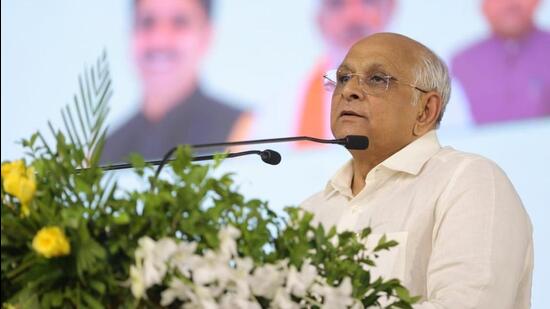
Chief minister Bhupendra Patel said the achievement is attributed to the implementation of the New Solar Policy 2021, initiated on 29 December 2020, which promotes the adoption of renewable energy sources and aims to reduce reliance on conventional energy methods.
“Over the past 2.5 years, Gujarat has witnessed a substantial decrease of 9.32 million tonnes of carbon emissions in energy production. The Department of Energy, led by Gujarat Urja Vikas Nigam Limited (GUVNL), has played a crucial role in driving this progress,” said a government official.
Also Read: Chandigarh sees a dip in carbon emissions
“In April 2023 alone, there was a decrease of 26.74 million tonnes of CO2 emissions, compared to a decrease of 17.42 million tonnes in December 2020, highlighting the state’s consistent efforts in reducing carbon emissions,” the official added.
Recently, GUVNL has secured agreements for 6180 MW of solar power and 1100 MW of wind power.
These agreements are expected to contribute to a further reduction of 11.06 million tonnes of CO2 emissions over the next three years.
To expedite progress towards low carbon emissions, the Gujarat government established the Decarbonization Cell in 2022.
Operating under the Gujarat Energy Training and Research Institute (GETRI), this specialised cell comprises accomplished officers from various domains, working with a long-term vision to achieve decarbonization and ultimately establish a net-zero state in Gujarat, the official said.
In line with Prime Minister Narendra Modi’s goal of achieving 50% carbon-free energy and 100% electric vehicle usage in India by 2030, the Gujarat government signed a memorandum of understanding (MoU) with the Tata Group on June 2, for manufacturing of lithium-ion-cells.
Tata Group will invest ₹13,000 crore for the new project that will come up closer to its vehicle manufacturing factory at Sanand.


