
 E-Paper



ICID honour for Parichha Weir: 140-year-old Jhansi structure earns global heritage status
The heritage recognition will be formally presented in France in October during the 26th ICID International Congress and 77th International Executive Council meeting

 Prefer HTon Google


A 140-year-old irrigation structure in Jhansi has secured a place on the global heritage map after the International Commission on Irrigation and Drainage (ICID) selected the historic Parichha Weir as a World Heritage Irrigation Structure (WHIS).
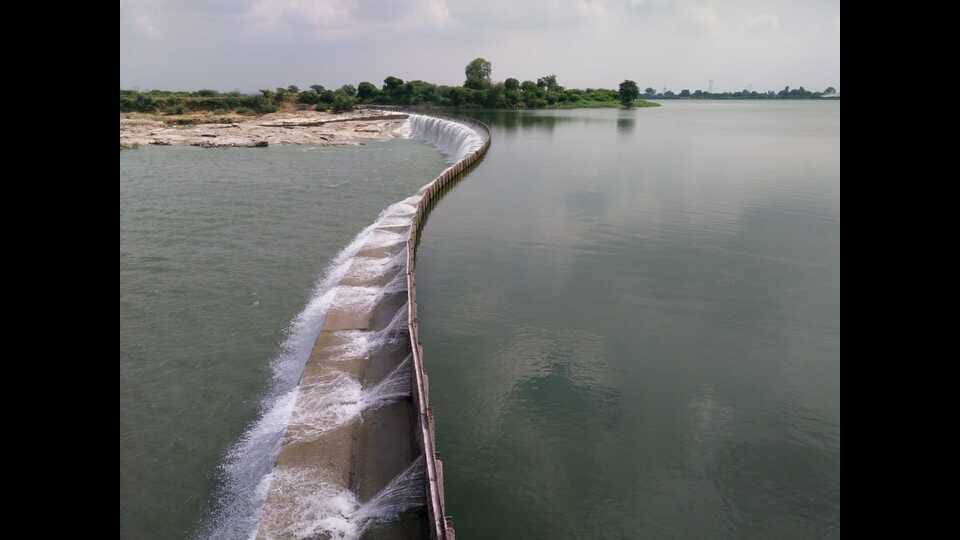
The heritage recognition will be formally presented in France in October during the 26th ICID International Congress and 77th International Executive Council meeting. Three other irrigation structures from India have also been chosen for the prestigious honour.
The WHIS programme recognises irrigation structures that are more than 100 years old and continue to serve their original purpose. The recognition also underscores the engineering legacy of traditional water-management systems. In 2022, the Sukwa-Dukwan Weir in Jhansi was included in the ICID heritage list.
Constructed across the Betwa, the Parichha Weir stretches 1,174 metres and stands 16.8 metres above the riverbed. Its 318 steel falling shutters helped raise the reservoir’s storage capacity from 1,700 million cubic feet to 2,400 million cubic feet.
Built with rubble-stone masonry, the weir consists of two main sections separated by an island. It forms the headworks of the Betwa Canal System, an extensive irrigation network developed to bring water to the drought-prone areas of Bundelkhand.
The roots of the project go back to 1855, when Captain Strachey proposed a canal system for Bundelkhand after conducting a detailed survey. The plan was delayed following the 1857 uprising, before construction of the weir finally began in 1881 at a cost of around ₹40 lakh. The canal system was commissioned in 1886.
Nearly a century and a half later, the structure remains operational and continues to support irrigation across five districts in Uttar Pradesh and Madhya Pradesh. Several original British-era features, including iron and wooden components dating back to its commissioning, are still preserved at the site.
The weir has also emerged as a popular tourist destination, especially during the monsoon when water cascades over its sluice gates. It additionally supplies water to the adjoining Parichha Thermal Power Project, which has an installed capacity of 920 MW, and is expected to be linked to the broader Ken-Betwa river-linking project.
Chief engineer, Betwa, Ambuj Dwivedi said the Betwa Canal has a designed discharge of 5,052 cusecs at its head and bifurcates at 30.90 km into the Kuthond Branch on the left and Hamirpur Branch on the right.
“For more than a century, the Parichha Weir and the Betwa Canal System have remained in continuous operation. The canal network is approximately 2,654 km long and irrigates around 4,28,360 hectares,” he said.
The ICID honour is expected to bring renewed attention to the preservation of the historic structure while highlighting the enduring relevance of Bundelkhand’s traditional water infrastructure.
HTC


