
 E-Paper



Indian Overseas Bank opens branch, ATM in Maoist affected Jagargunda village
Sukma district collector Devesh Kumar Dhruv said the bank branch will play a key role in the direct transfer of welfare scheme benefits, ensuring that financial inclusion reaches the grassroots,

 Prefer HTon Google


RAIPUR: The Indian Overseas Bank (IOB) has opened a branch and an ATM counter in Jagargunda, a remote part of Sukma district in Chhattisgarh, that has long been affected by the Maoist movement.
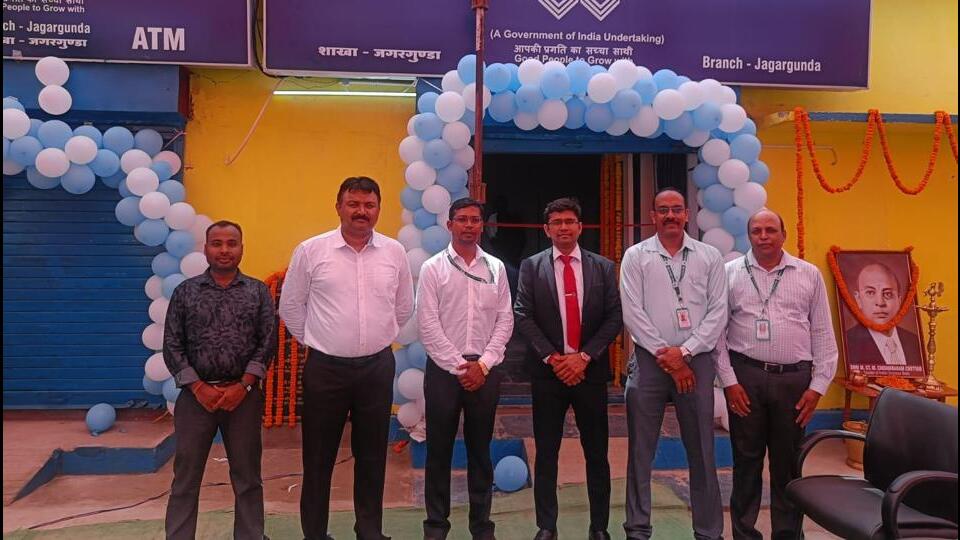
The branch was inaugurated by chief minister Vishnu Deo Sai virtually on Sunday and started functioning on Monday.
Sukma district collector Devesh Kumar Dhruv said that the aim is to help the people in the jungle. “The tribals residing deep in the jungle will surely benefit from the bank... The branch will play a key role in the direct transfer of welfare scheme benefits like the Tendupatta Bonus and PM-Kisan Samman Nidhi, ensuring that financial inclusion reaches the grassroots,” said the collector.
District officials said that nearly 50,000 people from 30 nearby panchayats in Sukma and Dantewada would now gain access to essential financial services.
Due to threats of Maoist attacks, the government had created a heavily fortified security zone in Jagargunda during 2008 Salwa Judum anti-naxal operations.
The entire village was fenced with barbed wire and security check posts, similar to a military base. It is protected by heavy deployment of Central Reserve Police Force (CRPF) and District Reserve Guards (DRG) personnel. Entry and exit to the village are strictly controlled, and ID checks are still mandatory.
An official of the bank said that the new IOB branch is currently staffed with two officers and four business correspondents (BCs).
“Plans are already underway to deploy an additional officer by next week. Though only 10 to 12 accounts have been officially opened so far, the branch has collected nearly 300 account opening forms, and processing will begin in the coming days,” said the bank official.
The bank official said that the team will face several challenges in that Maoist affected region.
“Firstly, there is no residential infrastructure available in Jagargunda and staff members currently reside in nearby Nakulnar in Dantewada district which is around 40 km from the branch. Secondly, erratic electricity supply hampers daily operations because while solar solutions are being arranged, a nearby government substation under construction is expected to offer a long-term solution. Poor mobile connectivity, limited water supply and transporting cash to and from the branch are logistical challenges in a region with a history of security threats,” the official said.
“However, the district administration has assured us to provide solutions to these issues in the coming weeks,” the bank official said.
-kW0H-U20214218012MgB-250x250%40HT-Web.jpg)


