E-Paper



Lodhi Art Festival returns, marks 10 years of Delhi’s public art district
French artist Yoann Bourgeois opened the month-long event with “Elevation”, as new murals, workshops, and performances bring streets alive till Feb 28.

 Prefer HTon Google


The Lodhi Art Festival returned on Sunday to mark 10 years of Delhi’s Lodhi Art District, with French artist Yoann Bourgeois opening the festival’s 10th edition with his performance “Elevation”. The month-long festival, running from February 1 to 28, is themed “Dilate All Art Spaces” and celebrates a decade since the area became the city’s first Public Art District.
“Elevation”, staged at Lodhi Colony, featured a wooden staircase leading to an empty platform placed before a colourful mural. In the performance, a man repeatedly attempts to climb the stairs, falling sideways onto a trampoline and bouncing back each time, continuing the cycle of ascent and collapse.
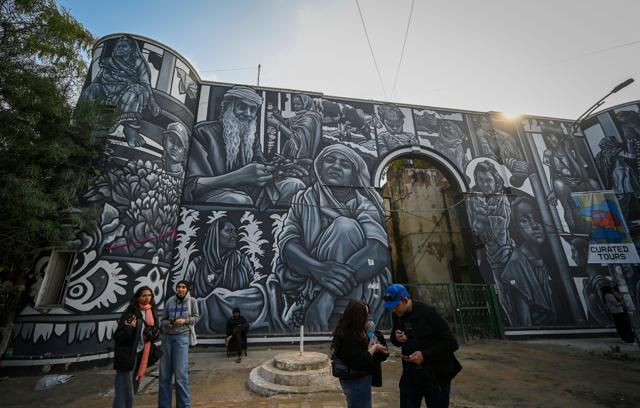
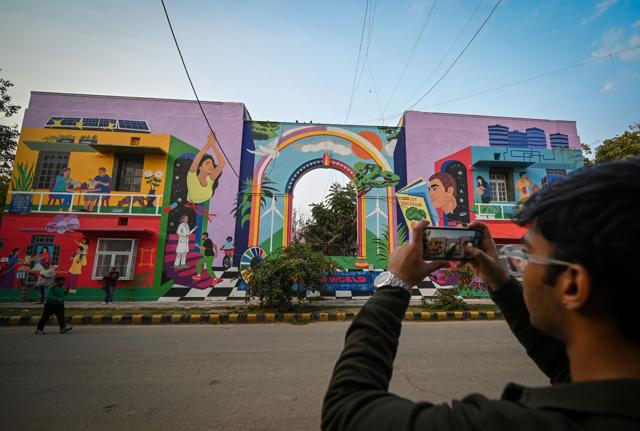
The Lodhi Art District was established in 2016 by the St+art India Foundation in association with Asian Paints, and is now home to large-scale murals painted across entire building walls. According to the foundation, accessibility remains the central idea behind the district.
“If you want to make art accessible in this country of billions, it has to be out in the streets. It is a different experience altogether to witness this performance and these murals in the street. You see the art, you stop, you walk around – you can pick and choose how to interact with it, and it leads to unexpected moments. Everything is out in the open for you to see and experience,” said Anoushka Rabha, communications head at St+art India.
The festival’s opening day saw hundreds of people gathering on the street, including residents and passersby who had not been aware of the event beforehand. Many were drawn in by the murals and the crowd. Visitors were seen watching the performance, examining the art-covered walls, and discussing them while drinking tea.
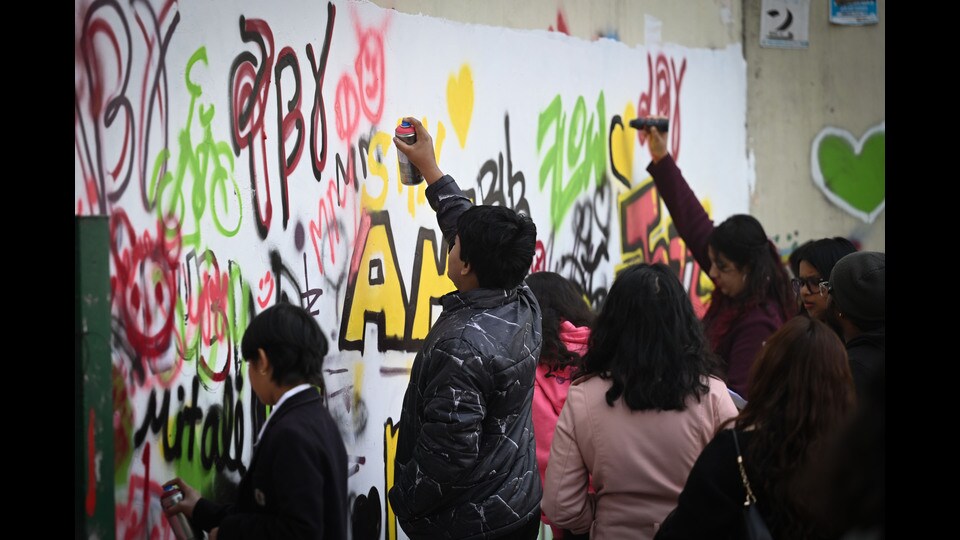
A graffiti workshop by illustrator Byska was held in the afternoon, resulting in sections of walls being covered with multicoloured drawings. Children from the locality were seen running around the street searching for leftover spray paint to continue drawing on walls, gates, and even dustbin tops.
“Lodhi Art District represents what can happen when art is allowed to grow patiently within a city. For Asian Paints, our association with Lodhi and with St+art India Foundation has always been
rooted in the belief that art in public spaces does more than beautify walls. It creates connection, invites dialogue, and becomes part of how people experience their city,” said Asian Paints CEO and managing director, Amit Syngle.
Six new murals are being added to the district during the festival, created by Indian and international artists. Polish artist Pener is presenting an abstract mural exploring abstraction in public space. German artist JuMu’s mural draws on Latin American, Peruvian, and Indian visual ideas on reality. Argentinian artist Elian Chali’s work reflects different bodily experiences of architecture.
Spanish artist Suso 33, collaborating with Indian artists Tarini Sethi and Ishaan Bharat, is creating a mural connecting Indian and Spanish visual histories through themes of translation, exchange, and layered urban memory. Indian artists Svabhu Kohli and 13-year-old Ram Sangchoju are unveiling a mural rooted in ecology and alternative ways of seeing, based on Sangchoju’s relationship with the forests and people of the Pakke Tiger Reserve in Arunachal Pradesh.
Another addition is a typographic mural on water conservation by London-based artist Raissa Pardini, created in collaboration with the late Hanif Kureshi, a co-founder of St+art India Foundation who passed away in 2024. The design was completed shortly before his death.
The festival also includes guided walkthroughs, workshops, and panel discussions held every weekend. Ten cycle rickshaws from the area have been transformed into moving art pieces, designed by artists associated with the district over the past decade.
“Some of Lodhi’s most recognisable murals have lived on these walls for years, becoming part of the neighbourhood’s everyday life. With the cycle rickshaw project, we wanted to let those images travel again. It’s a homage to the last decade, where art stayed, settled in, and now moves back onto the street,” said St+art India co-founder, Arjun Bahl.
By the end of the festival, Lodhi Art District will house a total of 65 murals.