E-Paper



LPG worries brew, Kashi keeps the kettle on charcoal
With over a thousand tea stalls across the city relying on such chulhas, the kettles in Banaras continue to boil — and the conversations show no sign of cooling

 Prefer HTon Google


Even as concerns over LPG supply surface amid the ongoing West Asia conflict, the familiar culture of animated conversations over tea continues uninterrupted in Varanasi — thanks largely to the humble charcoal-fired chulha that still powers hundreds of neighbourhood tea stalls.
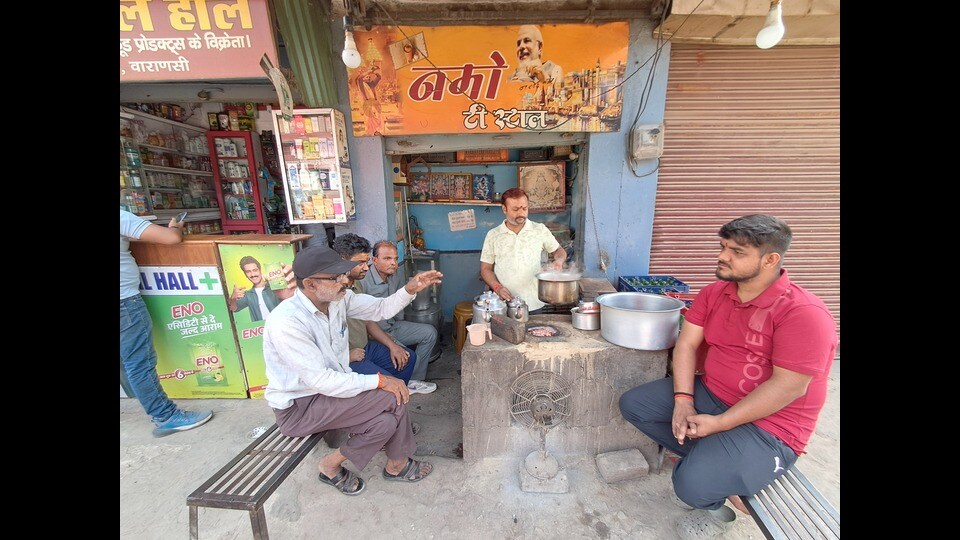
With over a thousand tea stalls across the city relying on such chulhas, the kettles in Banaras continue to boil — and the conversations show no sign of cooling.
Here they go: At a nearly seventy-year-old tea stall in Pandeypur locality, a teapan simmers on glowing embers as Amit Singh and Ravi Gupta wait for their kulhads, discussing the LPG situation.
Singh, a resident of Khajuri, says he recently tried to place an online order for an LPG refill but could not do so as bookings are now allowed only 25 days after the last delivery. “It worried me a little,” he says.
Gupta, however, appears unconcerned. “Supply is there. Earlier people could book refills whenever they wanted. Now there is just a waiting period after the last delivery,” he says.
Unperturbed by the debate, the tea stall’s owner Ballu strains the tea and pours it into kulhads, advising them in Banarasi dialect to sip their tea instead of worrying unnecessarily.
“There is no shortage of domestic LPG cylinders in Varanasi. People are panicking without reason,” he says, turning back to tend the charcoal stove.
Ballu says charcoal costs between ₹2,000 and ₹2,100 per quintal.
During winter, when tea demand peaks, around 10–15 kg of coal is used daily, while in summers 5–10 kg usually suffices. “For brewing tea, the charcoal stove is the best. It is cheaper than LPG and easily available,” he adds.
Across the city, many tea stalls continue to rely on the traditional fuel. At the well-known Pappu tea stall in the Assi area, tea keeps brewing on a charcoal oven from morning till evening.
Near a hotel on Mall Road, Chhalu Yadav also runs his stall on a charcoal-fired chulha. “Coal is delivered to the shop on a phone call.
If we depended on commercial LPG cylinders, the stall might have shut
during the current disruption,” he says.
In Harahua, tea seller Anil Yadav echoes the sentiment. “Most tea stalls in Kashi still use charcoal ovens. Once lit in the morning, they keep going till night.”