
 E-Paper



Monday Musings: A sellers’ market as pvt hospitals begin to ease vaccination burden on state
These hospitals from Pune are charging ₹900 for each dose of Covishield, almost four times higher than the ₹250 price determined by the Union government at “non-public” hospitals, when the drive had started for those above the age of 45 years


Maharashtra chief minister Uddhav Thackeray, on Sunday, said that the state would soon begin a 24-hour vaccination drive, as production capacity is likely to ramp up in June.
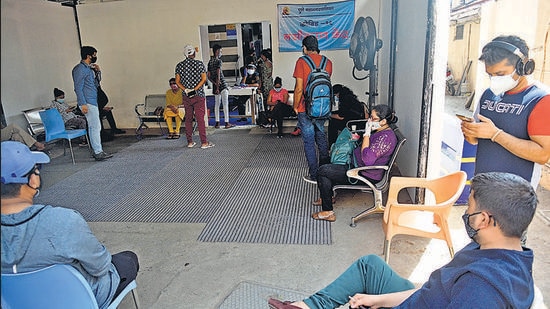
Presently, vaccination for people aged between 18-45 years at public hospitals in Maharashtra has been put on hold due to lack of a smooth supply of vaccines.
The Maharashtra government has, instead, decided to continue vaccinating those above 45 years of age, for whom doses are being purchased by the Centre and then distributed among the states.
The state government, in view of the non-availability of vaccines, has completely withdrawn from the responsibility of vaccinating those in the age group of 18-44 years over the last few days; this age group has been most vulnerable to the virus during the second wave.
On an insistence from various states, the Centre had, mid-April, allowed them to purchase vaccine doses directly from manufacturers to inoculate those above the age of 18 years.
The shortage of vaccines made it difficult for states to continue with the vaccination programme.
With only two firms supplying vaccines in India and different states and local bodies, including the Brihan Mumbai and Pune municipal corporations awaiting a response to proposed global tenders, it is increasingly proving to be a suppliers’ market.
As the state is unwilling to immediately restart immunisation for all adults, the responsibility of inoculating this class is now partially being shared by private hospitals in cities like Pune.
After starting vaccinations on Friday, as reported by Hindustan Times Pune in its May 21 edition, more private hospitals have received Covishield doses from the Serum Institute of India, the city- based Covid vaccine manufacturer.
In two days, at least 12 private hospitals procured doses and begun the inoculation programme across the city.
These hospitals from Pune are charging ₹900 for each dose of Covishield, almost four times higher than the ₹250 price determined by the Union government at “non-public” hospitals, when the drive had started for those above the age of 45 years.
The private hospitals are getting each dose from the manufacturer at slightly more than ₹600, including transportation and GST. They will also have to take into account wastage of some doses.
For employees of corporate houses, the hospitals have priced each dose at ₹1,200 given that jabs are likely to be given on campus. There are scores of corporate houses, IT firms and manufacturing units in Pune who have lined up with these private hospitals and the on-campus drive is likely to start within two days. (See Page 3).
Initially, the Cowin portal showed that almost all slots with most private hospitals are booked. With demand far higher than supply as the virus is unsparing in taking lives, most hospitals are witnessing long queues. The involvement of private hospitals in vaccination programme is a welcome step, given that the state government has shunned its responsibility.
The need of the hour is to vaccinate as many, and as quickly as possible, as it will help the city drive towards herd immunity to withstand a possible third wave.
The chief minister has repeatedly said the state is willing to buy 120 million doses to inoculate the entire 60 million population of Maharashtra, but it may take time for Maharashtra to start the drive for everyone, given that the shortage of doses from manufacturers is likely to continue.
Pune has so far vaccinated close to 2.6 million people from various categories. It still has millions to be inoculated. Compared to the economic cost that city has been paying due to lockdown in the past two months of the second wave, the benefit of vaccinating the maximum number of citizens, even through private hospitals where the price is higher, clearly outweighs the cons.
Those who can afford the price and are opting for private hospitals are actually reducing the burden on the government, which may at a later point resume vaccination for the larger population free of cost.
For suppliers, it makes sense to sell doses to private hospitals rather than to the government, which is procuring the doses at a cheaper rate.


