
 E-Paper



Monday Musings: Should the police act or not? When the law is made to order
In Pune, as many as 28,000 people have violated rules such as not wearing masks, stepping out of home during curfew orders, and keeping shops open beyond deadlines. The police action has caused an uproar, says Yogesh Joshi


Earlier last week, many in Pune began receiving phone calls from the police seeking personal details, such as address and photo id.
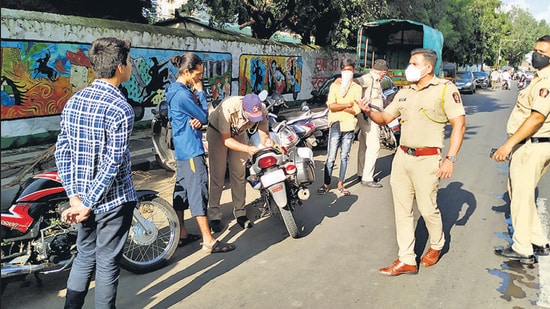
In some cases, police personnel even visited homes to collect the photo ids and other documents. All this was part of an exercise by the police against those caught violating curfew-related norms during the Covid- induced lockdown.
The police have already clarified that they are in process of filing chargesheets, and for this, details such as photo id, residence address and phone numbers of those who violated orders are being gathered.
These are offences police lodged mainly during March, April, May and June, when Pune, along with other parts of Maharashtra were under strict lockdown.
In Pune, as many as 28,000 people have violated rules such as not wearing masks, stepping out of home during curfew orders, and keeping shops open beyond deadlines.
The police action caused an uproar with many crying that the move is unnecessary when the law enforcement agencies have not been effective in dealing with criminals.
The Nationalist Congress Party (NCP) jumped into the fray and wrote to home minister Anil Deshmukh – he belongs to the same party – with a request to intervene and ask the Pune police chief not to go ahead with the action.
The NCP’s intervention came after some of the civic activists, who otherwise ask for transparency, honesty and accountability from every government agency, expressed unhappiness against the police action.
Is this the first instance where police are being asked not to pursue cases?
In the past, governments have on multiple occasions approved withdrawal of police cases filed during political and social agitations.
The latest being the Maha Vikas Aghadi government’s decision on December 31, to take back cases between November 2014 to December 2019. Most of these cases are related to the Maratha protests as well as the Aarey agitation against the Metro carshed.
Earlier, the Fadnavis government had cleared similar cases between 2005 and 2014.
Among the key cases in which the government made a plea in the court seeking withdrawal was one against Shiv Sena leader Neelam Gorhe and Uddhav Thackeray’s personal assistance Milind Narvekar.
Both, among others, were booked for hatching a conspiracy allegedly to create law and order problem in Pune during a bandh called by Shiv Sena in 2010.
Maharashtra, of course, is not the only state to have withdrawn cases. In all the protests from 2005 and 2019, where the government has decided to withdraw cases, there was violence too, making the common citizen suffer.
The spate of withdrawal of criminal as well as non-criminal cases against politicians, their workers and the aam aadmi point not just to the subverting of the rule of law, but also indicate the overpowering stranglehold of the political establishments.
In the latest episode involving cases against common citizens, police have invoked Section 188 of the Indian Penal Code. Section 3 of the Epidemic Diseases Act, 1897, provides penalties for disobeying any regulation or order made under the Act.
These are according to Section 188 of the Indian Penal Code under disobedience to order duly promulgated by public servant.
Any move to take back cases registered lawfully for any violation only undermines the legitimacy of state, an absence of which can lead to chaos.
During lockdown, when people were roaming the roads without purpose, police came under criticism for inaction.
Now that the police are trying to take cases filed against those violating the norms to their logical conclusion by filing chargesheets, they have once again come under criticism.
While any withdrawal must be “with the consent of the court”, the court itself has to see that the withdrawal is to meet the ends of justice and not for an improper reason such as political expediency.
Yogesh Joshi can be contacted at yogesh.joshi@htlive.com


