
 E-Paper



NGO rescues 80 avians from stressful conditions in Agra, Mathura
In Agra, people contacted the NGO’s rescue helpline number to save birds from dire situations such as heat exhaustion, dehydration, heat strokes, injuries and dog attacks.


With the scorching summer heat and rising temperatures in the past two months several birds are facing situations like heat exhaustion, dehydration, heat strokes, injuries and dog attacks. The Wildlife SOS alone rescued over 80 birds from in and around the Agra and Mathura districts in May and June, informed a press statement released by the public relations office of Wildlife SOS on Thursday.
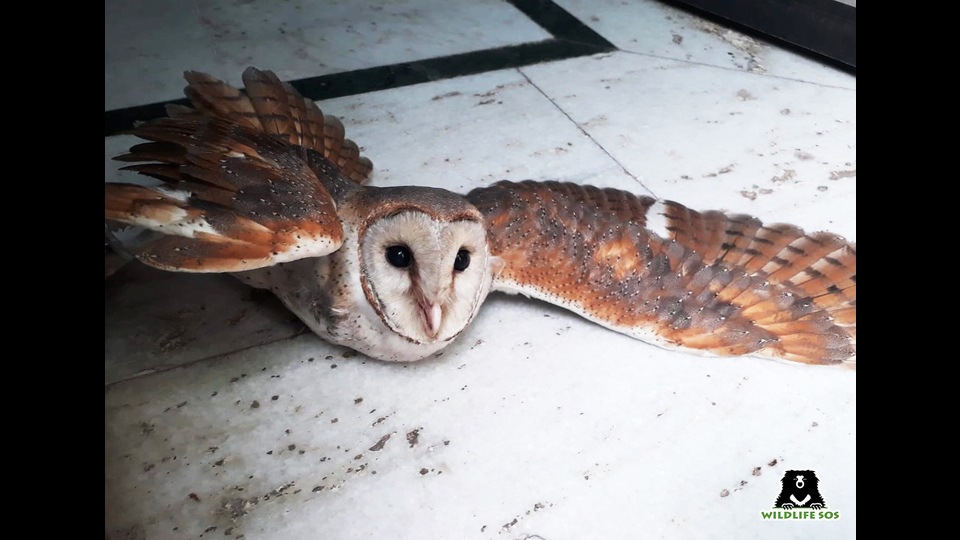
“The birds were rescued from dire situations such as heat exhaustion, dehydration, heat strokes, injuries and dog attacks after people reached out to the NGO’s Agra rescue helpline number,” the statement informed.
“In cities like Agra and Delhi, raptors like the Black Kite often suffer from dehydration and heat strokes due to their tendency of souring at high altitudes under the blazing sun. In a recent incident, a Black Kite was rescued from the boundary wall of a house in Pragati Puram, Agra, after it was found unable to fly because of dehydration,” stated the press release.
The rescue team rushed to the spot and immediately gave the bird some water to rehydrate itself—a standard protocol that Wildlife SOS follows during rescues of birds suffering from dehydration or heat exhaustion. The kite was kept under observation for a few hours, after which it was released back into its natural habitat. The NGO rescued 17 Black kites between May and June.
“Further, out of the 80 birds rescued from Agra in the two months, 49 of them were Indian peafowl commonly referred to as peacocks alone. In these regions, due to urban encroachment, it has become increasingly common for peacocks to venture out into human settlements, making them prone to attacks by street dogs. They often sustain severe injuries to their wings,” informed the statement.
In one such instance, a peacock that had flown down from an electric pole was attacked by a pack of feral dogs in Junsuti, Mathura. The bird was rescued by the Wildlife SOS Rapid Response Unit and treated for injuries under its wings.
Rapid urbanisation also means more buildings and houses springing up on what were once forest lands. For the avian population, this has meant reduced natural habitat, causing many birds to collide onto walls, windows and building glass. Birds collide mid-air onto walls at high speeds, often leaving them unconscious, with severe injuries, fractures and even paralysis.
A Kingfisher that had flown inside a house and collided with a ceiling fan was rescued near Taj Mahal’s West Gate in Agra. The bird was found lying unconscious by the residents, who immediately called Wildlife SOS. The bird had luckily not sustained any major injuries and was kept under observation for a day.
A few weeks later, a Barn Owl that had collided with a wall in Azad Nagar was rescued and treated for an injury in its right-wing following which an Indian Eagle Owl was also rescued from Panchkuian, Agra. All the birds have now been safely released back into their natural habitat.
Baiju Raj M.V, director of conservation projects, Wildlife SOS said, “Birds, especially the younger ones, fly low to the ground or land to rest when they are dehydrated or exhausted from the heat. Too weak to fly, they are often at risk of attacks by dogs or monkeys and sustain injuries, which at times even turn fatal. It is encouraging to see that more people are reaching out to our helplines so we can rescue these birds promptly.”
Geeta Seshamani, Co-founder & Secretary of Wildlife SOS, said, “The sky-soarers of our planet—birds—are a symbol of resilience and freedom. Today, however, owing to a rapidly heating planet and urban encroachment, life on earth has become quite a challenge for them. Our team has been working round the clock to help as many birds in distress as we can.”


