E-Paper



Orissa HC summons chief wildlife warden over rising elephant deaths
STF officials on Sunday had recovered partially-burnt and unburnt bones as well as ashes from Tabalei-Deogaon reserve forest and Kolgaon forest in Sambalpur district

 Prefer HTon Google


Orissa high court on Monday asked the state’s chief wildlife warden to appear before it via video conferencing on August 8 and file a response over rising elephant deaths.
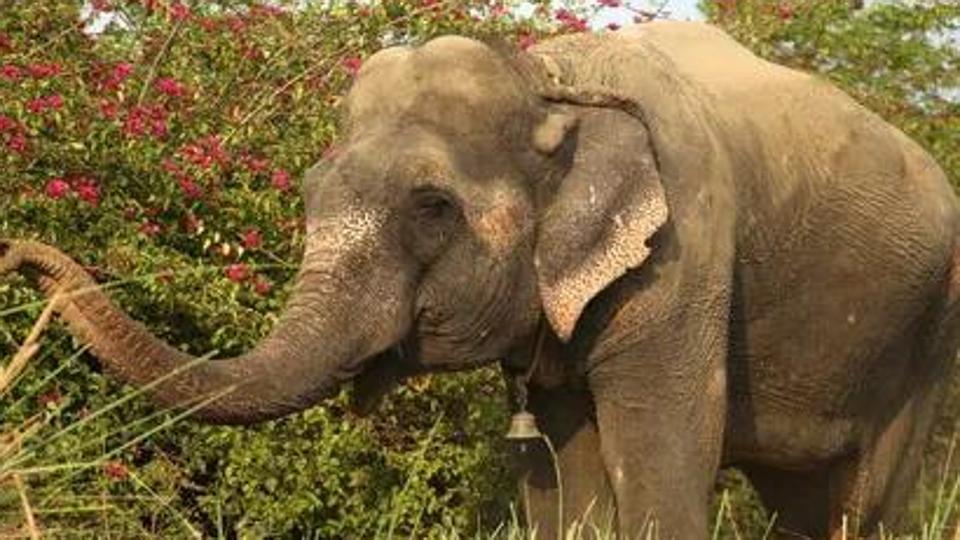
This development comes a day after the Special Task Force of Odisha police recovered burnt bones and ashes of elephants from two different places under Dhama Forest range of Sambalpur district bringing the forest department staff under the scanner again.
The HC direction to chief wildlife warden Shashi Paul came in response to a PIL filed by a Cuttack-based wildlife activist seeking amendment to the Wildlife (Protection Act), 1972 on the lines of the Wildlife (Protection) (Assam Amendment) Act 2009 to add more teeth to wildlife crime control efforts. Activist Gita Rout had filed the PIL after an ailing elephant, with suspected gunshot injuries died in Athagarh Forest division of Cuttack district.
Also Read: 39-year-old captive elephant rescued by U.P. forest department from Bhadohi
STF officials on Sunday had recovered partially-burnt and unburnt bones as well as ashes from Tabalei-Deogaon reserve forest and Kolgaon forest in Sambalpur district after being tipped off about it. From the size of the bones, they appeared to be that of large adult males who were poached for ivory.
“While one spot had bones scattered in the other, most of the bones were disposed-off elsewhere. Forensic tests would provide evidence of gender and the time when the bodies were burnt,” said a senior STF official.
Sambalpur divisional forest officer Vishwanath Neelannvar said it would be too early to say if the bones belong to one or more elephants. “STF has siezed the bones and those would be sent to laboratories in OUAT Bhubaneswar as well as in Wildlife Institute of India, Dehradun to know the age, gender and time of possible deaths. The investigation is at an early stage,” said the DFO.
STF sources suspect role of forest department staff as a similar case happened in Athagarh forest division in June.
On June 2, 3 and 15, the special task force of Odisha police had found bones and carcasses of elephants including a tusker from Athagarh forest range.
While two of the elephants had died due to electrocution, one was shot dead and bodies were allegedly buried by the forest department staff to conceal their deaths.
At least 9 forest department officials have been arrested so far for concealing the deaths while two rangers of the Athagarh division booked on charges of suppression of information are still absconding.
This year, at least 10 cases of concealment of elephant deaths have been reported from different parts of the state, the highest in any calendar year so far.
The recovery of the burnt bones from Sambalpur forests came four days after the decomposed carcass of a tusker with gunshot injury was found from a cashew orchard in Jagannath Prasad Forest range in Ghumsur North Division of Ganjam district. Preliminary examination by forest officials revealed that the 40-year-old tusker died of electrocution. There was also a gunshot wound on its back. As the right tusk of the elephant was missing, officials believed the elephant was killed by poachers.
On May 24 and 25, officials of Boudh Forest division were reportedly trying to pass off the graveyard of two elephants as a newly-constructed road.
When the villagers spotted the rotting carcass, salt and phenyl and informed the forest officials.
However, the next morning, there was nothing on the spot and all that remained was a newly-constructed road inside the forest.
After a brief inquiry, three forest officials including a forester, were suspended over their role in the incident.
In October last year, people of Jhankarpalli village under Sadar range of Sambalpur forest division reported about burning and burial of a poached tusker allegedly by the subordinate staff of forest department in Munderchuan reserve forest.
Wildlife activists in Odisha alleged that cases of concealment of elephants allegedly by forest officials are rising due to lack of a standard operating procedure on post-mortem of elephants that died due to unnatural causes.
“Though the National Tiger Conservation Authority has a SOP for unnatural deaths of any tiger for the last 15 years, the Project Elephant is yet to formulate such SOP. We have been demanding a SOP in which two independent witnesses and officials from other than the local forest division would have to be present during post-mortem. Like the tiger post-mortems, the process needs to be video graphed to remove any chance of foul play,” said Biswajit Mohanty, noted elephant conservationist. He alleged that forest departments could be involved in concealment of elephant deaths as the department is slow in pursuing such cases.
“In last 5 years, the forest department has managed to pursue 47 of the 89 elephant poaching cases. So, the forest staff could be concealing deaths,” he alleged.
Honorary wildlife warden Subhendu Mallik said while an SOP for post-mortem of unnatural death of elephant is necessary, responsibility should have been fixed on the higher officials such as DFOs for any such cases. “After an elephant dies it would take at least 12-14 hours to burn an elephant and dispose off the carcasses. Once the DFOs are held responsible for any such cases, the subordinate staff would be on their toes. Evern if the poachers resort to burning of carcasses, it can be detected,” said Mallick.
Officials said 82 elephants died in Odisha in 2019-20, 77 in 2020-21 and 86 in 2021-22.
Chief Wildlife Wraden Shashi Paul said though many forest officials have been arrested in the cover-up of the elephant deaths, it would be too early to say if more forest officials are involved.
“The three-member SIT comprising forest officials and crime branch officials to probe the elephant deaths cover-ups in Athagarh forest division has sought more time to submit its report,” said Paul.