
 E-Paper



Prayagraj revamps ‘Khet Talab Yojana’ to boost water security and farm incomes
The district has set a target of constructing 12 farm ponds for the current financial year, with four already completed within the first three months

 Prefer HTon Google


With the Uttar Pradesh government revamping the “Khet Talab Yojana” to make beneficiary selection more transparent and promote efficient water use, rainwater harvesting is emerging as a key strategy in Prayagraj to tackle declining groundwater levels and erratic monsoon patterns while helping farmers diversify their incomes.
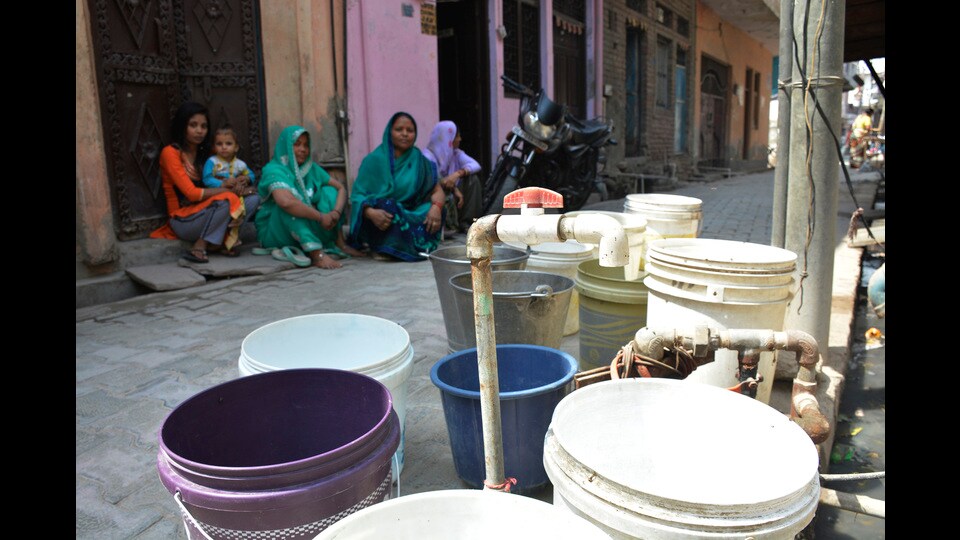
The district has set a target of constructing 12 farm ponds for the current financial year, with four already completed within the first three months. By incentivising rainwater harvesting, authorities hope to improve groundwater recharge and provide a reliable irrigation buffer for periods of water scarcity. To support this, farmers receive a subsidy of ₹52,500 for the construction of each pond.
Officials report that the initiative is being expanded beyond mere water conservation. Farmers are being actively encouraged to leverage these ponds for auxiliary activities, such as fish farming and the cultivation of aquatic crops like water chestnut (singhara) and makhana.
The need for such sustainable practices is urgent, as Prayagraj’s average annual rainfall has steadily declined to approximately 835 mm due to shifting climate patterns. “The agriculture department is implementing the scheme to ensure that every possible drop of rainwater is conserved for groundwater recharge and irrigation,” said in-charge land conservation officer KK Singh.
Highlighting past successes, Singh noted that the district completed 538 water bodies under the “Amrit Sarovar” initiative last year, creating a combined storage capacity of 53.8 lakh cubic metres. He added that the cumulative water storage capacity across the state has surged from 200 million cubic metres (MCM) to 560 MCM over the last two years.
The state government has implemented significant administrative changes to the “Khet Talab Yojana.” The previous “first-come, first-served” model has been replaced with an online booking and e-lottery system to enhance transparency in selecting beneficiaries.
Furthermore, the updated guidelines mandate the adoption of drip or sprinkler irrigation systems, ensuring that stored water is utilised efficiently. Beneficiaries can access separate subsidies for these micro-irrigation tools through the horticulture department.
The programme also includes social equity targets, with 50% of the scheme’s goals earmarked for small and marginal farmers, and 15% reserved for Scheduled Caste and Scheduled Tribe beneficiaries. Additionally, women farmers are receiving special priority under the new framework.


