
 E-Paper



Residents seek RWA-led reforms to manage waste in Manesar
Despite over 80 residential societies under the Manesar Municipal Corporation’s (MCM) jurisdiction—many of which actively manage their own waste—the civic body has failed to support or reward their efforts. RWAs argue that the solution lies in empowering residents to handle waste at the source


Gurugram: Five years after it was upgraded to a municipal corporation, Manesar is grappling with an escalating garbage crisis— one that residents and civic activists say is now worse than Gurugram’s. With no designated dumping zones, mismanagement of waste handling contracts, and a complete disregard for Resident Welfare Associations (RWAs), the sanitation system has collapsed.
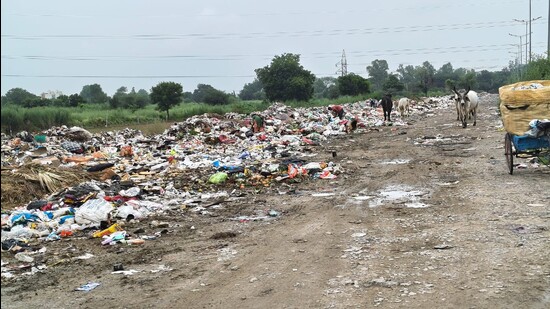
Massive heaps of garbage, construction waste, and unmanaged wood lie scattered across residential and industrial sectors, especially IMT Sector 8. “There is no fixed place to dump even wood. Earlier, it was being collected on HSIIDC land in Sector 8, but that too has now been vacated due to poor management,” said Praveen Malik, president of the Rising (SARE) Homes RWA in Sector 92.
He further alleged that many private agencies appointed for waste collection win contracts using political influence, only to abandon duties later. “When complaints rise, the same agencies reapply under new names for legacy waste clean-up tenders. This cycle of inefficiency continues while our city drowns in garbage,” Malik added.
Despite over 80 residential societies under the Manesar Municipal Corporation’s (MCM) jurisdiction—many of which actively manage their own waste—the civic body has failed to support or reward their efforts. RWAs argue that the solution lies in empowering residents to handle waste at the source.
“If wet waste is segregated at the household level and composted within societies, 70-80% of our waste problem would be solved. Dry waste is recyclable. Why can’t the government encourage RWAs doing this work?” Malik questioned, emphasizing the need for structured reward mechanisms, documentation-based accountability, and healthy competition among societies.
KL Verma, president of Microtek Greenburg (Sector 85), echoed the concern. “In several parts of Manesar, you’ll see garbage dumped openly—outside parks, near drains, and around high-rises. This is not just an eyesore, it’s a health hazard,” he said.
Despite repeated calls and messages, MCM commissioner Ayush Sinha did not respond to requests for comment.
Nijesh Manderna, executive engineer, Manesar Municipal Corporation (MCM), said, “We have deployed 108 motorised vehicles for primary waste collection along with JCBs to manage scattered garbage across almost all areas. While we don’t have a dedicated dumping site yet, the waste is currently being disposed at five designated locations. The major gap has been in processing — there was no processing mechanism earlier. A key challenge is identifying suitable land for setting up a processing plant, and we are in talks with HSIIDC to allot a site for this purpose.”
Residents insist that unless the administration integrates RWAs into policy planning and execution—especially through mandatory source segregation, composting support, and regular audits—the Swachh Bharat dream will remain elusive.


