
 E-Paper



Rewriting the Rules of Aging: The digital route to kill elderly boredom
Technologies open up a new virtual realm for the elderly, offering a valuable means to combat the challenges of isolation and estrangement that often accompany the later stages of life

 Prefer HTon Google


LUCKNOW For months, Madhu, an elderly woman, confined to a care home, yearned for her son settled thousands of miles away in the United States. However, her perception of life took a remarkable turn, all thanks to a handy electronic device.
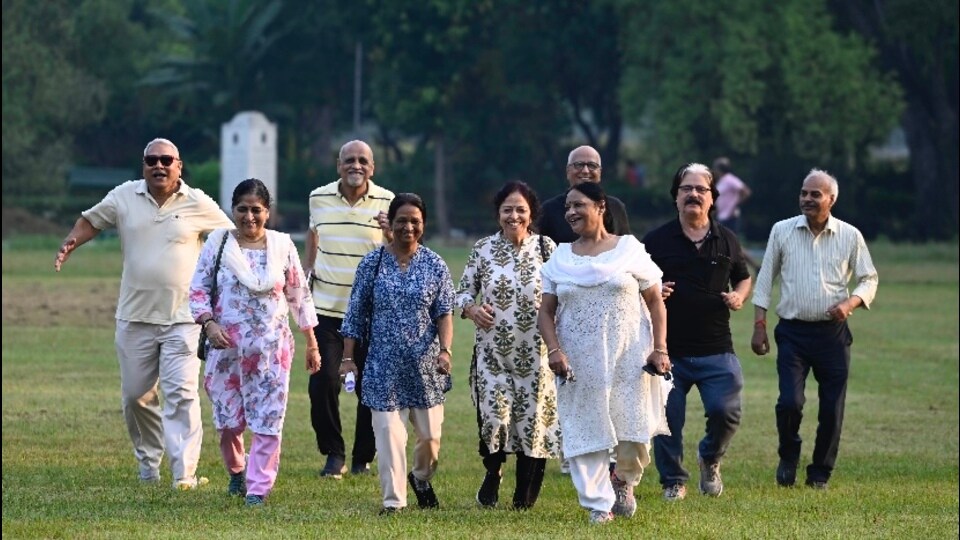
Madhu embarked on a journey of discovery as she learned to operate a cellphone, make video calls, watch reels and short movies, read messages on Facebook, and reconnect with friends she hadn’t seen in decades. What was once a monotonous existence, confined to a bed for a significant part of her day, suddenly transformed into a bustling digital adventure.
“The caretaker at the care home became her digital tutor. In this digital age, love and friendship know no bounds for Madhu,” said Neetu Batra, a sociologist specialising in social gerontology.
Doctors endorse the use of smartphones as a remedy for elderly loneliness. Dr Adarsh Tripathi, a senior faculty member in the Department of Psychiatry at King George’s Medical University, said, “For the elderly, smartphones are incredibly helpful for staying connected, fulfilling daily needs, and providing entertainment.”
Madhu’s case is not an isolated one. Contrary to societal perceptions of smartphones and social media as addictive distractions, they have introduced a new perspective into the lives of those grappling with loneliness. Despite physical constraints, newfound connections and cherished memories are injecting much-needed vitality into the lives of the elderly, as Batra points out.
Dr Abhishek Shukla, an expert in geriatric medicine, added, “Even elderly patients in the ICU benefit from seeing their loved ones via video calls; it aids in metabolic activity and speeds up recovery.”
These technologies open up a new virtual realm for the elderly, offering a valuable means to combat the challenges of isolation and estrangement that often accompany the later stages of life.
Digital media emerges as a novel tool for rejuvenating old relationships, with the elderly eagerly embracing this new mechanism to navigate the hyper-real world of today. It’s not an illusion for them; they discover fresh purpose and connection through it.
Surprisingly, digital media, often criticised for isolating generations from one another, plays a vital role in reuniting older individuals with their families, friends, and society. This shift is not as unusual as it might seem, as studies have shown that these efforts have a positive impact on the elderly population.
When asked about potential negative impacts of smartphones on the elderly, both physically and mentally, Dr Tripathi stated, “There are no risks of dependence and other adverse effects that are possible in children and adolescents.”
In a world that’s increasingly driven by technology, the elderly are finding their own unique path to staying engaged, connected, and happier than ever before.


