E-Paper



Silkworms spin new income stream for Kanpur farmers
Hundreds of farmers in Ghatampur, Patara and Bhitargaon adopt eri and mulberry silk to boost incomes alongside traditional crops

 Prefer HTon Google


In a quiet transformation across rural Kanpur, hundreds of farmers are adding an unlikely crop to their fields: silkworms. Villages in Ghatampur, Patara and Bhitargaon, where sericulture was virtually unknown five years ago, are now producing eri and mulberry silk that reaches markets as far as Gujarat and West Bengal.
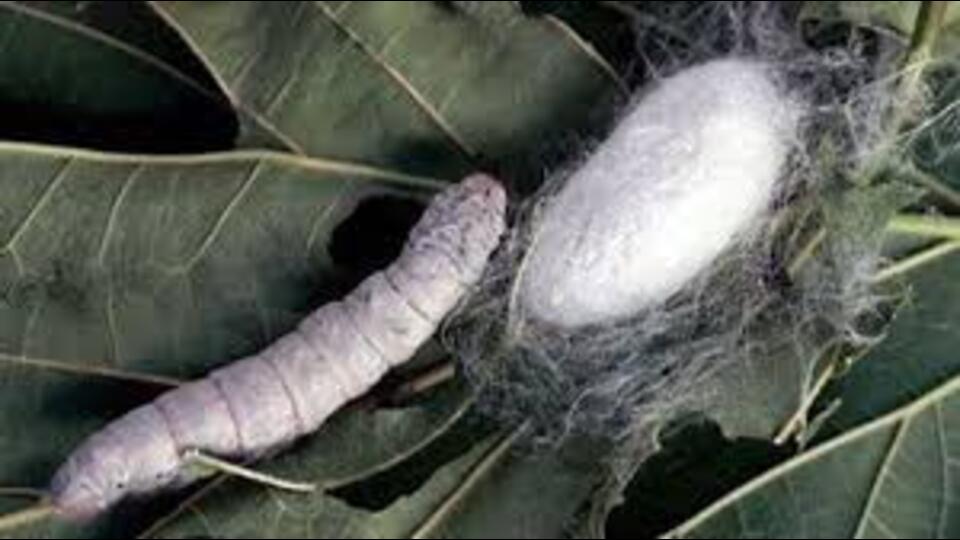
The shift comes as farmers seek alternatives to offset the fluctuating incomes from their crops. Silk rearing, with its short production cycles and assured buyers, has emerged as a practical solution. Officials say training support and direct market access have helped the activity take root.
Around 600 farmers in the district are currently engaged in eri and mulberry silk production, with a visible impact on village economies, according to the Directorate of Sericulture, UP.
Eri silk, reared on castor leaves, has found quick acceptance. Castor is sown on field bunds or small plots, with silkworms reared on its leaves. The short cycle allows three to four rearing rounds annually.
A farmer typically uses 100-150 disease-free layings (DFLs) per cycle and produces 50-60 kg of cocoons. Seed cocoons fetch around ₹300 per kg, while commercial cocoons sell for ₹100-110 per kg. Each cocoon yields 800 to 1,200 metres of silk yarn. “Traders from Gujarat, West Bengal, Maharashtra and Varanasi procure cocoons directly from villages,” an official added.
Rajesh Kumar, a farmer from Sujanpur village, said silk has reduced farming risks. “Every cycle gives us cash income. Since traders come to the village, we save time and transport costs,” he said.
Sudhir Sachan, a farmer from Kotra Makrandpur, credited government training programmes for improved output. “We received training in Mirzapur and Assam. After learning the techniques, both production and quality improved,” he said.
Mulberry silk production is also expanding. Two government silk farms at Rajepur and Hilalpur in Bilhaur block are supporting 40-50 farmers with mulberry cultivation and rearing. Mulberry silk commands higher prices for its sheen and quality, earning it the nickname “white gold”.
SK Rawat, assistant director, Directorate of Sericulture, UP, said eri silk rearing in Ghatampur, Patara and Bhitargaon has evolved into a strong model. “Nearly 600 farmers are producing an average of 50–60 kg of cocoons per cycle. The Bilhaur farms are providing technical support for mulberry silk as well,” he said. The department aims to expand the model through training and regular monitoring. In 2024-25, Kanpur district recorded silk production of 389.6 quintals.
According to Rawat, the income impact is substantial. Farmers earn ₹35,000-40,000 per acre from castor seed and an additional ₹20,000-25,000 per acre from cocoon production. Sericulture provides an extra annual income of ₹60,000-65,000 per acre.
District magistrate Jitendra Pratap Singh said the government’s focus is on creating secure income avenues for farmers. “Silk rearing has emerged as a successful model. Training, technology and marketing support are being ensured, and the benefits are clearly visible on the ground,” he said.