
 E-Paper



To snuff out toxic garbage fires, Nuh bans open waste burning in Aravalli
The order follows mounting reports of toxic waste being set ablaze near Khori Khurd village—allegedly by industrial units from Bhiwadi in Rajasthan—causing irreversible harm to local ecosystems and nearby residents

 Prefer HTon Google


Nuh: In a major crackdown on rampant environmental violations in the ecologically fragile Aravallis, Nuh deputy commissioner Vishram Kumar Meena on Thursday invoked Section 163 of the Bharatiya Nagarik Suraksha Sanhita (BNSS), 2023, to impose a blanket ban on all forms of open waste burning within Aravalli boundaries across the district.
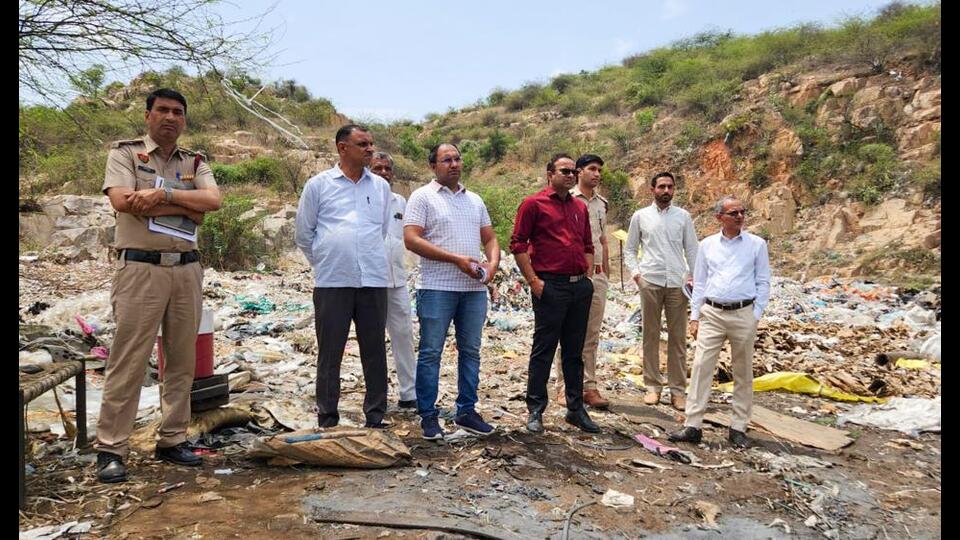
The order follows mounting reports of toxic waste being set ablaze near Khori Khurd village—allegedly by industrial units from Bhiwadi in Rajasthan—causing irreversible harm to local ecosystems and nearby residents. “The Aravallis are not a dumping ground,” Meena said. “This is an environmental emergency.”
Officials from the forest department, pollution control board and police have been deployed to the site, with instructions to lodge FIRs against violators. A five-member team led by SDM Tauru has been tasked with inspecting affected areas and filing a detailed report.
The action follows mounting evidence and public outcry over night-time waste fires that have blanketed the hills with toxic smoke. The fires are believed to be the result of unprocessed legacy waste, including chemically treated industrial scrap, being dumped and burnt to clear land for illegal farmhouses and construction.
Advocate Haseen Khan, a resident of Khori village in Tauru who first flagged the issue on social media, said he was under pressure to retract his statements. “This is a nexus. I have seen trucks from Rajasthan dumping plastic and chemical waste behind the village water body. When I complained, I was asked to name farmers. Why should I? The authorities must investigate. Wildlife is dying, our air is toxic and no one is held accountable,” he said.
Meena said two tractor-trolleys were recently seized from panchayat land where scrap dealers had set fire to waste. Forest and revenue officials have been instructed to file FIRs under the Indian Forest Act and Environment (Protection) Act.
Senior district officials said over 13 polluting industrial units were shut in the area by the Haryana Pollution Control Board in December 2024 for violating emission norms. However, the illegal operations appear to have resumed. “The worst part is that many of these offenders are encroaching on government and forest land. It’s a direct assault on the Aravallis,” a senior forest official said, asking not to be named.
Meena warned that any negligence by government officers will not be tolerated. “If any departmental official is found complicit or inactive, disciplinary action will follow,” he said, adding that all departments have been directed to conduct continuous patrolling in identified hot spots.
With fires being reported in ecologically crucial zones near water bodies, drain and behind dams—areas critical for groundwater recharge—activists warn that the ecological cost of inaction will be enormous. “These fires are not just illegal; they are suicidal. They’re turning the green lungs of NCR into a chemical graveyard,” said Vaishali Rana, a city-based environmentalist.
With increasing pressure from environmentalists, Haryana has shut its borders to industrial waste-laden trucks coming from Rajasthan, especially those heading into the Mangar and Bandhwari forest belt. A statewide alert has been issued to block tractor-trolleys and dumpers registered as “agricultural vehicles” being misused for commercial dumping operations—many of which have allegedly been caught burning toxic waste in the forest.
Earlier, last week, authorities identified five Rajasthan-based companies that were clandestinely transporting scrap, plastic, and cardboard for illegal disposal in the Aravallis. Notices are being prepared to hold them accountable, said district officials. Wildlife conservationists welcomed the move, citing that repeated dumping operations had killed ground-nesting birds, destroyed seedling patches and levelled hill slopes for illegal farmhouses.


