E-Paper



Uttarakhand HC closes PIL on elephant corridor, cites 2020 SC ruling
The apex court in 2020 had upheld strict protection of elephant corridors and forest land in the Nilgiris region of Tamil Nadu, rejecting challenges raised by private resort and hotel owners

 Prefer HTon Google


Dehradun: The Uttarakhand high court, while closing a public interest litigation (PIL) on Friday, raised concerns over the elephant corridor in the state, noting that the issue had already been conclusively settled by the Supreme Court in 2020.
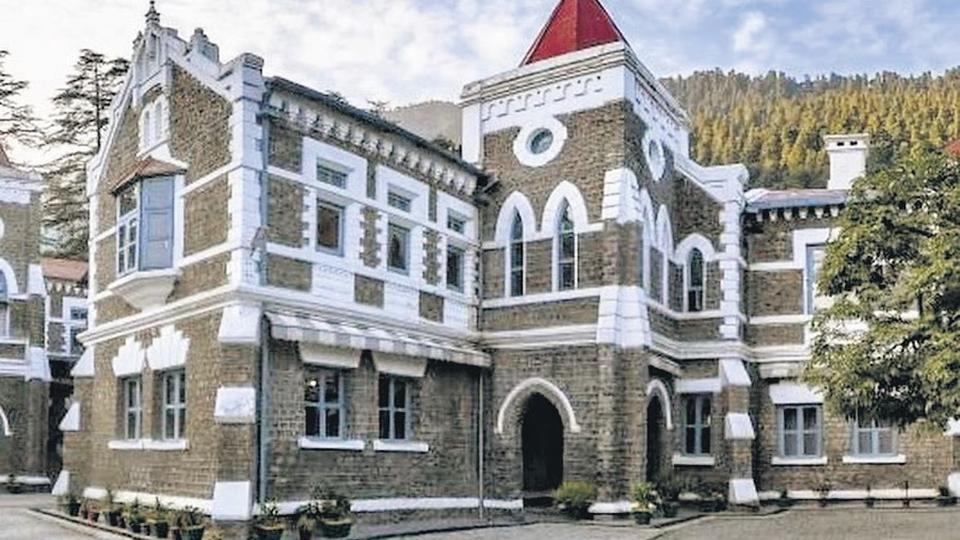
A division bench comprising chief justice G. Narendar and justice Siddhartha Sah disposed of the PIL filed by Reenu Paul, holding that revisiting the matter would be “duplication and redundant”, as the court and the state were bound by the apex court’s judgment in Hospitality Association of Mudumalai vs In Defence of Environment and Animals and Others (2020).
The apex court in 2020 had upheld strict protection of elephant corridors and forest land in the Nilgiris region of Tamil Nadu, rejecting challenges raised by private resort and hotel owners operating in ecologically sensitive areas.
The case arose after environmental groups flagged large-scale commercial activities, including resorts and tourism infrastructure, within notified elephant corridors, arguing that such constructions obstructed elephant movement and threatened wildlife habitats.
The Supreme Court held that environmental protection and wildlife conservation take precedence over commercial interests. The court ruled that once land is identified as an elephant corridor, no construction or commercial activity can be permitted, regardless of prior occupation or investment.
The HC bench further said that issues related to the destruction of forest or green cover were already under consideration before the Supreme Court in Anita Kandwal vs State of Uttarakhand.
The case relates to the alleged illegal occupation of over 2,800 acres of Uttarakhand government forest land. The dispute originated from land once leased to a society, which later allotted it to private individuals, some of whom relied on a compromise decree to assert ownership.
On December 22, 2025, the Supreme Court criticised the state authorities for “sitting like mute spectators” while forest land was encroached upon and directed the chief secretary and the principal chief conservator of forests to form an enquiry committee to investigate.
The high court said it would be appropriate to await the apex court’s decision on the matter.
The petitioner was granted liberty to seek impleadment in the pending Supreme Court proceedings and pursue adjudication of related issues there. With these observations, the court closed the PIL, keeping the contentions of all parties open.
In March this year, the Uttarakhand High Court directed the National Highways Authority of India (NHAI) and the state forest department to consult the Forest Research Institute, Dehradun, to devise ways and means to save the maximum number of trees in the Shivalik Elephant Reserve by transplanting them to nearby forest areas where the road project is proposed.
There is a proposal to fell 4,400 trees in the Shivalik Elephant Reserve for the proposed widening of a four-lane road project between Bhaniyawala in Dehradun and Rishikesh. The HC gave the directions while hearing a PIL filed by Dehradun-based Reenu Paul.
Abhijay Negi, counsel for the petitioner, said the PIL had pleaded with the HC to direct the state government to quash the proposed felling of over 4,400 trees in the Shivalik Elephant Reserve for the road-widening project connecting Bhaniyawala in Dehradun to Rishikesh, being carried out in a critical elephant habitat as identified by the Wildlife Trust of India.
Negi said, “The HC has accepted our prayer and has applied the apex court’s elephant corridor judgment to all elephant corridors in Uttarakhand. As regards the felling of 4,400 trees for a four-lane highway between Rishikesh and Bhaniyawala, the HC has said this issue should be decided by the Supreme Court’s CJI-led bench on encroachment of green cover in Uttarakhand. Also, neither has the HC expressly or impliedly vacated its earlier stay order, nor has the NHAI been granted any permission to start felling the trees, which has been paused since March 2025, when the HC stayed the road expansion project through the elephant corridor.”