E-Paper



Vaccine hesitancy persists among 13 primitive vulnerable tribal groups of Odisha
Vaccine hesitancy among the 1.3 lakh people in the 13 PVTG groups has proved to be a headache for the officials.


Odisha has been vaccinating around 3 lakh people a day since June 21 when the Covid-19 vaccination drive entered into a campaign mode. But for the state tribal welfare department, getting the members of the 13 primitive vulnerable tribal group (PVTG) is proving to be a tough task, HT has learnt.
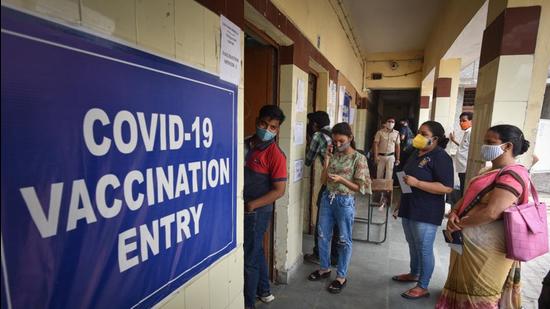
Vaccine hesitancy among the 1.3 lakh people in the 13 PVTG groups, who are eligible for vaccination, has proved to be a headache for the officials.
“Till now we have managed to vaccinate just about 17,000 of these 1.3 lakh people mostly in the 30+ age group. Though Dongaria Kondhs in Rayagada and Bondas in Malkangiri have shed their hesitancy, among the rest it persists. The people of tribal welfare department, as well as healthcare workers, are trying to create awareness but still, it’s proving to be a tough task,” said P Arthanari, project director of Odisha PVTG Empowerment Livelihood Improvement Programme.
Till Thursday evening, Odisha had vaccinated more than 1.06 crore people of the eligible 3.09 crore people of which 19.53 lakh received two doses and the rest single doses of Covid-19 vaccine. On Thursday, it vaccinated 2.82 lakh people, much higher than what it managed to vaccinate in May and most of June.
The PVTG groups are Birhor, Bonda, Chakotia Bhunjia, Didayi, Juang, Kharia, Dongria Kondh, Kutia Kandh, Lanjia Saura, Lodha, Mankidia, Paudi Bhuyan and Saura.
In the second surge of the pandemic, around 160 people from these communities had tested positive for Covid. Many groups like the Chakotia Bhunjias who live in relative isolation in the Sunabeda sanctuary were infected in the second wave.
Officials said while many of them were hesitant to get tested for Covid-19, the reluctance to get vaccinated is proving to be a big challenge. “We are trying to overcome this challenge. We have got interpreters to convince them in their language,” said PK Mishra, special officer, Lanjia Soura Development Agency in Gajapati district.
Gram Vikas, an NGO which conducted a Covid-19 assessment among 61,034 people in the tribal-dominated districts of Gajapati, Ganjam, Kalahandi, Kandhamal, Keonjhar and Sundergarh, found low rates of vaccine coverage. There is still lots of vaccine hesitancy among the tribals and rural communities, an official of the NGO said.
The officials said a video clip doing the rounds that predicted that those vaccinated would dye in the next two years proved as one of the biggest impediment in getting people vaccinated. In other areas, the tribals told healthcare workers that they trusted their village deity to protect them. In a village of Rayagada district early this month, the people fled by the time the vaccinators arrived.
“They have their own belief system. They would rather believe in Dishari and Bejuni, their priests, than the modern medical system. As a tribal researcher working in a central government project, I have found it difficult to win their trust,” said PC Mohapatra of Koraput-based Council of Analytical Tribal Studies.
However, there seemed to be some silver lining despite the hesitancy. In Rayagada district, around 1,700 Dongaria Kondhs have so far been vaccinated while in Malkangiri over 2,000 Bonda tribals have been vaccinated. “We did not expect the Bondas to agree so quickly to our pleadings for vaccination. I hope other tribals fall in line as well,” said Malkangiri chief district medical officer Dr Prafulla Nanda.
Meanwhile, the SC/ST welfare department has started a daily wage compensation worth ₹100 for 14 days for all PVTG people who tested positive for Covid-19. As per the PVTG covid management strategy, a health kit, worth ₹2500, is being provided to every family of infected PVTG member.