
 E-Paper



Woman ‘Kathavachak’ alleges threat for narrating ‘Bhagwat Katha’ in Chhattisgarh
The Mahasamud district police said that they have started investigating the case and have provided security to the ongoing ‘Bhagwat Katha’ after the woman ‘Kathavachak’ lodged a complaint.

 Prefer HTon Google


RAIPUR: Alleging caste and gender discrimination, a woman in Mahasamud district in Chhattisgarh has filed a police complaint that she was threatened by upper caste men to stop reciting ‘Bhagwat Katha’.
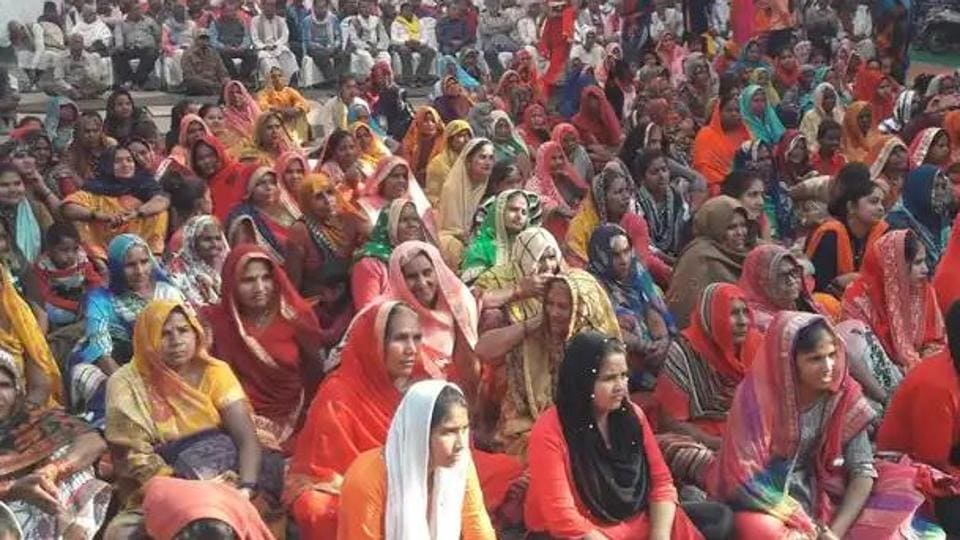
The Kathavachak, Yamini Sahu, a resident of Mahasamund district, complained to the Mahasmund police after she allegedly received more than a dozen phone calls from unknown people.
Police said that they have provided security to the ongoing ‘Bhagwat Katha’ and started investigating the case.
“I have been reciting Bhagwat Katha since 2012. A host from Mahasamund district wanted me to narrate Bhagwat Katha and I agreed to it. However, after the poster of Bhagwat Katha went viral, I started getting calls. Initially, I refused to attend the calls but later when I picked up, I was asked not to narrate Bhagwat Katha since I am a woman and also belong from ‘shudra’ community,” Sahu said, adding that the people who made the calls threatened her that they will not allow her to sit on the ‘vyas gaddi’, the seat from where anyone recites Bhagwat Katha.
‘Bhagwat Katha’ or ‘Bhagwat Purana’ is one of the 18 puranas of Hinduism which talks about Lord Vishnu and Lord Krishna. The Bhagwat Katha has around 18,000 verses and usually a Kathavachak takes 10 days for narration.
“One person also threatened to forcibly pull me down from the stage and defame me if I didn’t listen to them. Then I talked to my elders and they advised me to record a few calls. I got one call from one Narendra Shastri who claimed to be calling from Hindu Sanatan Sanskriti, another from Devendra Upadhyaya, who posed as a representative of some Hindu Parishad Brahmin Samaj. Both claimed to be resident of Uttar Pradesh,” Sahu said.
Sahu claimed that she was terrified about how things might happen since they had threatened to drag her down from the stage and therefore, she lodged a complaint on March 20.
Mahasamund police swung into action after the complaint and immediately provided security to the Bhagwat Katha which started on March 21.
“We have got a complaint from Sahu and after taking legal advice we will register a case against the accused. Meanwhile, we have given proper security to the programme,” said Vivek Shukla, superintendent of police, Mahasamund.
Local historians believe that the threat to Sahu should be seen as an aberration and the society in Chhattisgarh has traditionally been very liberal in such matters. Some said that it could be the case of a professional battle for stage-space fought behind the smokescreen of caste and gender.
“Katha Vachan’’ is an accepted and popular form of interpretation and explanation of the religious texts for the benefit of the masses which are generally not familiar with the languages of the original texts. Even the dialect of Tulsidas’s Ramcharit Manas falls in this category. Many find the dialect foreign.
“The caste or gender of the interpreter doesn’t come in the way of their acceptance or popularity. The one with better communication skills and stage presence becomes sought after and consequently an eyesore among the competitors. Neither the presence of women in this profession nor the fact of their belonging to castes other than the so-called upper-caste, has ever come in their way of being in demand. Incidentally, among the numerous women Kathavachaks popular and in great demand in Chhattisgarh, some of them were not from upper caste. Examples in Chhattisgarh are Jyoti Bala from Raipur, an exponent of Tulsidas’s text, Bhumika Sahu from Dhamtari, Sharda Rani Sahu from village Soreed, Puja Sahu from village Chirko, both from the same region,” said Parivesh Mishra, a Raipur-based historian.
Kamal Narayan Sharma, a Raipur-based researcher of religious texts, said Sahu has all rights to narrate Bhagwat Katha.
“The Hindu religion is very flexible and I believe Sahu can narrate and read any religious text. Everyone who believes in Hinduism should support her,” said Sharma.
-kW0H-U20214218012MgB-250x250%40HT-Web.jpg)


