
 E-Paper



PAU raises questions on Delhi’s microbe solution to paddy straw
Multipronged approach is the only way to manage the menace of paddy stubble burning, say profs, adding microbes need to incorporated into the soil with paddy residue

 Prefer HTon Google


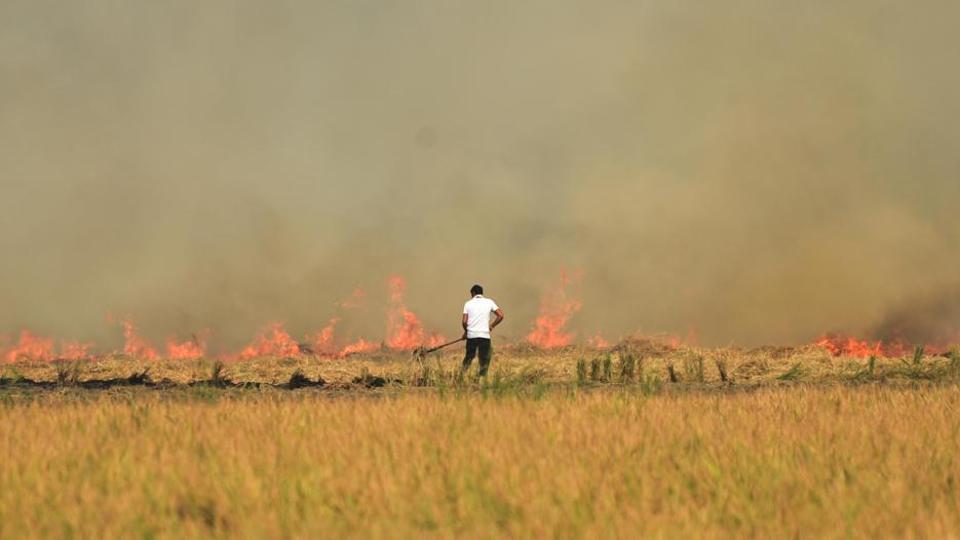
Ludhiana Days after the Aam Aadmi Party (AAP) government in Delhi announced that it had found a solution to the paddy stubble menace in the form of a bio-decomposer, Punjab Agricultural University (PAU) scientists have said that just microbes in the form of a decomposer were not the answer.
Indian Agricultural Research Institute (IARI), Pusa, had developed the decomposer.
“The microbe-based technologies, promoted and widely advertised, are being offered as stand-alone interventions. It is, however, clear that the application of microbes needs to be integrated with machine-based solutions,” said Dr Shammi Kapoor, dean, College of Basic Sciences and Humanities, PAU.
Dr Kapoor and GS Manes, additional director research, have also submitted a study to their vice-chancellor that a multipronged approach is the only way to manage the menace of paddy stubble burning. In the study titled, “Managing paddy straw with machines and Microbes” they cite examples and previous studies, with the central idea being that microbes need to incorporated into the soil with paddy residue.
They claim that over the past two years, nine different microbial preparations, including five commercial and four in-house consortia, are under evaluation at different locations (Ludhiana, Ladhowal, Sangrur, Kapurthala and Gurdaspur) that vary with respect to soil and agro-climatic conditions. With an increase in the number of specialised machines like happy seeder, super seeder (around 73,000 in 2020), the need to rely on exclusively microbe-based approach has also become less relevant, their study states.
AK Singh, director, IARI, said, “First, we have to see whether the PAU is talking about our consortium or the consortium that it has developed. Second, we have stated that after spraying the consortium, it has to be incorporated with a rotavator with some soil to remain over the paddy stubble. Then, it should be irrigated and left for 25 days. This is most sustainable option for the long-term solution.”


