
 E-Paper



60% reduction in TB cases at Ahmednagar in last 5 years
In the year 2021, TB notifications rose by over 4 lakh as the state arranged for multiple programmes to detect cases which might have gone unreported over the last two years of the pandemic


On the occasion of World Tuberculosis Day today (March 24), the ministry of health and family welfare awarded gold medals to eight districts for a whopping 60 to 80% reduction in TB cases in the last five years. Of the winning eight districts, one district is in Ahmednagar, Maharashtra, while three districts are in Jammu & Kashmir. This is the second time medals have been given away since the central government started the sub-national certification programme for TB elimination. While Akola and Beed, also in Maharashtra, have bagged bronze medals for over 20% reduction in notification of TB cases.
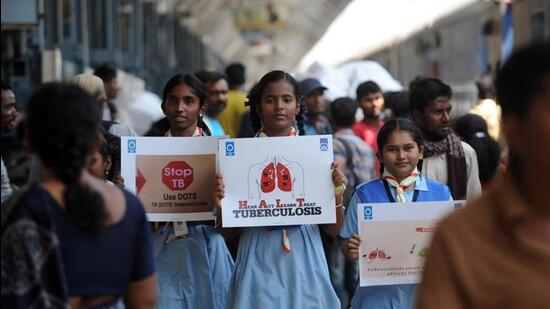
In the year 2021, TB notifications rose by over 4 lakh as the state arranged for multiple programmes to detect cases which might have gone unreported over the last two years of the pandemic. In the first year of the pandemic in 2020, the state reported 160,072 cases of TB while in 2021, this number went up to 200,623. With an increase in TB notifications last year, the number of multidrug resistant (MDR) cases went up from 8,045 in 2020 to 9,445 in 2021, while the number of extreme drug resistant (XDR) cases went down from 429 in 2020 to 254 in 2021.
The ministry of health and family welfare, government of India, rolled out the initiative of sub-national certification of progress towards a TB-free status in 2020-21 to track the progress in achieving total TB elimination by 2025. The verification of the claims submitted by state / union territories / districts was completed by the ICMR-National Institute of Research in TB (ICMR-NIRT) between February and March 2021, in collaboration with the ICMR- National Institute of Epidemiology (ICMR-NIE), Indian Association of Preventive & Social Medicine (IAPSM), and WHO India.
Field-level verification of prerequisites through review of programme records and patient interviews; and verification of drug consumption data in the public sector and drug sale data in the private sector through review of records and interactions with private practitioners and chemists was carried out for the submitted claims. These steps were supported with a district-level survey for estimating the incidence of TB and under-reporting in randomly selected villages in the districts.
State TB officer Dr R S Adkekar said, “The central government started the sub-national certification programme for TB in 2020-21 and during the first year of the Covid-19 pandemic when the entire health machinery was involved in fighting the infection, the reporting for TB was drastically hit just like other infections. However in the following year in 2021, the number of notifications went up by two lakh but we still have scope to do better. Ahmednagar has seen a 60% drop in TB notifications in 2021 compared to 2015 and so, it bagged the gold medal. While Akola and Beed bagged the bronze medal. In 2021, Maharashtra was the most affected state in the country and in April and May, the number of active Covid-19 cases was at an all-time high. In October, November and December, we began tracing TB cases when the second wave of Covid-19 had receded. We began village-wise monitoring, health and wellness centre-wise monitoring with the help of ‘Asha’ workers. All the symptomatic cases were screened and also their close contacts were screened. Especially those with diabetes, HIV/AIDS and those consuming tobacco were screened.”


