
 E-Paper



Air quality improves slightly in Pune, experts warn of dip ahead of Diwali
The city is expected to see a rise in vehicular emissions, dust, and smoke from firecrackers — all of which could push AQI levels back into the ‘moderate’ or even ‘poor’ category


After a period of consistently ‘moderate’ air quality, as measured by pollution monitoring stations across Pune, the city witnessed a brief spell of cleaner air on October 16 with the air quality index (AQI) dropping below 100, placing it in the ‘satisfactory’ category for the first time in several days. However, this relief is likely to be short-lived with pollution levels expected to rise again in the days leading up to Diwali due to dry weather and local emissions, as per experts and meteorological forecasts.
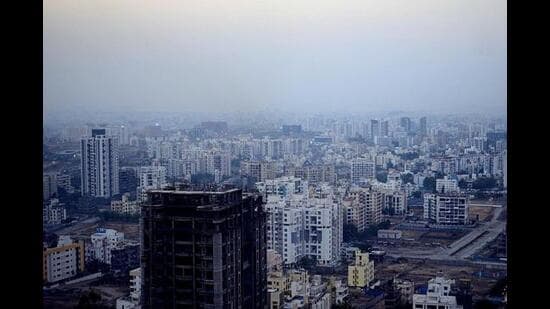
The decline in pollution levels has been largely due to light rainfall on October 15 that helped wash away particulate matter from the atmosphere. According to the Air Quality Early Warning and Decision Support System — a joint initiative by the Centre for Development of Advanced Computing (C-DAC) and Indian Institute of Tropical Meteorology (IITM) — the city recorded an AQI of 137 at 5.30 pm on October 13, with levels fluctuating between 170 and 200 over the next two days. These figures indicated a ‘moderate’ level of air pollution which persisted until the brief spell of rain. Following the rainfall, the air quality improved significantly with the AQI dropping to 86 at 8.30 am on October 16; further dipping to 75 by 11.30 am; and to 69 by 5.30 pm; marking one of the cleanest days in the city this month.
Among various monitoring stations across Pune, IITM’s Katraj station recorded the lowest AQI of 38, reflecting ‘good’ air quality. By contrast, the Maharashtra Pollution Control Board’s (MPCB’s) Wakad station recorded the highest AQI of 99 around noon on October 16. These readings collectively brought Pune’s overall air quality to the lower end of the ‘satisfactory’ range, providing temporary respite.
Officials however cautioned that this improvement may not last long. Forecasts indicate that the prevailing dry weather conditions, coupled with reduced rainfall activity, are likely to cause an increase in pollution levels in the coming days. As Diwali approaches, the city is expected to see a rise in vehicular emissions, dust, and smoke from firecrackers — all of which could push AQI levels back into the ‘moderate’ or even ‘poor’ category. The IITM’s forecasting system suggests that areas such as Bhosari, Nigdi, Shivajinagar, Katraj, Kothrud, and Pashan may see higher concentrations of particulate matter due to local emission sources and stagnant atmospheric conditions.
Meanwhile, the India Meteorological Department (IMD) in its forecast issued on October 16 said that Pune is likely to experience mainly clear skies which may become partially cloudy towards the afternoon or evening. A senior IMD official explained that moisture is still present in the atmosphere, which could occasionally lead to isolated showers or a drizzle. For most of the time however, the skies will remain clear, allowing for limited dispersion of pollutants.
Furthermore, recent mornings have seen the formation of haze, particularly during the early hours. Many areas in the city, including peripheral zones, have reported reduced visibility due to this hazy layer. IMD meteorologist Anupam Sanap said, “We are currently in a transitional phase between the monsoon and winter season. The moisture content in the atmosphere remains relatively high and as temperatures drop significantly during early morning hours, this combination encourages the formation of haze in and around the city.”


