
 E-Paper



Anticipating third wave, Maharashtra govt ensuring enough medicines, beds available
The Pune Food and Drugs Administration (FDA) officials said they have been asked to monitor medicine stock available in Pune market right now, which seems to be surplus as demand is low


With the NITI Aayog’s latest report predicting a third Covid-19 wave in September, with a surge in cases and an eventual load on health infrastructure, the state government has started preparing for the anticipated surge by instructing district administrations to prepare for 1.5 times the number of active cases at the peak of the second wave.
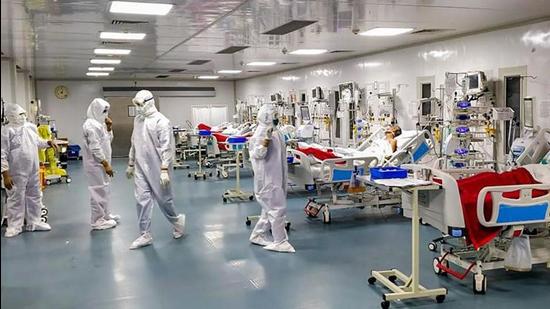
The Pune Food and Drugs Administration (FDA) officials said they have been asked to monitor medicine stock available in Pune market right now, which seems to be surplus as demand is low.
According to Maharashtra health minister Rajesh Tope, the state government has started preparing for increased oxygen supply, and medicines for children. “We are fully prepared to tackle next wave based on the directions given by centre,” said Tope in Jalna.
Dr Pradip Awate, state surveillance officer said, “The NITI Aayog report might have come now, but we have been preparing for the anticipated third wave right after the second wave started to ebb. There are regular financial approvals being made by the state. We have asked every district to prepare for the third wave with respect to the number of patients that could be reported. We are preparing for about 1.5 times the number of patients that the state saw during the peak of the second wave. For example if we reported a 100 active cases on a particular day during the second wave peak, then this time we have asked the districts to prepare for150 active cases in a day. Of this we anticipate that 65% would require home isolation and remaining 35% would require hospitalisation divided into ICU care, ventilators and also oxygenation. So we have asked district’s to ramp up their infrastructure as per this requirement.”
The state saw its peak of the second wave on April 22, with 699,858 active cases. The anticipation would be that the state would see 1,049,787 at the peak of a third wave, if it ever comes, with a much higher severity.
He further added, “Also this time we have reserved some beds for paediatric Covid-19 cases since the anticipation is that the third wave would affect children the most. So we have asked districts to reserve 15% beds in the Covid care centre for paediatric cases, which is anyone below 18 years of age; 10% for those with moderate symptoms and 5% for severe paediatric Covid-19 cases.”
S V Pratapwar, assistant commissioner of FDA said, “As of now there are no restrictions on the purchase of Covid-19 or mucormycosis drugs and so it is freely available with private chemists and stockists. If we talk about Pune district we have about 40,000 remdesivir vials and the demand has fallen down to single digits number in a week. We have about 25,000 tocilizumab vials and we have demand of about 10-15 vials in a month. For mucormycosis we have about 2,000 amphotericin vials available and the demand has gone down to 8/10 daily. All these drugs have been de-regulated now and remdesivir was also removed as a prescribed treatment drug for Covid-19, however, it is still prescribed by doctors’ as per their discretion.”
Pune district saw its highest active case load on April 19 when the number reached 125,096 active cases. As per Pune district’s information, in the second wave alone, from April 12, to August 18, 2021, Pune district saw a supply of 201,113 vials of remdesivir, 258 vials of tocilizumab (400 mg) 2,084 vials of tocilizumab (80 mg) and a total of 57,790 vials of amphotericin B injections.


