
 E-Paper



At Sarasbaug public loos; women pay ₹5, men go free
The pricing scheme at public toilets inside Peshwe Energy Park, Sarasbaug reeks of gender bias, wherein women have to pay for services that are free for men


The pricing scheme at public toilets inside Peshwe Energy Park, Sarasbaug reeks of gender bias, wherein women have to pay for services that are free for men.
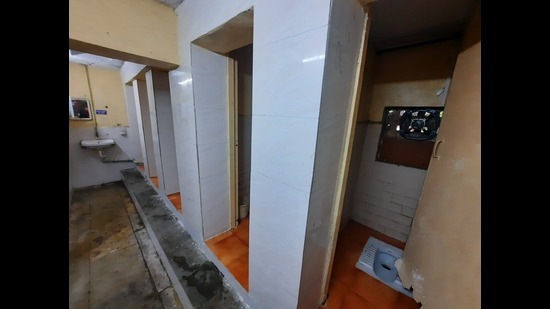
Those using the flush toilet facility have to pay ₹5, whereas urinals can be used free of charged.
Manisha Chandurkar who was not allowed to use the restroom without a fee said, “Public restrooms should not be charging women for services.Men urinate by the roadside and get away with it, however, women cannot use open washroom facilities. Charging a fee for a basic necessity like toilets in unacceptable.”
According to the manager of the restrooms, the women are charged as the restrooms are regularly washed and cleaned twice a day, once at 10 am and then at 5 pm. As men use urinals, it does not need extensive cleaning.
However, during a spot inspection by HT, it was found that the men’s restrooms were dirty, covered in fungus, and unfit for use. The women’s commodes looked relatively clean but were clouded with a heavy stench of urine and unwashed floors. The floors were laid with mud stains and sticky residue from frequent usage. Women continue to use these services due to a lack of public toilet facilities in close proximity.
Vinayak Bhorde, PMC health supervisor said, “The money charged is for sanitation, however the money goes to the Peshwe Energy Park management. The money coming from public toilets situated outside the park, goes to the corporation.”
Another woman said, “They should make public toilets free. It is not like the public toilet is spectacularly clean despite taking money from us. It is kept as much dirty if we did not have to pay either.”
About 20 to 25 women use the public toilets everyday, but some females refused the essential service because they either did not have money or did not want to pay. At the same time, HT observed that there was no receipt system in place to track the money flow.


