
 E-Paper



Can government ads and financial help revive Maharashtra’s dying Touring Talkies?
Once vibrant touring talkies in Maharashtra face decline due to multiplexes and OTT platforms. A government initiative aims to revive this cultural tradition.

 Prefer HTon Google


Nandkumar Kulkarni, 65, a resident of Palashi village in Satara district, once owned three touring talkies — Shree Ram, Vijay, and Vaibhav. For over 25 years, these mobile cinemas were a vital part of village fairs, or jatras across Maharashtra.
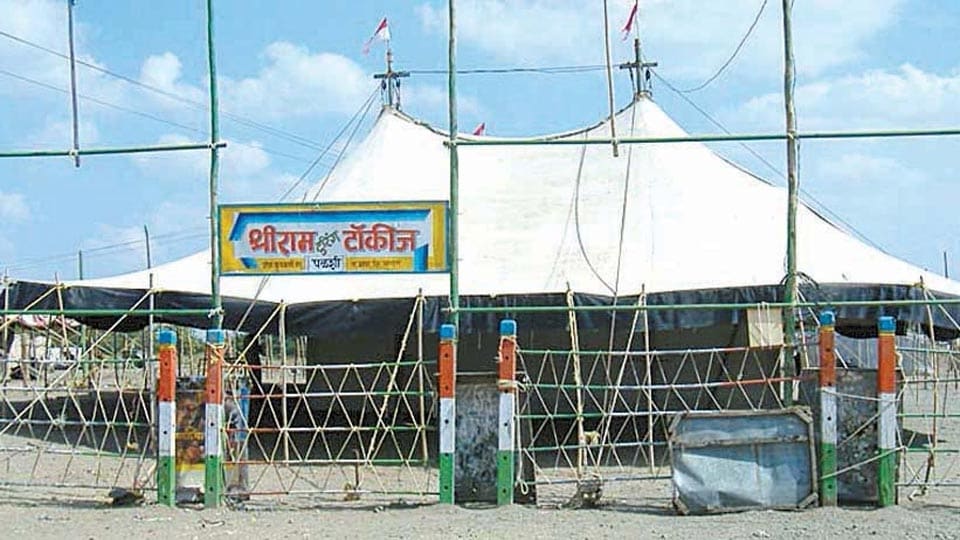
But today, Kulkarni has left the business as he was forced to abandon the family trade due to dwindling audiences and rising operational costs.
“With multiplexes and OTT platforms, people no longer come to touring talkies. It’s become impossible to even recover running costs,” he lamented. Kulkarni now runs a small dairy farm, having purchased 15 cows to sustain his family.
Kulkarni’s story is not unique. Touring talkies, once the centrepiece of rural entertainment during village festivals, have become a relic of the past. Where these traveling cinemas once attracted large crowds, now hardly any jatras even set up tents for screenings. Kulkarni recalls the last time he set up his touring tent—during the 2013-14 jatra season.
“Since 2000, the number of touring talkies has dropped sharply. Today, only 45-50 owners remain in Maharashtra, struggling to survive,” he said.
“It’s difficult to run a business in loss,” Kulkarni adds. “During the pandemic, almost every industry received government support, but we got nothing. Our tradition is dying.”
Neeraj Kamble, 55, from Deulgaon Raja in Buldhana district, faces a similar fate. His Anand Touring Talkies, once a thriving business in the Vidarbha region, is barely holding on. Kamble, an electrical engineer by profession, joined his father’s business in 1989, turning down a private-sector job to continue the family tradition. “I stayed because it was the family business, but now, it’s nearly impossible to make ends meet. We’ve had to start farming on a revenue-sharing model to survive,” Kamble explains.
In Chikhali, Buldhana district, Mohammad Navrangi, who runs Kohinoor Touring Talkies, has taken up a side job as a labour contractor. “Touring talkies once showcased the legendary Dadasaheb Phalke’s Raja Harishchandra, India’s first motion picture. Now, we’re losing this 100-year-old tradition,” Navrangi laments.
However, recent developments may offer a glimmer of hope. In an effort to revive Maharashtra’s touring talkies, the state’s Cultural Affairs Minister, Sudhir Mungantiwar, has announced a government initiative aimed at rejuvenating these once-thriving cinemas.
Under the plan, touring talkies will be encouraged to showcase films based on historical events and cultural narratives, while also benefiting from government-sponsored advertisements.
As part of the initiative, a lump sum grant of ₹1 lakh has been approved for each touring talkies operator, offering immediate financial relief.
“We have held a meeting with touring talkies representatives, and we’ve sanctioned a ₹1 lakh grant to help them restart their operations. We are also working on how to include government scheme advertisements in their programming to create a new revenue model,” Mungantiwar said.
At its peak in the 1980s, more than 1,000 touring talkies crisscrossed Maharashtra, bringing films to remote villages. Today, only 45-50 remain, with even fewer actively operating. According to the Maharashtra Association of Touring Talkies, many owners lack the capital to restart their operations in the upcoming jatra season, which traditionally begins with Dussehra and runs until May.
“The government’s initiative is a significant step toward reviving the golden era of touring talkies,” said Anup Jagdale, secretary of the Touring Talkies Association.
“By integrating government schemes with our programming, we can ensure sustainability and spark renewed interest in this cherished form of entertainment,” he added.
Jagdale, a second-generation touring talkies owner, estimates that out of the 45-50 remaining operators, only 25 are still in business. “Before Covid, we were just about managing. But the pandemic was a massive shock. Many sold off their entire setups to avoid further losses,” he explained.
The association hopes that the government’s grant and advertising support will allow touring talkies to return to their former glory. Featuring historical and culturally significant films, alongside state-sponsored ads, could attract audiences who are nostalgic for this form of entertainment while also educating the public on Maharashtra’s rich heritage.
However, challenges remain. As Kamble and Kulkarni point out, simply reviving the touring talkies business will not solve the underlying problems of profitability in a rapidly changing entertainment landscape. Competing with modern cinemas and on-demand platforms like Netflix and Amazon Prime presents an ongoing challenge.
Despite this, many operators are cautiously optimistic. “Our business is deeply rooted in tradition,” said Kamble. “If we can adapt and find new revenue sources, like the government’s support for ads, there’s still hope for the future of touring talkies.”
As Maharashtra prepares for the upcoming jatra season, the question remains: will these initiatives be enough to revive this dying industry, or is it too late to save a century-old tradition?


