
 E-Paper



College of agriculture in Pune transfers 264 embryos to conserve indigenous cattle breeds
Over the past one year, 264 embryos were transferred, and 35 calves were born, officials said, adding that pregnancy diagnoses were carried out for 242 cows


The research and training programme at the College of Agriculture in Pune has taken a remarkable step in the efforts to prioritise conservation of Indigenous cattle breeds.
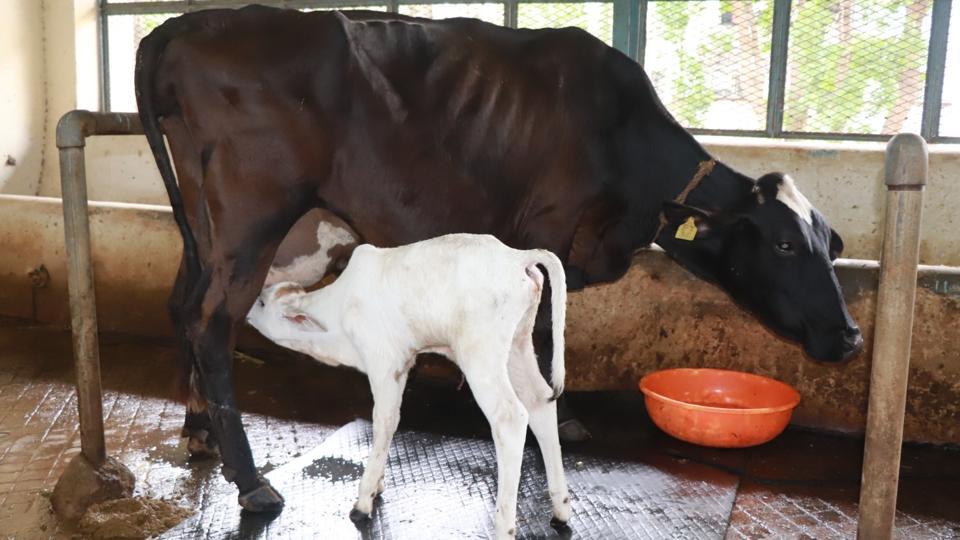
Over the past one year, 264 embryos were transferred, and 35 calves were born, officials said, adding that pregnancy diagnoses were carried out for 242 cows.
Somnath Mane, chief scientist, Indigenous Cattle Research-cum-Training Centre, College of Agriculture, said, “The aim of the programme, underway only at our institute, is to conserve the indigenous cattle breeds.”
During September 2022, the college for the first time developed an indigenous breed of cow “Sahiwal” through the ovum pick-up and in-vitro fertilisation (OPU IVF) technique at its premises. The birth of a “Sahiwal” breed calf, weighing 27 kg, was the success of research spanning five years.
Officials said public awareness has helped the Sahiwal Club of Maharashtra attract 7,000 farmer members from 18 over the years.
“We have focussed on indigenous breeds namely Gir, Sahiwal, Rathi, Tharparkar and Red Sindhi for their potential for higher quantity of milk production. By using IVF, the centre is increasing the female population of these breeds,” he said.
The college is assisting farmers with calves from indigenous cows born at cattle sheds.
“We are not only breeding cattle at the college campus, but even at farmers’ fields. The calves born are healthy and numbers will soon multiply,” said Mane.
Researchers cite that 50 indigenous cows can survive in different environment conditions in India. Cows account for 10 per cent of the total indigenous livestock. Among them, Sahiwal, Gir, Red Sindhi, Tharparkar and Rathi are famous for milk production. The production of crossbred is more than indigenous cows. The crossbreed cows face difficulties in adapting to the local environment unlike the indigenous species.
The centre, through this project, has provided technical guidance to farmers of Satara, Pune, Sangli and Solapur areas since last five years. The project involves providing guidance for breeding, feeding and health management of indigenous cows.


