
 E-Paper



Congress loses ground in Pune after sidelining former MP
During his tenure, Suresh Kalmadi built a firm hold over the city Congress and actively promoted new leadership, including women leaders. Under his stewardship, leaders such as Kamal Vyware, Vandana Chavan, Dipti Chaudhary, Rajni Trivuban and Vatsala Andekar served as mayors of Pune.

 Prefer HTon Google


Pune: The Congress’ steady decline in Pune over a decade and half is closely linked to the sidelining of former MP Suresh Kalmadi, with party leaders acknowledging that the absence of a single strong, unifying figure after him weakened the organisation at the city level.
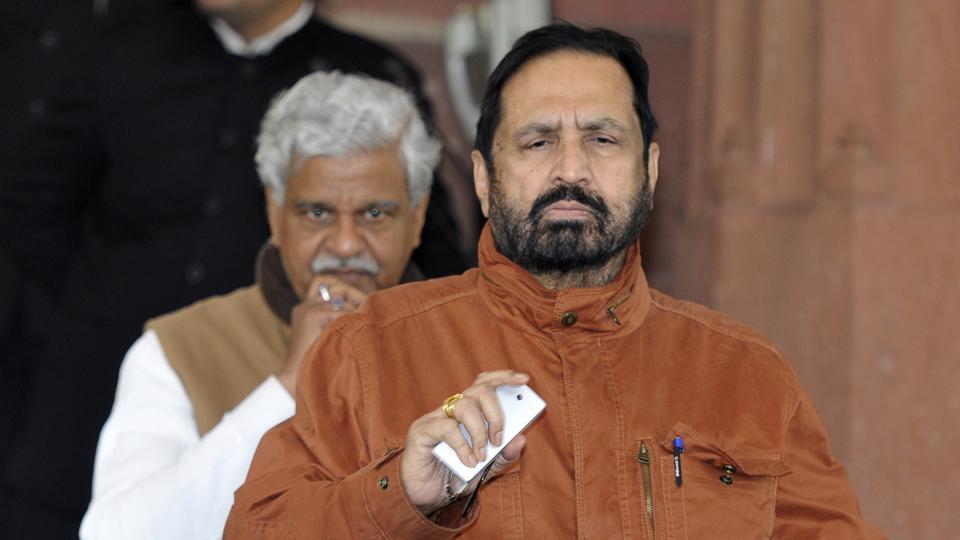
The Congress dominated Pune’s civic and political space until around 2000, when Kalmadi exercised near-complete control over the city unit. Kalmadi exiting from active politics due to controversies and Nationalist Congress Party (NCP) leader Ajit Pawar trying to challenge his authority by 2007 led to the party gradually losing its organisational strength, with no leader emerging to fill the vacuum.
During his tenure, Kalmadi built a firm hold over the city Congress and actively promoted new leadership, including women leaders. Under his stewardship, leaders such as Kamal Vyware, Vandana Chavan, Dipti Chaudhary, Rajni Trivuban and Vatsala Andekar served as mayors of Pune.
Party workers recall that the Congress Bhavan would draw large crowds whenever Kalmadi visited, reflecting his organisational grip and mass following. Even the NCP, which later emerged as a dominant force in Pune, initially struggled to dislodge the Congress under Kalmadi’s leadership.
To counter Kalmadi’s influence and keep the Congress out of power in Pune, Ajit Pawar later engineered the so-called “Pune pattern”, bringing together NCP, Bharatiya Janata Party and Shiv Sena to form a ruling alliance in the civic body.
Congress leader and former city unit president Abhay Chajjed said the party failed to nurture a successor after Kalmadi. “It is true that after Kalmadi there was no single or umbrella leadership for the city. Even the state unit did not empower any one leader. Collective leadership did not work effectively in Pune,” he said.
Interestingly, even political rivals acknowledge Kalmadi’s stature. Ajit has publicly said that Kalmadi worked across sectors and took keen interest in sports, culture and social work, and possessed strong leadership qualities.
City Congress president Arvind Shinde admitted that the party’s organisational strength declined sharply after Kalmadi’s fall. “It is a fact that no strong leadership emerged from the city unit after him. The number of elected representatives has steadily reduced,” he said.
Several Congress leaders, speaking on condition of anonymity, pointed to Kalmadi’s state and national-level connections and his ability to support party workers as key factors behind his influence. “He had access, resources and the ability to stand by workers when needed. After him, no leader with similar stature emerged,” one leader said.
Another senior leader blamed the state leadership for neglecting Pune. “After Kalmadi, the city unit was completely ignored. Despite having a strong base and cadre, Pune was never taken seriously. State leaders rarely campaigned here. The result is visible today — Pune has no Congress MLA, not even from the rural pockets, and the party’s strength in the Pune Municipal Corporation has dropped to single digits,” the leader said.
An attempt to rebuild leadership through Vishwajeet Kadam also failed after he was shifted back to his home district of Sangli, leaving the Congress in Pune without a clear face or direction.


