
 E-Paper



Curtain Call: Learning from children the fine art of acting
The one thing I remembered distinctly was how unfiltered children's reactions were! If they loved something they would be all praises but if they didn’t like it, then god help you!


I jokingly say that I had five “first films”. I had been trying to get one made for about a decade and that “one” film kept changing. One even came very close to entering production before the financers backed out at the last moment. And finally, the process of the film that became my first directorial — “Dhappa” — was so fast and unexpected that at every turn I was expecting it to stop. But thankfully it didn’t!
When Girish Kulkarni narrated the story to me, he took me on a ride of the world he had created. He is a master at narration and creating many characters, each one complete with their personal motivation and traits. I had fun listening to him! When we wrote that story down on paper and listed the characters I realised that there were eight characters in the lead, and seven of them were kids!
I had never worked with kids before, but I had performed in a play for children. The one thing I remembered distinctly was how unfiltered their reactions were! If they loved something they would be all praises but if they didn’t like it, then god help you! A friend of mine had conducted workshops for children while prepping them for a film and I decided to take the same route. Since it was also my first film, I knew I was going to be overwhelmed with unknown pressures and I wanted to be mentally prepared to face it all. And not knowing how to extract performances from children was never an option.
We conducted an open round of audition and received an excellent response from nearly five hundred children. Out of those we shortlisted around a hundred. We conducted another round of audition for the shortlisted ones and out of them I personally selected thirty such children who were promising and were also close to our characters.
While the script was being written on the one hand, we decided to conduct a weeklong workshop of all thirty children. Even they and their parents seemed interested in it. “Dhappa” dealt with a socially relevant topic and I was looking out for children who were sensitive, who could empathise and, of course, who could act at the drop of a hat. Without giving the idea of the film away, I asked them to improvise scenes which were totally similar to the ones in the film. Slowly but surely they started becoming friends even though they were of different ages. Even I started seeing my characters in them. The most interesting situation I faced was that there was a girl named Deepali Borkar who had such an amazing presence and was quite the performer, but unfortunately she wasn’t suitable for any of the roles. I talked to her and her parents if she would still like to be a part of the film, we could develop her role along the way. They were gracious enough to accept and she was cast as the younger sister of one of the principal characters who follows him everywhere! She doesn’t have too many lines, but her presence brings energy and warmth to every frame she is in.
The cinematographer – Swapnil Sonawane - decided to keep the camera movement fluid and go handheld, without restricting their movement and limiting them by giving them positions. We felt that they might get caught up in the technical aspects and wanted to keep their performance as natural as possible. So, I used to choreograph a scene and never did any of us ever show the children “how” to act. We tried to help them to understand the scene and be present in the moment – whether it was a fun scene or an emotional one. And they became masters in that!
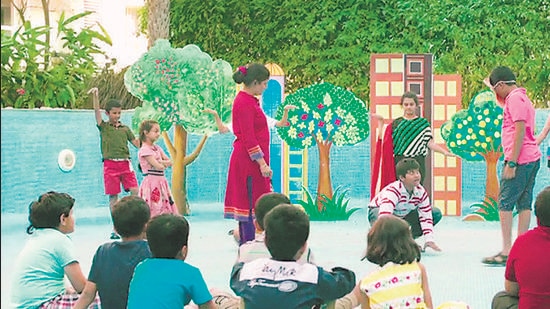
I particularly remember one incident. There was a key scene which I had never narrated to them in detail. We had even skipped that scene from their script copies. So, the scene was that while the children are rehearsing for a play, some goons arrive, break their set and threaten them with dire consequences if they still went ahead with it. Feigning fear is one of the most difficult things and so I had decided to directly shoot the scene without informing the children about what was going to happen, so that we could get their natural reactions. We rehearsed with the camera and sound and the adult actors involved in it, but without the children. Then we called them and started rehearsing the play. Or so they thought. They were clueless when the actors playing the goons arrived and when the mayhem started, their reactions were amazing, which are now part of the film!
For a few years I used to pat myself on the back for this scene and how I had managed to evoke those reactions. But one fine day I realised, that in that minute-long scene, which is a single take without a cut, not a single child has looked in the camera directly or has broken character! Even when they didn’t know that they were a part of the scene, they played their characters perfectly. And that got me wondering, perhaps it is time to learn something from them!


