
 E-Paper



Darshan turns 50: How a restaurant helped shape young lives
Founded in 1976, Darshan Restaurant started out as a humble juice centre. It followed a simple but unusual approach: clean food, fixed prices and respectful treatment of staff. College students were hired on a part-time basis and purposely referred to as ‘bandhus’.

 Prefer HTon Google


PUNE: As Darshan Restaurant on Prabhat Road completes 50 years this month, the milestone will be marked by the return of men who once worked there in the mid-1970s as ‘bandhus’, earning a meagre ₹100 per month for three hours of daily work. Five decades later, many of them are engineers, administrators and professionals who say that the experience has left an indelible mark on their values and lives.
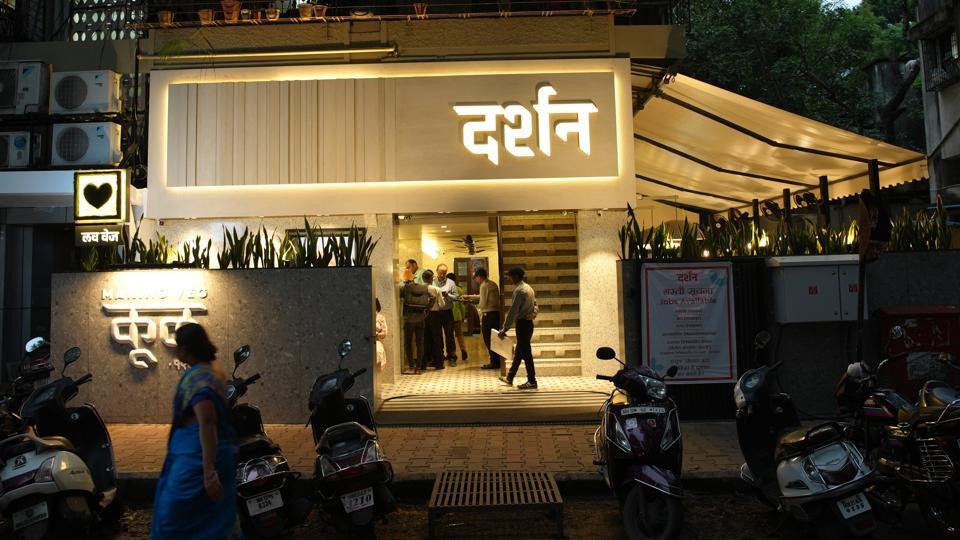
Founded in 1976, Darshan Restaurant started out as a humble juice centre. At a time when Pune’s eating-out culture was limited, the restaurant followed a simple but unusual approach: clean food, fixed prices and respectful treatment of staff. College students were hired on a part-time basis and purposely referred to as ‘bandhus’ or brothers, signalling a certain equality rather than the usual hierarchy. Customers too were encouraged to address them in the same manner.
For the students, their job at Darshan was often their very first experience of the working world. The ₹100 they earned every month helped pay for their books, bus passes and hostel expenses but former bandhus who know better claim that the real value lay elsewhere. They learned priceless everyday lessons in punctuality, dealing with customers, handling cash, and taking responsibility for mistakes.
Anand Kelkar, who later worked as an engineer with TELCO, recalls joining as a waiter in 1976. “We learned resilience and accountability very early,” he says. The experience stayed with him long after he left the restaurant. Vishnu Joshi, now a finance and administration professional, remembers being entrusted the keys of the establishment. When he received a job offer that required immediate joining, the restaurant management encouraged him to take it without any hesitation. “That trust mattered more than the salary,” he recalls.
Several former bandhus recount how fairness was favoured over profit. Pramod Kulkarni, who later worked with the SSC and HSC Board, remembers a regular customer who was served hot milk at the same price for years, despite rising costs. “Relationships were valued over margins,” he says.
For others, the restaurant served as an informal training ground. Deepak More, now in the catering business, calls it a ‘management college’ where students learned everything from cleaning floors to managing counters. With no formal hotel training, they taught one another etiquette, teamwork and problem-solving; he recalls.
Over the years, many bandhus moved on while others stayed for decades, rising from entry-level roles to supervisory and managerial positions. Simultaneously, the restaurant cultivated a steady workforce drawn from the same pool of villages and families, creating an employment network that extended well beyond Pune.
As the restaurant turns 50, what stands out is not so much its longevity as much as the quiet impact of its (still) unique ‘earn-and-learn model’ that gave young students dignity of labour, not to mention confidence in themselves. For the restaurant’s many bandhus who once earned ₹100 per month, the lessons learned have compounded and borne fruit over a lifetime, shaping careers and lives in ways far beyond the dining hall.


