
 E-Paper



Don’t use students for business, CM warns coaching institutes
Chief minister Devendra Fadnavis said that private coaching institutes should not treat students as a source of commercial gain, but focus on mentoring aspirants

 Prefer HTon Google


Pune: Chief minister Devendra Fadnavis on Friday said that private coaching institutes should not treat students as a source of commercial gain, but focus on mentoring aspirants rather than exploiting them in the name of competitive exam preparation.
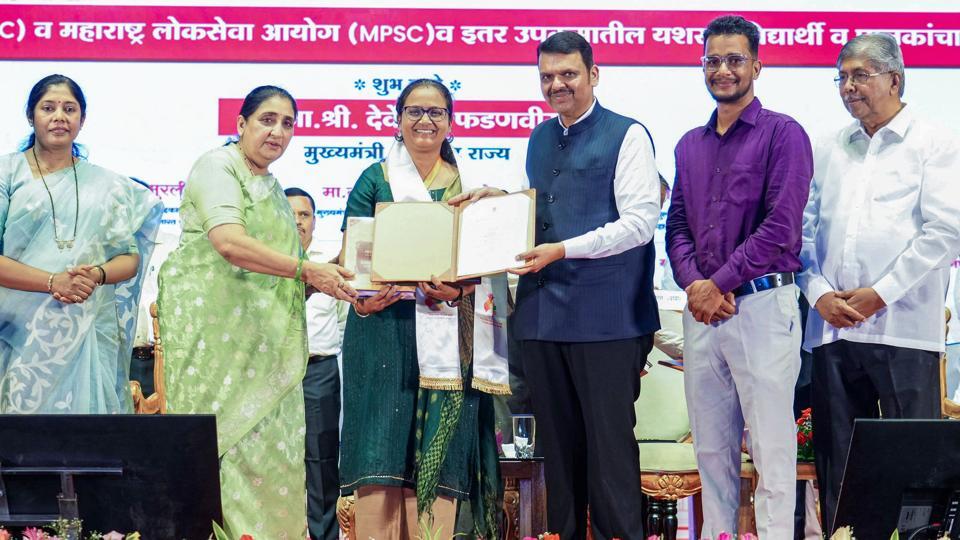
During his visit to Pune, Fadnavis inspected the newly inaugurated headquarters of the Chhatrapati Shahu Maharaj Research, Training and Human Development Institute (SARTHI) in Shivajinagar before attending a felicitation ceremony at Ganesh Kala Krida Rangmanch in Swargate. Successful candidates of the UPSC, MPSC, banking and other competitive examinations, along with their parents, were honoured at the event.
Addressing the gathering, the chief minister said Pune has emerged as the country’s leading hub for competitive examination coaching, attracting thousands of aspirants from across India. He said coaching institutes should remain committed to training students instead of pursuing their own interests.
“I appeal to coaching institutes not to use students for their own interests. Their responsibility is to train students, not to mislead them. This is not a political issue; it concerns the future of our youth,” Fadnavis said.
Referring to the ongoing debate over proposed online competitive examinations, he assured students that no decision would be imposed without consultations.
“We will hold extensive consultations with students before implementing any changes. Every reform is intended to benefit candidates by ensuring greater transparency, timely recruitment and fairness. Decisions taken after taking students into confidence are always better than unilateral decisions,” he said.
Deputy chief minister Sunetra Pawar, higher and technical education minister Chandrakant Patil, MP Medha Kulkarni, Pune mayor Manjusha Nagpure, MLAs and senior government officials were present at the function.
Congratulating the successful candidates, Fadnavis said the achievements of students supported by SARTHI reflected the institution’s growing contribution to the educational empowerment of the Maratha community.
“It is a matter of great satisfaction that through SARTHI’s various initiatives, hundreds of talented students from the Maratha community have successfully cleared competitive examinations and excelled in different fields. While nearly 800 to 1,000 deserving students could not all be felicitated on stage today, this recognition belongs to every one of them. I congratulate all these successful students and appreciate the dedicated efforts of the SARTHI governing body, officers and staff,” he said.
According to the CM, 140 candidates supported by SARTHI have cleared the UPSC, 1,124 have qualified in the MPSC, more than 500 have been selected through banking examinations, over 13,000 youth have received skill training leading to employment, and more than two lakh people have benefited from its various training programmes.
Fadnavis announced the expansion of SARTHI’s infrastructure across Maharashtra.
“We are strengthening SARTHI by establishing regional headquarters and hostels in Nashik, Chhatrapati Sambhajinagar, Amravati, Nagpur, Latur and Kolhapur. These projects are expected to be completed by next year. We have also extended several educational and welfare benefits that were earlier available to OBC communities to eligible members of the Maratha community through a government resolution,” he said.
Fadnavis said reservation alone could not address the educational and economic challenges faced by disadvantaged sections of the Maratha community.
“The real issue is that many economically and educationally disadvantaged youth, particularly from rural areas, lack access to quality education, skill development and employment opportunities. Unless these gaps are addressed, the benefits of reservation will largely reach those who are already relatively better placed, leaving poorer students behind,” he said.
The chief minister highlighted measures to support students migrating to cities for higher education.
“We recognised that many students discontinue their education because they cannot afford accommodation in cities. Therefore, we launched hostel initiatives and later introduced the Bhausaheb Panjabrao Deshmukh Living Allowance Scheme, under which eligible students receive financial assistance of up to ₹60,000 annually towards accommodation, food and books,” he said.


