
 E-Paper



Drain water in PMC pipelines: 175 spots across city face contamination risk
Pune Municipal Corporation found 175 sites where sewage leaks into drinking water, raising health concerns. Urgent repairs are planned.


PUNE: The Pune Municipal Corporation (PMC) has identified 175 locations across the city where sewage water is leaking into the drinking water supply system, raising serious concerns over contamination and public health risks.
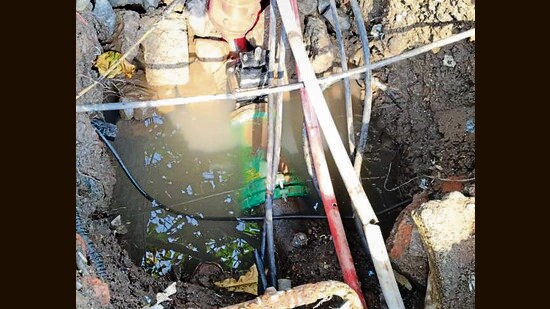
The findings emerged from a recent inspection drive by the PMC’s Water Supply Department following a spate of complaints about foul-smelling, yellowish water. Based on residents’ reports received over the past few months, the department conducted a month-long survey.
The report was submitted to the Drainage Department on Thursday.
The inspection revealed a disturbing pattern: in many areas, drinking water pipelines and sewage chambers are either laid too close or, in some cases, are intersecting underground. This proximity has resulted in leaks from damaged sewer lines contaminating potable water.
“We have to let the water run for 20 to 30 minutes before it looks clean,” said Sunita Jadhav, a resident of Yerawada. “It smells bad and looks yellow. We don’t even feel safe brushing our teeth with it.”
In several cases, only specific lanes or homes are affected. “Three houses in our lane are getting smelly water. The water department told us that the pipeline is leaking and mixing with drain water. They’ve promised to replace the pipe soon,” a Kondhwa resident said.
Residents in Yerwada, Kondhwa, Shivajinagar, and Dhankawadi reported that the issue has worsened in recent months.
“My children have been falling sick repeatedly. We thought it was the flu, but now we suspect the dirty water,” said Kamal Patil from Ambegaon Pathar.
Civic officials believe poor planning during earlier drainage works is the key reason. In many congested areas, water and sewer lines run parallel in narrow lanes, often with illegal or poorly executed water connections.
Prasanna Joshi, superintendent engineer, PMC Water Supply Department, said, “We received multiple complaints. Our teams visited the sites with residents and found several illegal water connections tapping directly into main lines. These were not laid properly, allowing sewage water to leak in.”
He added that many of the affected areas are slums or densely populated lanes, where smaller, older pipelines still exist. “While the main pipelines have been replaced under the 24x7 water supply scheme, these tertiary lines remain vulnerable,” said Joshi.
Following the report, PMC has asked the Drainage Department to act immediately. Department head Santosh Tandale said emergency funds will be used to separate drinking water and sewage lines, wherever needed.
“We’ve received the list of affected areas and will begin repair work without delay. Ensuring safe water is our top priority,” Tandale said.
In the meantime, many residents have taken to either drinking bottled water or boiling the tap water before using it.
“We pay taxes but still don’t get clean water. This isn’t just an inconvenience, it’s a health hazard,” said Rani Gaikwad, a homemaker from Dhayari.


