
 E-Paper



Education can be made free, but living costs are extremely high today: SPPU Pro-VC
Kalkar said that despite policy support, the dropout rate among university students continues to rise as living costs become unaffordable for many

 Prefer HTon Google


“Savitribai Phule Pune University (SPPU) may be offering free education to support economically weaker students, but many are still being forced to discontinue their studies due to the rising cost of living in Pune,” said pro-vice chancellor (VC) Parag Kalkar while addressing a gathering at the Pune Journalists’ Club on Sunday.
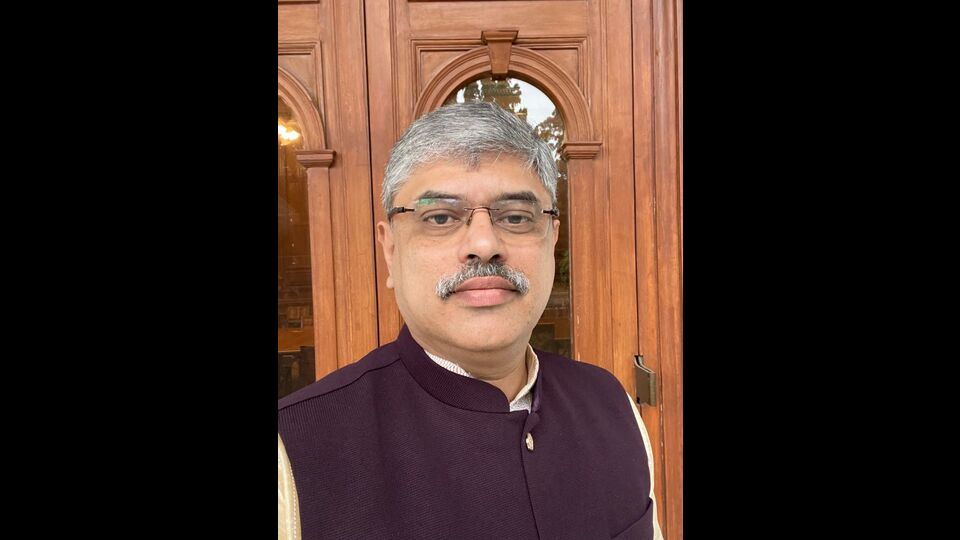
Kalkar said that despite policy support, the dropout rate among university students continues to rise as living costs become unaffordable for many. “Education can be made free, but living costs are extremely high today. Students spend anywhere between ₹60,000 and ₹1.5 lakh a year on food, accommodation and transport. Many deserving students are compelled to quit because of this financial burden,” he said, urging an expansion of hostel facilities and more social initiatives to support outstation students.
Highlighting the need for educational reforms, Kalkar said, “Today’s syllabus is not fully relevant to tomorrow’s world. We upgrade our mobile phones every few months but forget to upgrade ourselves. Algorithms are running our lives today.”
He noted that while India’s average age is just 28 — a ‘youth dividend’ — issues such as rising anxiety and shrinking attention spans post Covid-19, and over-dependence on technology are hampering learning. “Algorithms are working 24 hours a day, more than teachers. If we continue to surrender our emotional control to machines, the long-term consequences will be dangerous,” he cautioned.
The pro-VC criticised the education system’s overemphasis on exams and narrow career preferences. “Every profession, from doctor to musician, has equal value, yet we view education in binary terms. Mechanical and electrical engineering seats are lying vacant while everyone runs after information technology (IT). Many students graduate with gold medals but fail to find jobs because they lack the skills the market demands,” he said.
Predicting a major technological transformation by 2030, Kalkar said that students must prepare for a rapidly changing job market. “ATMs are shutting down, banks will close physical branches, programmable currencies are coming, and driverless cars will replace thousands of drivers. Are we mentally ready for this transition?” he asked.
Emphasising creativity, values, and sincerity as the key to employability, he said, “Marks and degrees alone won’t decide your success. What matters is what you deliver to the company — your creativity and how well you adapt to their culture will determine your package.”
He also urged universities to promote multidisciplinary and activity-based learning. “Degree documents are no longer proof of skill. Society and industry observe sincerity, not certificates. Gold medals don’t automatically make CEOs — skill and adaptability do,” he said.
Kalkar concluded by calling for sustainable, digital, and inclusive learning models. “We can teach 60 students offline but 300 online — let’s use that potential wisely. The future of education lies in combining self-learning, digital literacy, and human values,” he said.


