
 E-Paper



For first time this year, mercury crosses 35°C in Lohegaon, Koregaon Park
Maximum temperature crossed the 35°C mark for the first time this year at Koregaon Park and Lohegaon on February 20

 Prefer HTon Google


PUNE: In an indication of an early onset of summer, the maximum temperature crossed the 35°C mark for the first time this year at two monitoring stations in the city on Friday. Koregaon Park recorded 35.3°C while Lohegaon touched 35.1°C on February 20. This is the first instance in 2026 when the day temperature has reached 35°C at any station in Pune. The India Meteorological Department (IMD) has indicated that temperatures are likely to remain above normal for the next two to three days.
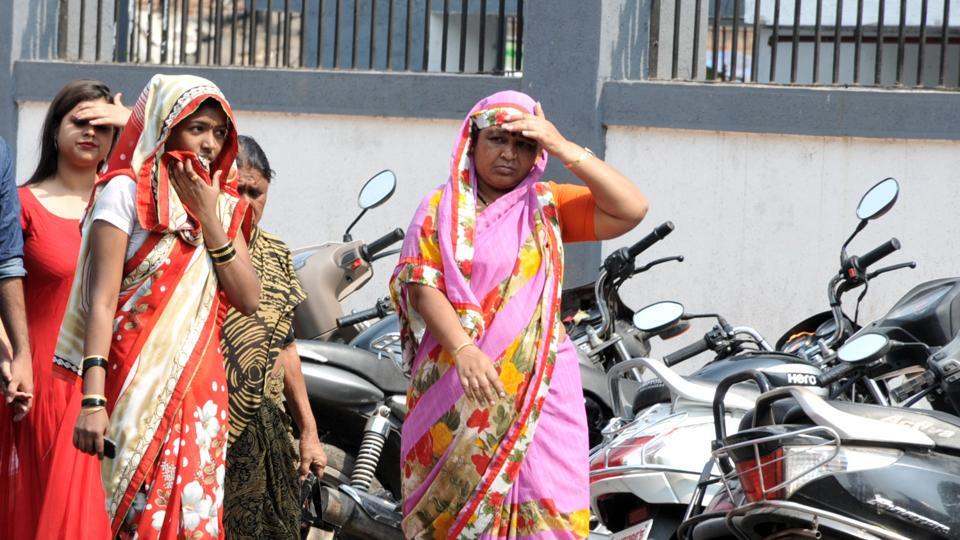
The city has been witnessing rising temperatures over the past week, with both day and night readings staying above normal levels. Night temperatures in several parts of Pune have hovered between 18°C and 21°C. On Friday, Shivajinagar recorded a minimum temperature of 17.5°C — four degrees above normal. Whereas the maximum temperature at Shivajinagar stood at 33°C, which is within the normal range.
However, areas such as Koregaon Park and Lohegaon — that have been experiencing the urban heat island effect for the past several years — recorded higher daytime temperatures, breaching the 35°C mark. While the IMD considers March as the beginning of the summer season, residents are already experiencing summer-like conditions in the second half of February.
According to the IMD weather bulletin issued on Friday, multiple weather systems are currently active over the country. The low-pressure area over the equatorial Indian Ocean and adjoining southwest Bay of Bengal became less marked on Friday morning, although the associated upper air cyclonic circulation persists and is likely to move west-northwest toward Sri Lanka over the next 24 hours. Another upper air cyclonic circulation over the equatorial Indian Ocean and adjoining southeast Bay of Bengal is expected to give rise to a fresh low-pressure area within the next 48 hours.
Additionally, a trough extends from the cyclonic circulation over the equatorial Indian Ocean to the Lakshadweep area across south Tamil Nadu and Kerala. A western disturbance is currently seen as a trough stretching from central Uttar Pradesh to north Gujarat across east Rajasthan in the middle tropospheric levels. Several upper air cyclonic circulations are also present over south Haryana and adjoining Punjab, northeast Assam, and east Bangladesh. The subtropical westerly jet stream with core winds of around 95 knots prevails over northeast India. A feeble western disturbance is likely to affect the western Himalayan region from February 22.
Under the influence of these systems, Maharashtra has been experiencing moisture incursion, resulting in clouding over various regions. Pune, too, has witnessed partly cloudy conditions during the day and night, leading to heat being trapped in the lower atmosphere.
About the forecast, S D Sanap, senior meteorologist at IMD Pune, said, “The city is likely to experience mainly clear skies for the next four to five days. However, due to moisture incursion from the Bay of Bengal, Pune may witness morning haze and occasional cloudiness. Hence, temperatures are expected to remain on the higher side.”


