
 E-Paper



Forest dept conducts grasslands, wetlands mapping
The department has finished a mapping of both grasslands and wetlands in Pune districts under this initiative. The mapping activity began in 2020


Pune: The Pune Forest Department conducts measures to conserve grasslands and wetlands, which are frequently prone to encroachment and other activities that threaten the ecosystem of these areas.
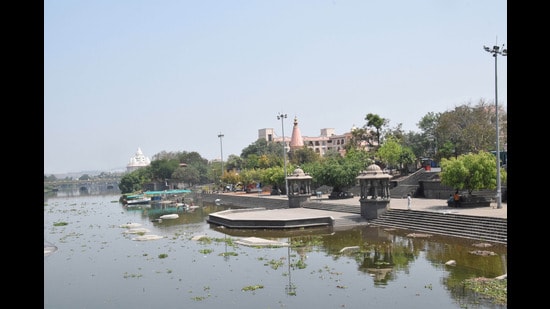
The department has finished a mapping of both grasslands and wetlands in Pune districts under this initiative. The mapping activity began in 2020, and these properties were recently included in the 10-year working plan, for the first time this year, according to Forest Department officials.
As a result, Pune districts have approximately 8,000 ha. of grassland and 68137 ha. of wetlands, and attempts are underway to build a conservation plan for this category of land.
A grassland is an area dominated by dense grass cover. Wetlands are terrains where water covers the soil or is present at or near the soil’s surface during the growing season. Both types of land are critical, and each has its own ecology and biodiversity. Unfortunately, these lands are frequently neglected and subject to a variety of activities that result in habitat and biodiversity loss.
The forest department’s stock analysis in Pune found that there are around 8,000 hectares of grassland in a scattered form. It is prevalent in locations such as Daund, Baramati, Indapur, and others.
These areas are almost barren and devoid of any tree growth. Thorny shrubs like Lantana, Henkal, Ran Tulas, and Euphorbia are seen scattered. At present, most of the areas are devoid of good grass growth. However, they are supporting a moderate growth of grass species like Sheda, Pawanya, Dongri, Kalikusal, etc. Grasslands are important to wild animals as well as local people, especially as it provides fodder for the livestock of the pastoralist as well as local villagers. Grasslands are important for wild herbivores and carnivore species like Blackbuck, Chinkara, Hares, Indian Wolf, Indian Fox, Indian Jackal,
Stripped Hyena, etc that can be seen in grasslands in Pune.
In the wetland category, 13 major dams are in or around the vicinity of the forest areas of the Pune Forest Division. Most of these dams are outside the forest areas but the major chunk of their watershed areas is within the forest areas. The total area under the wetland is 68,137 hectares.
The wetland mapping of the Pune district, which is primarily done for the National Wetland Atlas, highlighted that reservoirs/barrages contribute a major share of 48,339 ha to the wetland area. Following this, rivers, streams, tanks, and ponds are also contributed to the wetlands.
Mahadev Mohite, Deputy Conservator of Forest said,” Grasslands and wetlands are important parts of our environment. Both these lands have their natural ecosystem therefore it is necessary to preserve them. Unfortunately, to date, these lands have been considered barren lands, and have been neglected for a long time. But now that the significance has been highlighted by the scholars, all efforts are being made for the conservation of these lands, especially the wetlands. All activities will be planned on these lands carefully after analyzing their environmental impact. Even for plantation purposes, the least priority will be given to them as general plantations may be harmful to the natural ecosystem in these areas.


