
 E-Paper



Green cover in Pune’s central parts stays at 10% despite ₹108 crore spent on parks
The figures raise questions over the impact of spending on urban greenery as rapid construction and concretisation continue to shrink open spaces

 Prefer HTon Google


Pune’s green cover remains at just 10% of the 249 sq km area within the city’s old limits, despite the Pune Municipal Corporation (PMC) spending ₹108.26 crore on park maintenance and repairs over the past five financial years.
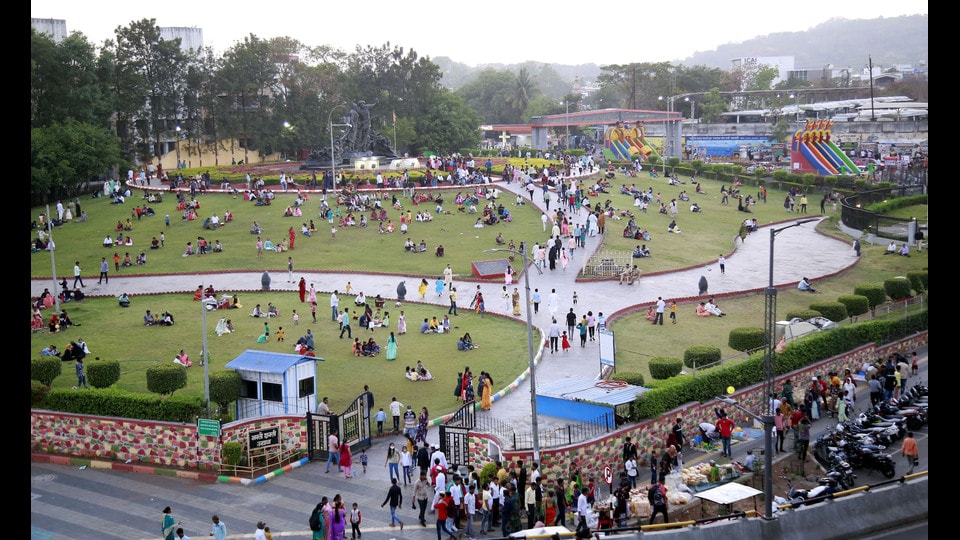
According to data submitted by the civic administration, the city has 27.90 sq km of green cover. The figures raise questions over the impact of spending on urban greenery as rapid construction and concretisation continue to shrink open spaces.
The data was submitted in a written reply to a question by Congress group leader Adv Chandu Kadam ahead of the PMC general body meeting scheduled for August.
The PMC said its garden department has developed 215 parks covering 2,453,573 sq m, or about 2.45 sq km. The parks account for only a fraction of the city’s overall green cover, which also includes hills, tree-covered open spaces, green belts, roadside plantations and other naturally vegetated areas.
The civic body plans to use drones for its upcoming tree census to get a more accurate assessment of green cover.
“Previously, green cover was calculated indirectly using tree counts relative to population. However, actual green cover is defined by the forest and foliage canopy visible from above. With modern drone technology, we can assess canopy density far more accurately,” said Ashok Ghorpade, chief superintendent of the PMC garden department.
The census proposal has been submitted to the PMC Standing Committee for approval and will also cover the 23 newly merged fringe villages.
₹108 crore spent on park maintenance
PMC expenditure on park maintenance and repairs totalled ₹108.26 crore between 2021-22 and 2025-26. Spending peaked at ₹32.22 crore in 2022-23, followed by ₹24.79 crore in 2025-26, ₹20.32 crore in 2024-25, ₹16.54 crore in 2023-24 and ₹14.38 crore in 2021-22.
The spending largely covered existing parks and does not necessarily expand the city’s overall green cover, raising questions over whether more funds should be directed towards creating new green spaces and protecting natural areas.
Pune has seen extensive construction over the past decade, with roads, residential and commercial projects consuming open land. Environmental groups and civic activists have repeatedly raised concerns over tree loss and shrinking open spaces, particularly on hill slopes, riverbanks and reserved open land.
The National Forest Policy, 1988 envisages forest and tree cover over 33% of India’s geographical area. For urban areas, government planning guidelines use additional benchmarks such as 10–12 sq m of green/open space per person.
Dr Sachin Punekar, conservation biologist and former member of the PMC Tree Authority committee, said protecting the city’s greenery requires coordination beyond the garden department.
“The garden department has an important role in maintaining public parks and developing new gardens. However, the civic body also needs coordination among departments dealing with roads, town planning, land acquisition and development permissions to ensure that green spaces are not lost to urban development,” he said.
Punekar said the PMC should also ensure that land reserved for gardens and open spaces is protected and developed as planned.
“Maintaining roadside green belts and increasing tree cover along major roads could further contribute to improving the city’s green environment,” he said.
He also suggested reviewing how the annual garden budget is allocated.
“Regular maintenance is necessary to keep existing parks usable, but greater investment in creating new green areas and restoring degraded open spaces could have a more direct impact on the city’s overall green cover,” he said.
The drone-based census could provide a more accurate baseline and identify areas where greenery has declined and new green spaces can be created.
For a city under continued development pressure, the challenge is not only to maintain existing parks but also to protect its remaining natural green spaces.


