
 E-Paper



India’s transformation in telecom & digital connectivity led by Modi ‘monumental’: Scindia
Union minister for communications, Jyotiraditya Scindia, said that India’s transformation in telecommunication and digital connectivity led by Prime Minister Narendra Modi has been ‘monumental’ in the past one decade

 Prefer HTon Google


Union minister for communications, Jyotiraditya Scindia, said that India’s transformation in telecommunication and digital connectivity led by Prime Minister Narendra Modi has been ‘monumental’ in the past one decade. Scindia was in Pune to attend the 12th BRICS communication ministers’ meeting.
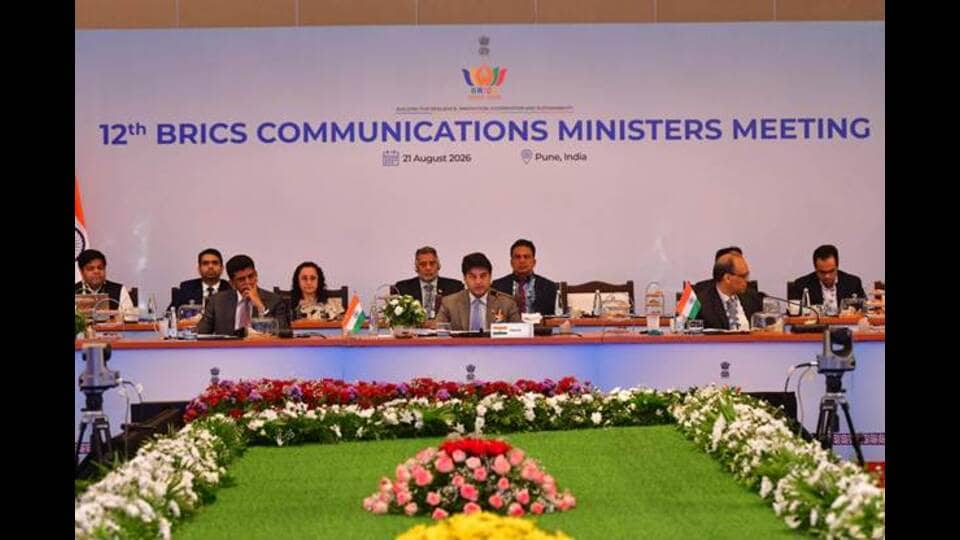
“India’s transformation in the telecom sector has been led by our Prime Minister Narendra Modi. We have presently 1.33 billion mobile subscribers. Our internet penetration has grown from 250 million to over a billion subscribers. Our broadband penetration has grown from just 65 million to a billion people across the country. And all this has been possible on a paradigm of reducing costs,” Scindia said while interacting with the media.
More than 12 years ago, a voice call was 50 paise per unit which is now just 0.03 paise per unit, Scindia said. Similarly, one GB of data which used to cost ₹287 now costs less than ₹10, he noted. As far as the spread of telecom networks is concerned, India now has over 2 million base transceiver stations (BTSs) and 20 lakh BTSs for 4G covering 99.9% of the country’s population.
“India started its 5G rollout in October 2022 and it has been the fastest rollout in the world. At present, it covers all districts in the country covering 86% of the population. The 5G subscriber base is growing rapidly and at present, it has 500 million subscribers. By the end of 2030-31, it will cross one billion,” Scindia said.
The communications minister said that the Prime Minister is clear that telecom networks and communications must connect people and improve people’s lives. At present, 50% of the world’s digital transactions take place in India. “The UPI has processed 242 billion digital transactions involving 3.2 trillion dollars in 2025-26 in the country,” the union minister said.
“We have prepared comprehensive discussions and priorities that will shape our future information and communication technology (ICT) cooperation within BRICS. The pillars in particular: universal and meaningful connectivity; resilient public infrastructure; trusted, secure and people-centric ecosystems; digital public infrastructure; artificial intelligence and future network technologies; innovation startups and entrepreneurship; and digital scaling and enhanced cooperation amongst BRICS countries,” Scindia said, adding that BRICS has an increasing role to play in the global forum, considering half of humanity lives in this region and two-fifth of the world’s economy lies in this region.
Earlier, Scindia chaired a meeting of the BRICS communications ministers and said, “India assumes the chair-ship in 2026; we do so with humility and a shared commitment to our theme, building resilience, innovation, cooperation and sustainability reflected in the ICT track theme, ‘innovate, cooperate and transform for a resilient future’”.
Meanwhile, Scindia and Brazil’s minister of communications Frederico de Siqueira Filho, signed a memorandum of understanding (MoU) to deepen cooperation in telecommunications and information and communications technologies (ICTs) on the sidelines of the BRICS ICT track meeting. The agreement will advance digital innovation, strengthen digital infrastructure, and foster cooperation in emerging technologies.


