
 E-Paper



Kadaknath: First Bhili-language film shines spotlight on Adivasi cinema at PIFF
Speaking during the screening, film academician and chairman of the PIFF selection committee Samar Nakhate highlighted the importance of linguistic and cultural diversity in cinema

 Prefer HTon Google


Breaking new ground for Adivasi representation in Indian cinema, “Kadaknath,” the first-ever film made in the Bhili language, was showcased at the 24th Pune International Film Festival (PIFF) in the Indian Cinema category on January 16. The thriller drama, set in the remote tribal belt of East Gujarat, marks a significant moment for indigenous storytelling on a global cinematic platform.
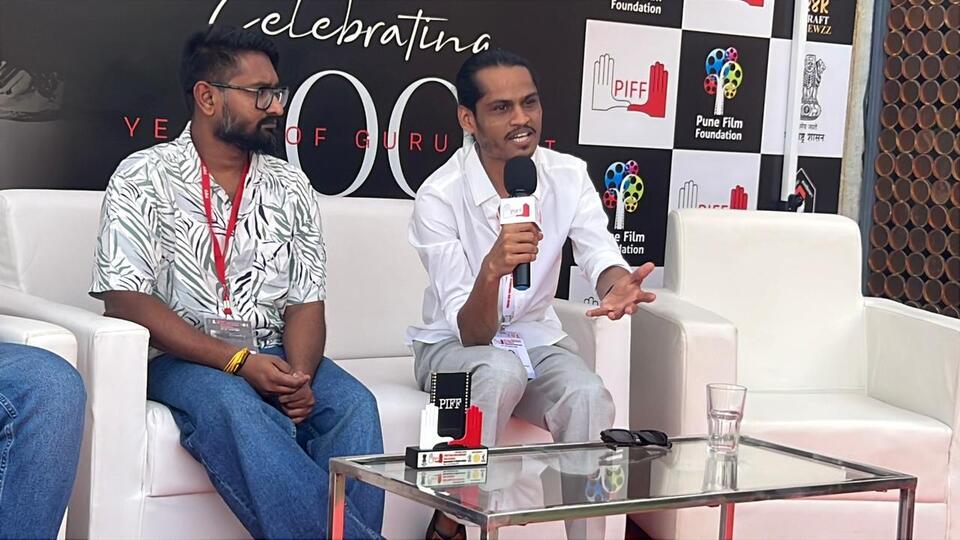
Speaking during the screening, film academician and chairman of the PIFF selection committee Samar Nakhate highlighted the importance of linguistic and cultural diversity in cinema.
“When films from different languages and dialects come together, it truly enriches cinema. This film has a strong and intense flavour. The textual depth of the characters, their use of language, and the different locations are interesting. While mainstream films get funding easily, independent films continue to struggle. At PIFF, we are witnessing a wide spectrum of cinema,” Nakhate said.
Directed by Kaushik Garasiya, Kadaknath is a thriller rooted deeply in the lived realities of the Adivasi community. The film unfolds in a village in the Dahod district of Gujarat, gripped by fear after a series of mysterious killings over three months. As panic spreads, the villagers rely on their own sense of justice, deliberately avoiding the police, reflecting a complex relationship with authority shaped by generations of marginalisation.
Garasiya said choosing the Bhili dialect was non-negotiable. “Bhili is a widely spoken dialect, yet there are hardly any films made in it. I wanted to tell a story rooted in this tribal milieu. Changing the dialect would have compromised the authenticity of the world I was trying to portray,” he said.
For Kadaknath, Bhili is not just a language; it represents a community that has largely remained invisible in cinema, he said.
Garasiya, whose film draws from personal experiences, explained that the story reflects everyday grief, trauma and discrimination faced by the Adivasi community.
“People constantly struggle to survive their routine lives while also fighting larger systemic issues. I have seen many trying to balance these two worlds, and the film captures a small glimpse of that reality through its subplots,” he said.
The director deliberately chose the thriller genre to engage audiences while gradually unfolding deeper social themes.
“The genre allowed me to sustain tension and invite questions, predictions and assumptions about the characters. It also helped in revealing layered meanings without being didactic,” he added.
A key strength of Kadaknath lies in its casting. Most actors are from the Adivasi community and speak Bhili as their first language.
“They were confident because language was not a barrier. They were not just acting; they were also helping us with production management and cultural accuracy,” Garasiya said, while acknowledging that repeated takes and technical demands were initially challenging for first-time actors.
The film was crowdfunded, with Garasiya and his friends investing their own money after being warned about the risks of making a Bhili-language film.
“I was told how difficult it would be, but we took the risk, and I truly feel it was worth it,” he said.
Garasiya also emphasised the importance of letting the community tell its own story.
“The film will resonate more with the community than with outsiders because of its relatability. When there are hardly any films made by someone from within the community, this sense of recognition becomes crucial,” he said.
Challenging long-standing stereotypes, Kadaknath places the agency firmly within the community.
“Mainstream cinema often portrays tribal people as helpless, waiting to be saved by someone powerful. This film breaks that narrative. The hero belongs to the community, and there is no outsider coming to rescue them,” Garasiya said.
Shot entirely in East Gujarat, including forest locations, the film faced logistical hurdles ranging from wildlife threats to transporting heavy equipment through inaccessible terrain.
Despite limited resources, the team completed the shoot with the support of local residents.
PIFF marked the film’s first-ever public screening, and audience response was encouraging.
“Viewers were curious about the story world, the origins of the narrative, and its visual language. I’m happy the film gives audiences a lot to think about,” Garasiya said.
The audience responded positively to the film, describing it as a powerful intervention playwright and director Maulikraj Shrimali said, “I felt privileged to watch the world premiere of Kadaknath at PIFF. It is the only Gujarati film at the festival this year, and I am glad that it is actually a film in the Bhili dialect.”
“I especially appreciate that the film is rooted in Adivasi society and is represented by Adivasi filmmakers themselves. This is a film that deserves to be cherished in every possible way. Gujarati audiences must support it and make it a hundred-crore film,” said Maulikraj.


