
 E-Paper



Lower voter turnout may tilt balance in favour of parties with strong organisational structure in PCMC polls
According to the election office, polling for the PCMC recorded a turnout of 60%, estimated to be a total 1,028,334 voters casting their votes (till the time going to Press)

 Prefer HTon Google


A lower voter turnout compared to 2017 in the Pimpri-Chinchwad Municipal Corporation (PCMC) elections is likely to tilt the balance in favour of parties with a strong organisational structure and a disciplined voter base, political observers said. Despite this, leaders from both the ruling Bharatiya Janata Party (BJP) and Nationalist Congress Party (NCP) remain confident that the turnout trend will work to their advantage.
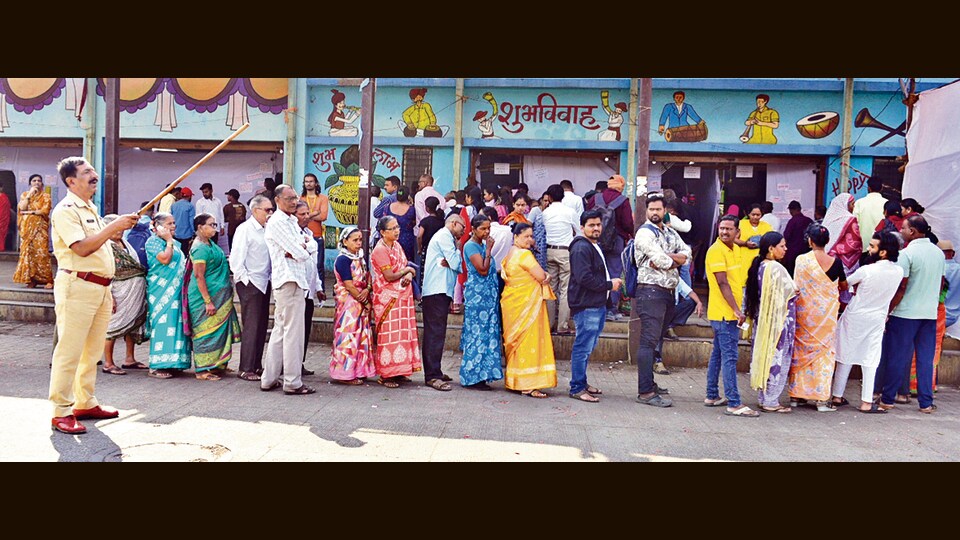
According to the election office, polling for the PCMC recorded a turnout of 60%, estimated to be a total 1,028,334 voters casting their votes (till the time going to Press). In comparison, the 2017 civic elections saw a turnout of 65.35% whereas the 2012 civic polls saw a turnout of 52%.
This year, the twin city has a total of 1,713,891 registered voters; comprising 905,728 men; 807,966 women; and 197 voters from other categories. The PCMC has been divided into 32 wards, each electing four corporators, taking the total strength of the civic body to 128 members. Ward number 16, which includes Akurdi gaothan and the adjoining areas, is the largest with over 75,100 voters; whereas ward number 23, covering Thergaon and nearby localities, is the smallest with just over 33,000 voters.
The contest is particularly intense in 22 wards, where 47 former corporators, senior leaders from the ruling party and seasoned opposition figures are locked in a direct contest. The stakes are higher this time with seven former mayors in the fray, compared to just three in the 2017 elections, making the polls a key battle for political prestige.
Among the prominent candidates are former mayors Yogesh Behl and Vaishali Ghodekar from the NCP; and Aparna Doke, Mai Dhore, Shakuntala Darade, Rahul Jadhav and Nitin Kalje from the BJP. Behl is contesting from ward 30 (Kasarwadi–Sant Tukaram Nagar) against BJP’s Satish Nagargoje; while Ghodekar is facing BJP’s Meenaj Inamdar in ward 9 (Nehrunagar–Kharalwadi). These wards are expected to play a crucial role in determining the future leadership of the civic body.
Shatrughna alias Bapu Kate, BJP’s Pimpri-Chinchwad city president, said that the party is headed for a decisive victory, citing voter confidence in chief minister Devendra Fadnavis. “We will once again secure a clear majority and the PCMC mayor will be from the BJP. Party MLAs and workers have worked tirelessly, and our candidates will win by a good margin,” he said.
The BJP enjoys a strong organisational presence among the middle-class, urban and housing-society dominated areas; whereas the NCP has traditionally performed better in elections with higher turnout, particularly in working-class, industrial, slum and migrant-dominated pockets. Political observers said several wards are witnessing close contests between the two parties, and the winning side is expected to secure between 60 and 65 seats to claim power.
Former mayor Yogesh Behl, who is the city president of the Ajit Pawar-led NCP faction, said that party workers had put in sustained efforts across most wards, barring a few pockets in Bhosari and Chinchwad. “We are hopeful of winning around 60 to 65 seats. Voters have seen the development carried out during our tenure, and we expect to regain the prominence we had in the 2012 civic elections,” he said.
PCMC commissioner and election officer Shravan Hardikar said that the counting of votes will begin at 10 am on January 16, 2026, at eight designated centres within the civic limits. “Only authorised persons with valid identity cards issued by the election department will be allowed entry. Adequate arrangements have been made for traffic management, parking and a separate media centre. Computerised systems will be used to ensure accuracy and transparency in the counting process,” he said.


