
 E-Paper



Monday Musings: Unlocking Pune... State government takes a risk, links incentives with responsibilities
The original order, released by state government late on June 4 and followed by local authorities in Pune and many other cities the next day, is open for a weekly review


The wise men in the state have taken a call to bring normalcy back to Maharashtra. As part of the unlock plan, Pune is set to reopen today in a big way, that will bring back livelihoods to some degree, even as the economy will take time to regain momentum.
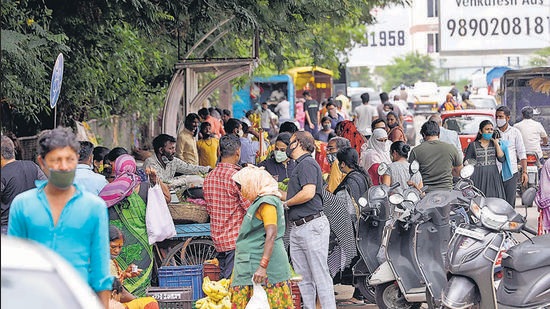
As wheels of the city set to restart again, the challenge before the authorities at the local and state level, is to prevent another wave, or minimise its impact. This is the second unlock exercise Maharashtra has undertaken, after last year.
There is, however, a difference this time.
The government in its order has passed the responsibilities on to people, if they want to avail incentives by way of restarting activities.
The original order, released by state government late on Friday evening and followed by local authorities in Pune and many other cities the next day, is open for a weekly review.
This means if the positivity rate or bed occupancy of a city or district goes up, local authorities will downgrade it to another level, between 1 and 5, depending on the spread of infection. The higher the level, the lower will be the incentives.
The new system risks leading to confusion as it is a departure from the previous method, when the state government used to wait till the infection spread, and then would ask local bodies to tighten restrictions.
In Pune district for example, authorities have considered Pune city, Pimpri-Chinchwad and rural parts as three separate units. The city, with a weekly positivity rate of 6.11% and oxygen bed occupancy at 27.47%, has been allowed to enjoy relaxations, along with Pimpri-Chinchwad. In the rural parts, curbs largely continue the way they were during previous weeks.
As per the state order signed by chief secretary Sitaram Kunte, administrative units with a positivity rate between 5%-10%, or oxygen bed-occupancy of more than 40% will have level-3 restrictions.
By restarting most services in one go, the government has taken a major risk barely a few days after the second wave has started ebbing. In Thackeray’s own words: “The government is taking a ‘calculated risk’ by relaxing Coronavirus-induced restrictions in the state.” Among the things the government has relaxed in cities like Pune and Mumbai, are gatherings.
This was in contradiction to what the chief minister had said in his address on May 30, when Thackeray stressed going ahead cautiously.
Social, religious and cultural gatherings with a cap of 50 attendees could have been avoided given that it was neither a demand from any quarter nor being helpful in anyway. With no strong mechanism to check each and every gathering, such programmes can become super- spreader events. With civic polls lined up in 10 major cities of Maharashtra early next year, these gatherings can turn into political events too.
The state has already paid a heavy price during the second wave, the trigger for which, according to experts, was political events ahead of local elections in parts of Maharashtra early this year. Already, political parties and community outfits have started agitations on various issues in the run-up to polls.
Taking away e-pass inter-district travel, allowing public transport buses to ply with limited capacity in cities like Pune and Mumbai and reopening of restaurants and hotels for dine-in, is also bound to result in crowding, though livelihoods too are important here.
The unlocking is necessary and should be rolled out. However at the same time, government and local bodies like Pune Municipal Corporation (PMC) should take a cue from previous experience and build a stockpile of medicines, while building new oxygen producing units. At the same time, it should aim for higher vaccination numbers.
With the wave ebbing, fear among people, too, is on the wane. The government, however, can’t afford to be lax this time.


