
 E-Paper



Muslim women will benefit from Uniform Civil Code: Chandrakant Patil
Patil was speaking at the 12th Indian Student Parliament organised by MIT World Peace University, MIT School of Government (MIT-SOG)


Maharashtra higher and technical education minister Chandrakant Patil on Saturday said that Uniform Civil Code (UCC) will ensure equality for Muslim women in India.
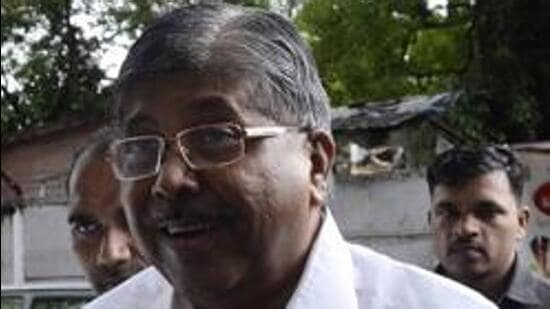
“We have the same laws applicable for everyone but laws for succession, marriage, adoption etc. are different for different communities. Uniform Civil Code will give equal rights to Muslim women,” Patil said while speaking at the 12th Indian Student Parliament organised by MIT World Peace University, MIT School of Government (MIT-SOG).
Ritu Khanduri Bhushan, speaker, Uttarakhand Legislative Assembly, in her speech cited some examples claiming injustice against Muslim women like Shah Bano, Shayara Bano and Sarala Mudgal to show inequality concerning women and establish the need for Uniform Civil Code.
“There is a need to de-link personal laws related to adaption, succession, marriage etc from religion and make gender and religion-neutral laws,” Bhushan said.
Minister of environment and climate change law and judiciary Nilesh Cabral said, “Goa has Uniform Civil Code in place for more than 100 years. If they can follow it, why can’t it be implemented in the country?” In addition, he said that it is a sign of a progressive nation and promotes secularism and women’s rights.
Raashid Alvi, a senior leader of Indian National Congress, expressed views against Uniform Civil Code and about technical difficulties in implementation stating, “If every state will make its own UCC, there will be different UCC in every state and it will be a problem. India has more important issues than Article 44 and Uniform Civil Code.” He advised students to think and not follow blindly.
Sr Adv Mahalakshmi Pavani underlined the need for a Uniform Civil Code considering the light of equality toward the LGBTQA+ community. She said, “We need gender and religion-neutral laws. As UCC does not discriminate based on gender, inclination and religion, it becomes an inclusive code and widens the scope of equality in India.”
Harjot Singh, education minister of Punjab, stated the importance of education saying, “Education is a power that made APJ Abdul Kalam The Missile Man. There is a need for platforms where you can come together and discuss, whether you agree or not, discussion is important.”
In the concluding speech Prof. Shobhit Mathur, vice-chancellor of Rishihood University, gave an alternative perspective about UCC. “Many communities have their own judicial system. They can act as the primary judicial system and in case of disagreement, people can reach out to the judiciary. This can reduce the burden on the judiciary,” he said.


