
 E-Paper



No case of BF.7 variant in Maharashtra so far, state dept asks not to panic
The officials further said that unlike in China where the BF.7 variant is driving the Covid surge, this variant has not led to a spike in cases in India and hence, there is no need for panic


In the wake of the BF.7 variant driving the Covid surge in China, state health department officials said that while there have been three cases of this variant detected in India, none have been from Maharashtra. The officials further said that unlike in China where the BF.7 variant is driving the Covid surge, this variant has not led to a spike in cases in India and hence, there is no need for panic.
Dr Pradip Awate, state surveillance officer, said that the only thing needed is to take the utmost care because according to INSACOG, BF.7, the sub-lineage of BA.5, which is driving China’s Covid surge, has already been spotted in India though it has not spread among the Indian population. “At the same time, the BQ.1, which was found in the United States of America, was also found in India and Maharashtra, and that too did not lead to an increase in cases,” Dr Awate said.
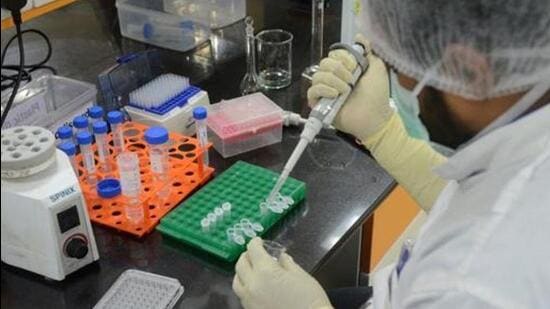
All said, the centre has directed all states to start sending all positive RT-PCR samples for genome sequencing considering the rise in cases in China. Dr Awate said that they are already carrying out genome sequencing but since the number of positive cases has gone down, the genome sequencing too has gone down. “Earlier, we used to pick samples of serious patients, admitted patients, patients who had re-infection after vaccination and patients from particular clusters for genome sequencing but as per the centre’s guidelines, we will be sending all RTPCR-positive samples for genomic sequencing,” he said. Dr Awate added that they are prepared for the genome sequencing of all samples.
Maharashtra’s coordinator for genome sequencing, Dr Rajesh Karyakarte, too, said that they are prepared for genome sequencing. He said that in Maharashtra thus far, the XBB sub-variant has been dominant accounting for more than 70% of the cases with the sub-lineages of BA.5 accounting for only about 4% of cases.


