
 E-Paper



Onion traders break away from APMCs as deadlock with govt continues
On Wednesday last week, when the strike began, 149 traders from Lasalgaon surrendered their licences, mandated for carrying on business through the APMCs

 Prefer HTon Google


Lasalgaon (Nashik): The restlessness among onion farmers after the central government’s imposition of 40 per cent duty on onion exports in August, and the impasse between the government and protesting traders thereafter, has gathered momentum. Traders in Nashik are considering going solo by breaking away from the government-controlled Agriculture Produce Market Committee (APMC). The strike by farmers and traders entered the eighth day on Wednesday.
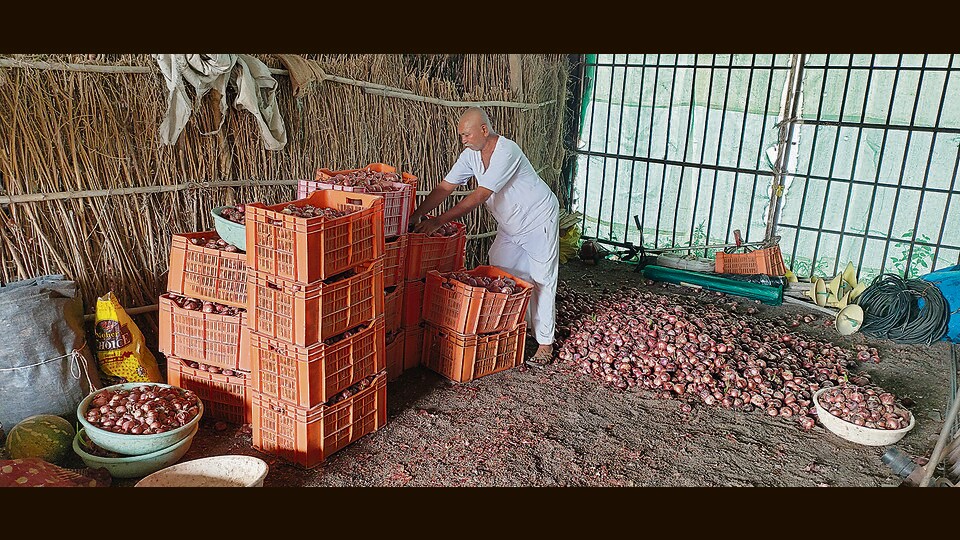
On Wednesday last week, when the strike began, 149 traders from Lasalgaon surrendered their licences, mandated for carrying on business through the APMCs, so that they can start procuring onion from the open market without government intervention. On an average, around 40,000 to 50,000 quintals of the produce arrive at the Lasalgaon market every day and its daily turnover is ₹10 crore.
An official from the department of agriculture, who did not wish to be named, said a handful of the 600 registered procurers operating through over 15 different wholesale markets across Nashik have already started what they term “private markets”. They buy onion directly from farmers and sell in the retail markets. Insiders have suggested that if the numbers increase, it can end the government control over them as the farmers have created multiple options to sell their produce.
Four to five private markets are already operating in the district, and the current strike has emboldened many more traders to start similar markets in the coming months, said members of Nashik District Onion Traders Association (NDOTA). Khandu Kaka Deore, president of NDOTA, said, “The parallel system of private markets is the order of the day to meet the growing demands of consumers. The existing APMCs are unable to do so. Earlier, there were markets at the district level, now they operate in the talukas as well. There is already an existing model to do business. With the growing resentment among farmers many have decided to become private players.”
At a meeting held by members of NDOTA on Friday last week, trader representatives spoke about opening more private markets to give the APMCs a run for their money. Pravin Kadam, director of Lasalgaon APMC said, “While the volume of business in APMCs in Nashik is huge, one cannot overlook the challenges that will be presented soon if more private players come up in the district as a parallel system in future. It will take away our business.”
The state currently has around 305 APMCs, most of which are controlled by traders and politicians. The APMC Act mandates these markets have facilities such as auction halls, warehouses, weigh bridges, shops for retailers, police station, post office, bore-wells, farmer amenity centres and soil-testing laboratory.
In 2006, Maharashtra became one of the first few states to adopt the model APMC Act, paving way for private markets on the lines of APMC and contract farming. In 2016, the state decided to de-regulate fruits, vegetables, onions and potatoes. However, despite allowing private markets, farmers across Maharashtra, including onion growers in Nashik district, have preferred APMCs as they offer price protection and timely payments. The APMCs were established in order to eliminate the exploitation of the farmers by the intermediaries, who often compelled them to sell their produce at extremely low prices. With the ongoing impasse between the traders and government, farmers have thrown caution to the winds, choosing to split from the government body.
Deore, who runs his own private market in Malegaon tehsil, likened the phenomenon to “private banks operating alongside nationalised banks with the guidelines of the state government”.
Vijay Bhorkade, a farmer from Pimpalgaon Jalan village, in Yeola taluka, said: “Private markets will have an effect on the business of APMCs. We will choose to go to the markets that offer better rates to us. Every farmer is looking for a good opportunity which the APMCs are not giving.”
Nashik and Ahmednagar districts account for 35% of onion exports from India. A senior official of the agriculture department said the farmers in the state harvested onions on 210,344 hectares of land during the Rabi season this year. They are now cultivating onions on 27,609 hectares of land in Kharif season and 51,321 hectares in late Kharif season.


