
 E-Paper



Operation Sindoor showcased India’s defence tech, indigenous systems: DRDO chief
Kamat said the multidimensional mission along the western borders highlighted both the bravery of soldiers and the technological backbone that ensured success.

 Prefer HTon Google


India’s recent Operation Sindoor is a testament to the country’s growing self-reliance in defence technology, with indigenous systems delivering decisive results, Defence Research and Development Organisation (DRDO) chairman Samir V Kamat said on Saturday.
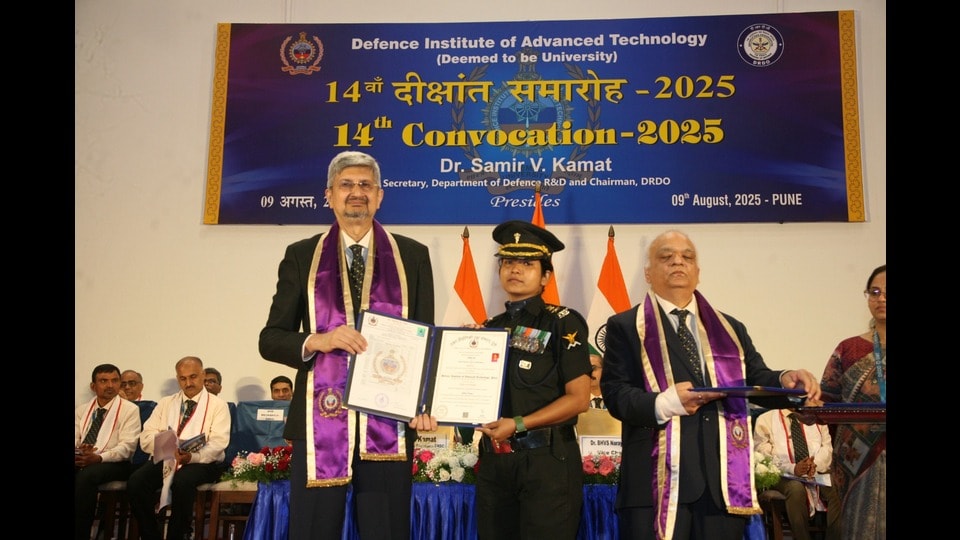
Speaking at the convocation of the Defence Institute of Advanced Technology (DIAT), Kamat said the multidimensional mission along the western borders highlighted both the bravery of soldiers and the technological backbone that ensured their success.
Also Read: 'Ask a Pakistani...': Army chief mocks Asim Munir's promotion after Op Sindoor
“I can say with pride that Operation Sindoor’s success was powered by homegrown systems such as Akash short- and medium-range surface-to-air missiles, BrahMos supersonic cruise missiles, the D4 anti-drone system, airborne early warning and control platforms, the Akashteer air defence control system, and advanced C4I systems,” Kamat said, adding that institutions like DIAT played a critical role in these achievements.
Describing the mission as “more than a military operation” and a declaration of India’s ability to stand tall through self-reliance, strategic foresight and indigenous innovation, Kamat urged graduates to sustain the momentum, reminding them that India aims to be a developed nation and a global technology leader by 2047.
He stressed that DIAT graduates are not generalists but specialists in critical domains such as quantum technology, cybersecurity, robotics, propulsion, missile systems, materials engineering, and AI—skills with direct national security applications. In an increasingly unstable geopolitical climate, he said, their expertise in developing hypersonic propulsion, stealth technologies, cyber defence, space deterrence, and AI-led combat systems would be vital.
Congratulating the graduating class, Kamat said their perseverance and commitment would be central to shaping India’s future defence capabilities. He noted that demand for Indian defence exports is rising in the Middle East, Southeast Asia and Africa.


