
 E-Paper



PCMC issues advisory on vector-borne diseases
In the advisory, the PCMC has asked residential societies to clear out the stagnant water to prevent the outbreak of vector-borne diseases such as malaria, dengue and chikungunya


PUNE: Due to a surge in vector-borne disease cases in the twin-city of Pimpri-Chinchwad, the Pimpri-Chinchwad Municipal Corporation (PCMC) on Tuesday issued an advisory for citizens. The PCMC officials said that the recent heavy rain had resulted in the accumulation and stagnation of water in residential areas.
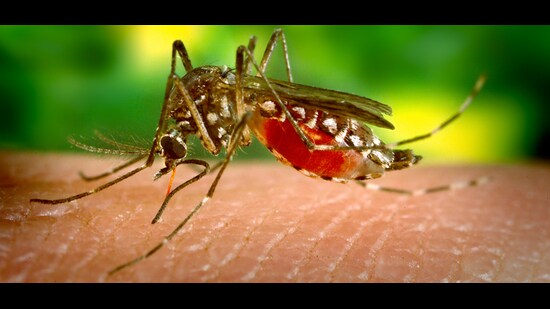
In the advisory, the PCMC has asked residential societies to clear out the stagnant water to prevent the outbreak of vector-borne diseases such as malaria, dengue and chikungunya. While the PCMC undertakes the vector-borne diseases’ surveillance and containment programme, the advisory has been issued to take further measures to ensure that there are no mosquito breeding spots at the community level.
Dr Laxman Gophane, health officer of the PCMC, said that mosquito breeding can lead to the spread of vector-borne diseases, particularly dengue, if citizens do not take preventive measures at the community level. “We have conducted several activities in schools, and housing societies to create awareness about vector-borne diseases in Pimpri-Chinchwad. We have put up over 70 public awareness banners about vector-borne diseases in the PCMC area,” he said.
Dr Gophane said that recently, a meeting was held with private practitioners in the twin-city, asking them to report dengue cases to avoid panic among the public. “We only record cases of people who have tested positive via IgM ELISA tests and NS1-ELISA tests as confirmed dengue cases, while those who have tested positive via the non-ELISA NS1 antigen test are considered as suspected cases.”
Do’s
Cover all water tanks and containers with well-fitted lids to prevent mosquito breeding.
Empty, scrub and dry, coolers every week before refilling to prevent breeding of mosquitoes.
All unused containers, junk material, tyres, coconut shells etc. should be properly disposed of.
Don’t throw broken utensils, unused bottles, tins, old tyres and other junk in the open as Aedes mosquitoes breed in these objects during the rainy season.
Change water in flower vases, plant pots, bird baths every week to prevent mosquito breeding.
Don’t allow water to stagnate in and around houses in coolers, buckets, barrels, flower pots, bird baths, freeze trays, coconut shells etc.
Cover the toilet seat if going out of the house for more than a week.
To avoid mosquito bites, wear full-sleeved clothing and use mosquito repellents.
Don’ts
Avoid taking over-the-counter medicines.
Seek medical attention in case any symptoms develop.
Don’t insist on hospitalisation in case of dengue fever unless advised by a doctor as many dengue patients do not require hospitalisation.


