
 E-Paper



PMC begins process for ESIA for water supply project covering 12 newly-merged villages
The civic body on April 13 issued a request for proposal (RFP), inviting eligible firms to undertake the study within a timeline of two-and-a-half months

 Prefer HTon Google


The Pune Municipal Corporation (PMC) has initiated the process for appointing a consultant for carrying out an environment and social impact assessment (ESIA) for a major water supply project covering 12 newly-merged villages, as part of efforts to strengthen infrastructure in the city’s expanding limits.
The civic body on April 13 issued a request for proposal (RFP), inviting eligible firms to undertake the study within a timeline of two-and-a-half months. The consultant will be selected through a quality and cost-based selection (QCBS) method under an open tender process. According to the tender schedule, a pre-bid meeting has been set up for April 20, while bids will be accepted between April 22 and April 28. Bidders must have at least five years of experience in environmental and social consulting, along with prior experience in ESIA studies for large infrastructure projects, particularly those funded by international agencies.
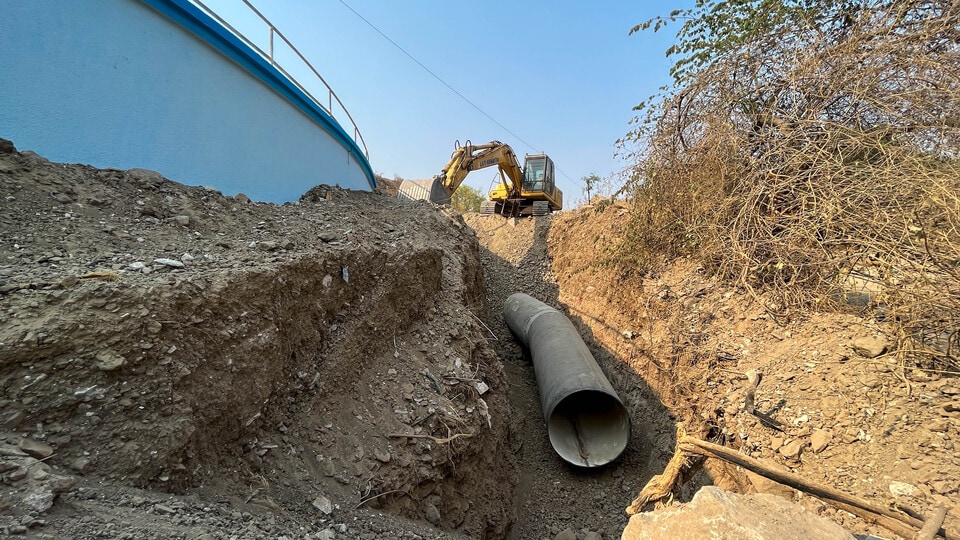
Officials said that the water supply project is part of the PMC’s phased plan to upgrade infrastructure in areas added to its jurisdiction particularly along the southern periphery; and aims to ensure reliable and equitable water supply in these rapidly urbanising zones. The proposed project includes development of bulk water transmission, treatment, storage and distribution systems. As per project details, it will comprise a 200 million litres per day (MLD) water treatment plant, a 100 MLD pumping system, a 288.45 km distribution network, and 66.39 km of transmission lines. A total 52 elevated and ground service reservoirs have been planned to support storage and supply.
The water supply project is aligned with PMC’s long-term urban expansion strategy following the merger of several villages within its limits in 2018 and 2021 that expanded the corporation’s jurisdiction to around 510 square kilometres. The current phase focuses on 12 out of the 23 merged villages, including Khadakwasla, Nanded, Nandoshi, Sanasnagar, Kirkitwadi, Dhayari, Narhe, Jambhulwadi, Kolewadi, Mangdewadi, Gujar Nimbalkarwadi and Bhilarewadi.
Hemmant Pawar, executive engineer, PMC water department, said that the civic body has sought funding support from the World Bank for a larger project. “We have approached the World Bank for ₹1,400 crore to develop water infrastructure in 20 out of 23 villages. However, concerns have been raised regarding 12 villages as the project requires forest and private land. An impact assessment report has been sought, and we have initiated the process to appoint a consultant,” he said.
Whereas the ESIA will play a key role in identifying environmental and social risks related to the project. The consultant will assess baseline conditions; study potential impact on communities, biodiversity and water resources; and suggest mitigation measures. The assessment will be conducted in line with national regulations as well as international benchmarks, including International Finance Corporation (IFC) standards and World Bank environmental and safety guidelines. It will also involve stakeholder consultations and preparation of a detailed Environmental and Social Management and Monitoring Plan (ESMMP). The scope of work includes field surveys, socio-economic studies, biodiversity assessments and evaluation of issues such as land acquisition, displacement, labour conditions, and community health and safety.
Pawar said that water supply works in the remaining villages are already underway using PMC and state government funds as per the detailed project report (DPR). Once implemented, the project is expected to significantly improve water availability and support planned urbanisation in Pune’s newly added areas.


