
 E-Paper



PMPML deploys staffers on BRT route to monitor traffic
Public transport utility has deployed clerical and administrative staff on the route at each chowk and bus station


The long-awaited project of Swargate to Katraj bus rapid transit (BRT) corridor resumed service from February 5 after the Pune Mahanagar Parivahan Mahamandal Limited (PMPML) buses started running on the route.
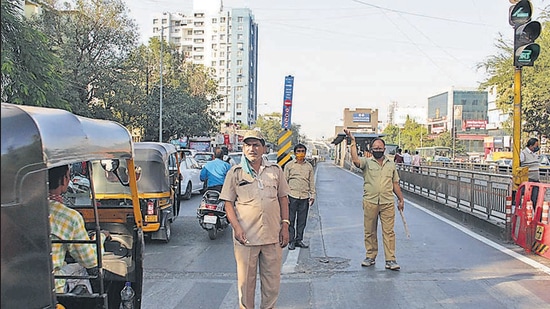
Now, in order to monitor the traffic and help passengers on this newly revised bus service, the PMPML has deployed clerical and administrative staff on the route at each chowk and bus station.
On the other hand, daily traffic jams are being reported on this stretch during peak hours, as all the other vehicles are taking the normal route.
From the last two months, the issue of resuming service on the BRT route was in discussion.
Last year, Pune mayor Murlidhar Mohol had announced to start the bus service by January 1, 2021, however, due to the lack of necessary safety arrangements and infrastructure, the PMPML denied starting the bus service on the scheduled date.
“We have started the bus service on the BRT corridor from February 5 and gradually the public will also know about it. Initially, for a week we have deployed our staff in rotation from depots and the administrative department at each bus station and chowk to monitor the traffic. These staffers are helping passengers cross the roads, help them with the revised and new operations from the BRT bus stations and also, monitor the traffic by restricting them from entering the BRT corridor,” said Rajendra Jagtap, PMPML chairman and managing director.
At each of the bus station and chowk, four to five staffers of PMPML are standing monitoring the traffic and helping out passengers. They are given duties in slots for peak hours, in the morning from 8am to 12noon and then 4pm to 8pm.
“After a long period, this BRT corridor is in operation and it will take time to gain passengers in such tough situations post-Covid it is challenging to run the bus services with all necessary safety precautions. We are happy that the BRT corridor is operational now, passengers will receive fast service and accordingly our focus is on to maintain the frequency of buses on the route. We are trying to provide a bus after every 1.5 minutes from this corridor going to various other routes so that passengers get options to travel,” added Jagtap.
At the same time, traffic congestion during the peak hours has increased in the last few days, as other vehicles are strictly not allowed from inside the BRT corridor.
Amit Pataskar, a regular passenger on this route said, “I stay at Katraj and daily travel via Swargate to my workplace, but since the BRT corridor has closed down for other vehicles all the trucks, heavy vehicles and other private buses take the normal road. This is creating pressure and traffic jams during peak hours, earlier it used to take me 15 minutes from Katraj to Swargate on a bike which now goes up to half an hour when there is a heavy rush.”


