
 E-Paper



PMRDA floats nullah-cleaning tender mid-monsoon, draws flak for poor planning
The tender, floated on May 23, covers the cleaning and widening of nullahs in nine talukas namely, Mulshi, Maval, Haveli, Shirur, Daund, Ambegaon, Khed, Purandar and Velhe


Despite warnings to complete the cleaning of nullahs (drains) before the monsoon, the Pune Metropolitan Region Development Authority (PMRDA) has floated a ₹5 crore tender for nullah-cleaning in the middle of the rainy season, drawing flak for poor planning and execution.
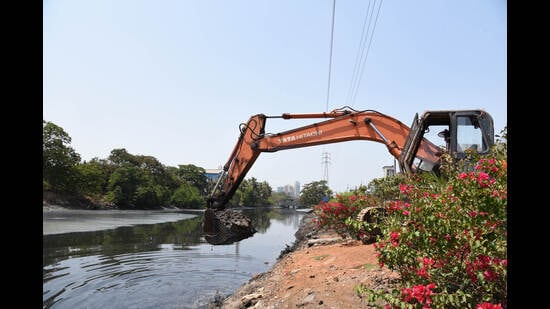
The tender, floated on May 23, covers the cleaning and widening of nullahs in nine talukas namely, Mulshi, Maval, Haveli, Shirur, Daund, Ambegaon, Khed, Purandar and Velhe.
According to PMRDA officials, this tender was first floated in April before the monsoon but due to poor response, it had to be reissued. As such, the original deadline for nullah-cleaning (May 30) has now been extended to the fourth week of June.
Civic activist Sudhir Kulkarni said, “The PMRDA’s decision to float a nullah-cleaning tender in the middle of the monsoon reflects gross mismanagement and lack of seriousness. Every year, the authorities promise timely action but end up only reacting after flood-like situations arise. This is not just inefficiency; it is negligence that puts lives and property at risk.”
However, Dr Yogesh Mhase, PMRDA commissioner, said, “This is the first time the PMRDA has floated a tender for nullah-cleaning. Earlier, we never took up such work. The tender is not limited to the monsoon season; it is meant for cleaning work throughout the year. We had first floated the tender in April before the monsoon but it did not get any response. Now, we have reissued it and received two bids, but both are ineligible.”
With the actual work of nullah-cleaning now expected to begin only in July well into the peak of the monsoon, concerns are being raised as heavy pre-monsoon and monsoon showers have already caused flooding across the region. By now, most drains are filled with silt and debris, making cleaning operations difficult. Officials said that clogged drains cannot be accessed or cleaned easily. “It is unclear how this work will be executed now,” said a PMRDA engineer on condition of anonymity.
Even as per the PMRDA’s pre-monsoon survey, many drains were clogged with weeds, branches, stones and waste raising the risk of flooding in residential areas. Over the past few years, the intensity of rainfall has risen sharply in the district. Senior officials—including the chief minister, deputy chief ministers, and divisional commissioner—have chaired multiple meetings warning agencies of strict action if they fail to complete the cleaning of drains by May. Still, the delay on the part of the PMRDA has left residents vulnerable yet again.


