
 E-Paper



Poona’s summer-houses: Hub for tea parties, status, and affluence
In India, a garden and its components, like the summer-house, were symbols of dominance and control, which were used to gain reverence and respect from the natives. The summer-houses were usually built within the gardens of large villas, which meant that only the well-to-do could afford them.

 Prefer HTon Google


Pune: In the days when Poona followed a more seasonal rhythm, summer often meant several families from all over the Bombay Presidency, who could not move to Mahabaleshwar, Panchgani, Matheran, Lonavala, or Deolali, shifting their homes temporarily to the city.
Poona was dry during most of the year, and very different from that of stations on the sea coast, like Bombay. Due to its elevation and dryness, it was cold at night even in summer, and, hence, was the summer home of many Bombay residents.
One of the striking features of the Poona summers was the tea parties organised by the wealthy in their summer-houses.
Dating back to the mid-15th century, in the English language, the term ‘summer-house’ meant a structure in a house garden or a park, usually of quite simple and rustic construction, designed to provide a cool, shady place in the heat of the summer. It was a resting place from the glare of the hot sun, a place to lounge, talk, read, sew, and a “meeting point” for the whole family. It was where the man and the woman of the house enjoyed solitary intellectual pursuits or entertained their guests.
This was different from a summer home, where families rented or moved to in cooler locations to escape the heat for an entire season. The summer-house, by contrast, remained within the main residence and was used as a temporary retreat during the day rather than a full relocation. The distance from the house at which these structures were located made them places of seclusion and retreats where one might dream away the hours free from the distractions of a large household.
A summer-house was located in a prominent place in the garden and was visible from the main house, since one of the main purposes of constructing it was to provide aesthetic pleasure. It might be of wood, designed as rustic as possible, and thatched with locally sourced material like straw or palm leaves, or it might be an elaborate affair, with statuary and carving to set off its stateliness. Between these two extremes, there was abundant room for the play of fancy, and, usually, in those days, the tendency was to erect structures in keeping with the surroundings. And, where the more substantial buildings were erected, care was taken to provide means, whereby they might be clothed with foliage and flowers, to harmonise with the trees and flowers around.
Scholars have long noted the influence of early to mid-18th century English novels on domestic interiors and gardens. These works portrayed rooms as distinct, named spaces with specific functions and styles, giving them an atmosphere as vivid as the characters themselves. They prominently featured summer-houses as sites of romance, intrigue, and opulence.
In India, a garden and its components, like the summer-house, were symbols of dominance and control, which were used to gain reverence and respect from the natives. The summer-houses were usually built within the gardens of large villas, which meant that only the well-to-do could afford them. They required space, upkeep, and a certain level of comfort that was beyond the reach of most households. As a result, the summer-house stood as a visible sign of status and affluence, reflecting the social position of its owners.
A Bombay newspaper, on January 18, 1909, wrote that the ideal summer-house should be a real house with windows and doors, and possibly a fireplace, in cities like Poona. There should be a place for writing and there should be many chairs and low seats; a chafing dish and cutlery for tea was absolutely necessary, and the table should be large enough to spread luncheon for five to six.
A summer-house was a perfect place to rest and enjoy a refreshing cup of tea. It was also known as a tea house in Europe and in India, a name that came from its social use during the warmer months in the late 19th and early 20th centuries. Small tea gatherings were often held here, usually with no more than six to eight guests. The setting encouraged easy conversation and a slower pace, making these meetings more intimate than formal.
Likely, this custom of inviting a few people for tea in such spaces drew from the habits of European soldiers, merchants, and travellers who had spent time in China and Japan, where traditions of tea and simple garden structures were already well established.
The Governor of the Bombay Presidency spent the hot months in Poona at the potentates of fairyland, the Government House. It was built in the chateau style, and had an 80-foot tower, a grotto, a lake, innumerable gazebos, arbours, and summer-houses.
During his stay in Poona, the Governor’s residence hosted parties very often. These were attended by princely figures, military and administrative officials, and prominent local citizens, both natives and Europeans, and their names were regularly published in the newspapers.
In contrast, the tea parties held in the Governor’s summer-houses remained more private. Newspapers would mention that a tea party in the summer-house had taken place, but the names of those invited were not printed.
David Sassoon’s ‘Garden Reach’, his summer home in Poona, flaunted three beautiful summer-houses that were famous for their intimate tea parties and luncheons when the family was in town.
An invitation to such a tea party carried its own significance. For a guest, it suggested a certain closeness to the host, or at the very least, that they were held in particularly high regard.
These tea gatherings also offered an opportunity to display refined taste. Hosts brought out cutlery and crockery imported from Europe, as well as from China and Japan, items that were still uncommon in most Indian homes. The gardens around these summer-houses often featured shrubs, vines, and trees that were not widely seen locally. These details served as clear markers of success and wealth.
In the early 20th century, American gardens were often criticised for not having summer-houses. This had not always been the case. Older gardens in several American states did include them, sometimes resembling English gazebos and at other times built more simply.
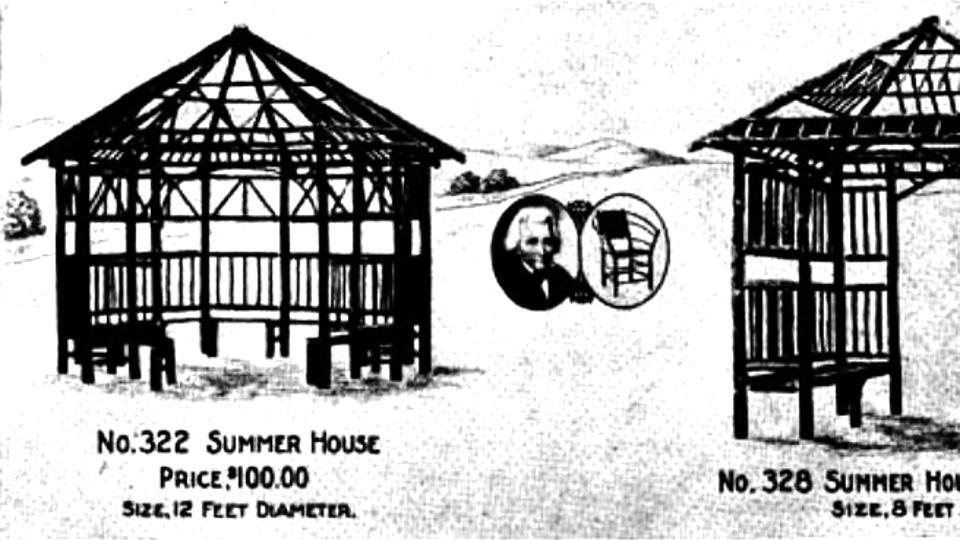
When the United States revived the idea of the summer-house, it found a ready market in India. Europeans living in India, along with wealthy Indians, were quick to adopt new fashions and trends. These newer American summer-houses were often made using prefabricated metal frames, making them easier to assemble and install.
The Old Hickory Chair Company from Martinsville, Indiana, in February 1911, set up temporary shops in Bombay and Poona in the winter of 1912. They specialised in pre-fabricated metal and wooden frames for summer-houses along with furniture for tea parties and luncheons. These summer-house skeletons could travel with their owners to new towns and cantonments.
Between January and August 1907, a Bombay newspaper placed several advertisements for plots near Mahabaleshwar for sale. The ads claimed that “the climate for this quarter was well approved of by all the European gentlemen, as best calculated for the preservation of their health” and made a special mention of summer-houses that could be built on the land.
The summer-houses were not just shelters from the heat, but stages where power, taste, and intimacy were carefully performed. Even as they faded from everyday life, they left behind a record of how people lived, entertained, and understood comfort in a changing world.


