
 E-Paper



Pune RTO rolls out automated fitness testing for commercial vehicles
Fresh appointments will gradually shift to the automated facility once the backlog is cleared, with full-scale operations expected within a month

 Prefer HTon Google


The Pune Regional Transport Office (RTO) has operationalised its new Automated Testing Station (ATS) at Dive village for fitness certification of commercial vehicles, ushering in a technology-driven inspection system aimed at improving road safety and eliminating subjectivity in vehicle fitness tests.
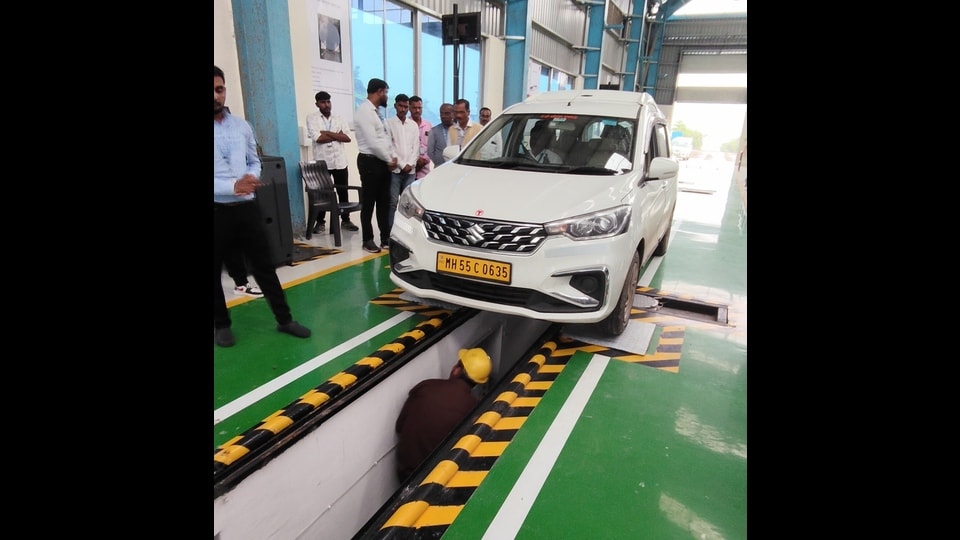
The facility, which became operational on Wednesday, is part of the Union Ministry of Road Transport and Highways’ mandate to replace manual vehicle fitness inspections with automated testing. Ahead of its launch, the Pune RTO demonstrated the system to the media on Thursday, showcasing how commercial vehicles will undergo computerised inspections with minimal human intervention.
However, RTO officials clarified that all commercial vehicles will not immediately be tested at the ATS. Vehicles with appointments already booked under the manual system will continue to be inspected through the existing process. Fresh appointments will gradually shift to the automated facility once the backlog is cleared, with full-scale operations expected within a month.
“The ATS is a major technological upgrade in the vehicle fitness certification process. It eliminates subjectivity through computerised testing and ensures that certificates are issued purely on scientific parameters. Existing manual appointments will continue until they are cleared, after which all new appointments will be shifted to the ATS,” said Swapnil Bhosale, deputy regional transport officer, Pune.
Once fully operational, the station will be capable of conducting nearly 600 fitness tests a day, significantly reducing waiting time and improving efficiency.
Under the new system, vehicle owners must book appointments online through the Automated Fitness Management System (AFMS). On arrival, vehicles are identified through Automatic Number Plate Recognition (ANPR) or QR code scanning before undergoing a series of automated tests, including checks for brake efficiency, suspension, wheel alignment, speedometer accuracy, headlamp alignment, axle load, emissions and underbody condition.
The test results are uploaded directly to the AFMS, which automatically generates a pass or fail outcome. Vehicles that clear all parameters will receive a digital Form-66 fitness certificate, while those that fail will have to rectify the defects before appearing for a re-test.
The RTO has also issued a list of mandatory pre-checks. Vehicles with bald tyres, broken windscreens, defective mirrors, non-functional wipers, faulty lights, damaged horns, malfunctioning speedometers or missing High Security Registration Plates (HSRP) will be declared unfit. Depending on the vehicle category, compliance with emission norms, retro-reflective tapes, reflectors, speed governor calibration and AIS-140 GPS devices will also be verified.
Officials said drivers or any other persons will not be allowed inside the automated testing lane during inspections, ensuring the process remains objective and tamper-proof.


