
 E-Paper



Pune scientists discover new species of multidrug-resistant bacteria from snake
PUNE The city-based scientists along with other experts in the country have discovered a new species of bacteria which are known to resist the approved antibiotics used in the treatment of snake bites


PUNE The city-based scientists along with other experts in the country have discovered a new species of bacteria which are known to resist the approved antibiotics used in the treatment of snake bites. The bacteria was found in the scats or faecal of “vine snake” a green coloured snake commonly found in the northern western ghats. The two species of bacteria have been discovered for the first time, claim scientists.
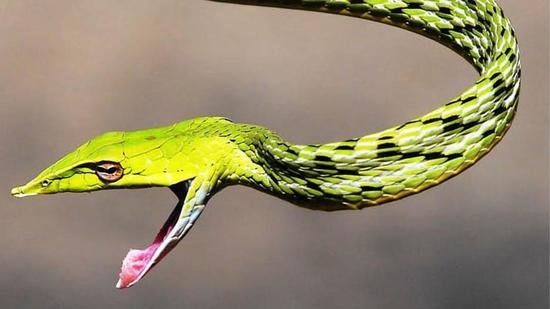
According to these researchers, it is necessary to find out the microorganisms of animal origin which can lead to various human diseases or the next pandemic in future given the current Covid-19 pandemic situation.
A team of scientists working from Junnar, Pune and Chandigarh made this discovery which was accepted in February 2021 by “The study” and recently published in the Springer – Nature journal Antonie Van Leeuwenhoek.
According to the team, while most of the study for isolation and identification of microorganisms from snakes and other wild animals mainly focus on the oral cavity. But in the present study, the novel microorganisms are isolated from the scat of snakes.
RD Chaudhari from the department of zoology and research centre, Shri Shiv Chhatrapati College, Junnar, Pune (SSCC) who first collected the faeces of the snake four years ago, said, “It is a huge discovery and further study is needed. We do not know how harmful this new bacteria or how safe it is. It is resistant to the existing antibiotics we use for the treatment. The most important point is that this bacteria can enter other species not just through snake bites, but also through the faeces of the snake and can be carried through the water flow in the rainy seasons or air.”
The faecal microbiome is studied to understand the gut microbes and in this case, also the microbes from the scat may represent the microbes present in the gut of the snake. The role of this microbe in the snake gut needs to be established by further studies. The bacteria reported here comes under the family Planococcaceae. Some species of this family are pathogenic.
It is important to identify the bacteria in snakes because they can cause disease. As society develops, the chance that humans have contact with animals decreases; however, the desire of people to interact with animals increases. As a result, several people will come in contact with these bacteria which are opportunistic invaders and may lead to various diseases. Most of the bacterial species isolated from the snakes have public health importance and have been incriminated in human infections worldwide. Some snakes may already harbour these bacterial pathogens from the wild, said the statement issued by National Centre for Cell Sciences (NCCS), which is located in Pune and which also worked in the project and Shri Shiv Chhatrapati College.
“Given the ongoing Covid-19 pandemic, multiple researchers after a more detailed bioinformatics analysis of the sequence of 2019-nCoV found that coronavirus might come from snakes. So we need to realise that these microscopic organisms have the potential to cause more such pandemics in future. Hence, nowadays it becomes important to focus on such a study to avoid diseases originating from wild animals,” said Chaudhari.
In the present study strain, SN6T and SN6b as novel species of the genus Savagea and the family Planococcaceae are discovered for which the name Savagea serpentis sp. Nov of is given. As these bacteria are isolated from snakes hence the species name serpentine is given. In addition to NCCs and SSCC both of which are located in the Pune district, microbial type culture collection and CSIR Institute of Microbial Technology, Chandigarh also worked on this research.
According to the team, the newly isolated bacteria from scats of vine snake are resistant to multiple antibiotics of four different classes that are aminoglycosides including gentamicin, amikacin, tobramycin, neomycin, and streptomycin, b-lactams including penicillin G, amoxicillin, cephalosporin C, cefoxitin, thienamycin, aztreonam, clavulanic acid; fluoroquinolones including levofloxacin, ciprofloxacin, moxifloxacin, ofloxacin, gemifloxacin.. and sulphonamides including sulfadiazine, sulfamethizole, sulfamethoxazole, sulfasalazine, sulfisoxazole and others. The most interesting fact mentioned by the team is that other bacteria from the family Planococcaceae are sensitive to several antibiotics including tetracycline, streptomycin, ampicillin, erythromycin, gentamicin, penicillin-G, rifampin, streptomycin and others.
Further, the team added that there are many bacteria including multi-drug resistant which are present in the snakes leading to wound infections after snake bites. In some serious cases, patients may suffer from cellulitis, tissues necrosis, finger or toe gangrene, and/or extensive necrotizing fasciitis. To avoid such types of infections antibiotic therapy is the only way. It is also mentioned that ciprofloxacin, amikacin, cefotaxime, cefepime, ciprofloxacin, ampicillin, gentamicin, penicillin and vancomycin are the most frequently prescribed antibiotic after snake bite to control wound infection due to bacterial flora present in snakes. But these newly isolated bacteria are resistant to these drugs which is of serious concern.
They further added that a few species and strains of Planococcus have been demonstrated to be pathogenic to other animals. Some species lead to an outbreak of necrotic hepatitis in chickens. Some of the species and strains of Planococcus are found in bronchial biopsy in a child with cystic fibrosis.


