
 E-Paper



Pune: Study reveals persistent poor air quality between Feb & Apr 2025
According to the study published on June 10, the average PM10 concentration stood at 127 µg/m³ in February and 112 µg/m³ in March, both significantly higher than the permissible limit of 100 µg/m³


A recent study by the Centre for Research on Energy and Clean Air (CREA), based on data from the Central Pollution Control Board (CPCB), has revealed that Pune experienced poor air quality on 57 out of 89 days between February and April 2025. The analysis underscores that PM10 levels — levels of coarse particulate matter originating mainly from road dust and construction activities — consistently exceeded the National Ambient Air Quality Standards (NAAQS) throughout most of this three-month period, particularly in February and March.
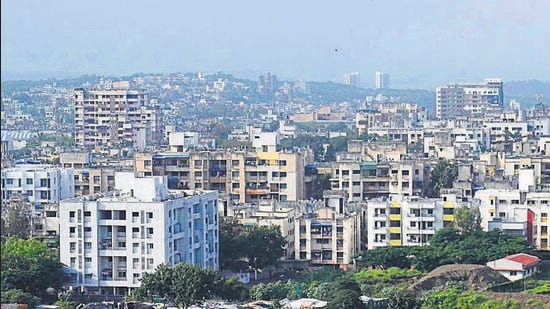
According to the study published on June 10, the average PM10 concentration stood at 127 µg/m³ in February and 112 µg/m³ in March, both significantly higher than the permissible limit of 100 µg/m³. Although April saw a slight improvement, with average PM10 levels dropping to 94 µg/m³, the figures still marked a year-on-year increase. This trend signals a reversal from earlier improvements which is worrying.
In case of PM2.5 — a finer and more hazardous pollutant associated with vehicular emissions, industrial activity, and biomass burning — the monthly averages were within the 60 µg/m³ threshold but remained a matter of concern: 55 µg/m³ in February, 51 µg/m³ in March, and 44 µg/m³ in April.
The CREA report warns that prolonged exposure to both PM10 and PM2.5 can have serious health consequences, including respiratory illnesses and cardiovascular complications. Despite several interventions under the city’s Clean Air Action Plan and a cumulative expenditure of ₹222 crore under the National Clean Air Programme (NCAP), Pune has consistently failed to achieve compliance with annual PM10 standards.
A six-year trend analysis (2019–2025) presented in the study showed inconsistent but troubling patterns in particulate matter levels. PM2.5 concentrations dropped sharply to 23 µg/m³ in 2020 — likely due to the Covid-19 pandemic-related lockdowns — but spiked to 61 µg/m³ in 2022. Levels improved to 36 µg/m³ in 2024 before rising again to 44 µg/m³ this year. A similar trend was seen for PM10, which fell to 36 µg/m³ in 2020, peaked at 101 µg/m³ in 2022, dropped to 87 µg/m³ in 2024, and rose again to 94 µg/m³ in April 2025.
Manoj Kumar, an analyst at CREA, said, “Despite the investments, we’ve never met national PM10 standards. This calls for a serious review of local action plans and better accountability in implementation.”
Dushyant Bhatia, a member of the Pune Air Action Hub, echoed similar concerns. “We’ve worked with local authorities on issues like mobility and solid waste, but the current approach needs a rethink. We need source-level interventions such as improved public transport and a ban on open burning, rather than stop-gap measures like mist cannons, which have limited effectiveness,” Bhatia said.
Experts also stressed that with winter approaching — a season typically marked by deteriorating air quality — the city must act swiftly to improve baseline conditions. With infrastructure like the Metro and Pune Mahanagar Parivahan Mahamandal Limited (PMPML) buses already in place, the focus must shift toward enhancing accessibility and affordability of public transport to reduce dependence on private vehicles.
When contacted, Maharashtra Pollution Control Board (MPCB) regional officer J S Salunkhe did not respond. However, in an earlier statement, he acknowledged that PM10 levels continue to exceed safe limits due to construction activity and traffic congestion. He added that action has been initiated against ready-mix plants and that coordination with traffic police is underway to address the issue.


