
 E-Paper



Pune teen’s app enables citizens to digitally record trees
Users can log species, girth, height, photographs, and GPS coordinates, generating ecological data that can support petitions, presentations to authorities, or court cases on tree felling and urban development

 Prefer HTon Google


A 17-year-old student from Pune, Aryaman Deshmukh, has merged coding with his interest in riverside conservation to create ‘The Tree Map’, an app that enables citizens to digitally record trees. The Vidya Valley School student has built a platform that converts manual tree documentation into a collective effort.
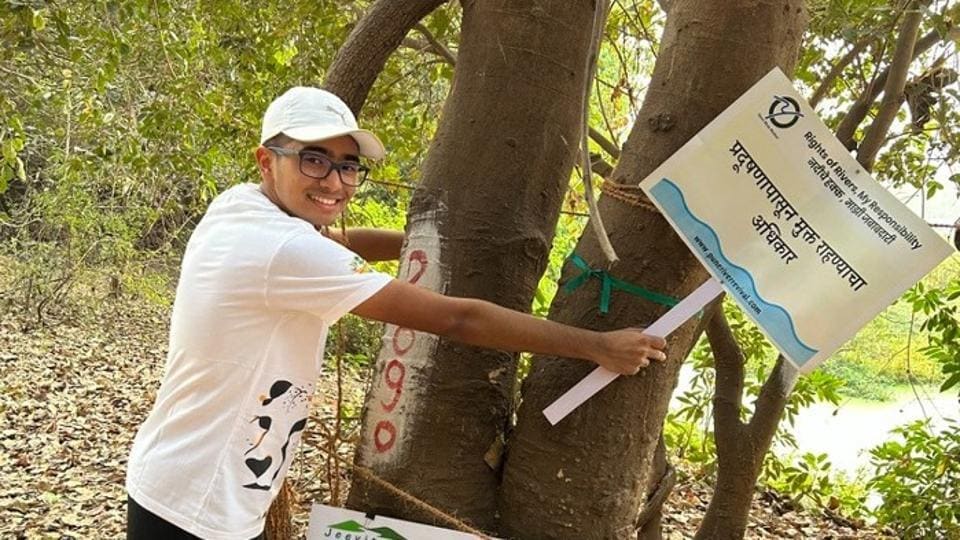
Inspired by years of volunteering with Jeevitnadi, a non-profit organisation working to revive Pune’s rivers, Aryaman’s app aims to digitalise the manual process of documenting flora biodiversity. The Tree Map allows its use of citizen data to create a location-linked database of trees, empowering everyone - from students to city planners - with actionable information.
Users can log species, girth, height, photographs, and GPS coordinates, generating ecological data that can support petitions, presentations to authorities, or court cases on tree felling and urban development.
“Data changes the conversation,” said Aryaman. “When you show what species grow where, how rare or old they are, or what threats a green space faces, the debate shifts from opinion to facts.”
According to Shubha Kulkarni of Jeevitnadi, NGOs, neighbourhood groups, and citizens can use the app to resist projects like road widening, real estate construction, and concretisation of water bodies. Volunteers of Jeevitnadi have begun piloting the app along the Mula-Mutha riverbanks.
“This app democratises conservation,” said Kulkarni. “It makes documentation accessible and participatory. Citizen action gains strength through collective information.”
Biodiversity data is not easily available to guide conservation, particularly on native versus invasive species. Even government agencies face difficulty in mapping green cover in growing cities. The Tree Map fills this gap by turning citizens into contributors to public knowledge.
By equipping people with credible ecological records, the app helps level the field between conservation advocates and development lobbies. “In future, petitions backed by data may prove the strongest defence for India’s trees,” said Aryaman.
Ipsita Rodricks, director at Vidya Valley School, said, “The Tree Map builds on the current global focus on sustainability, as climate change affects every one of us. Through projects like this, we want to integrate industry and education, letting students explore work in the real world, while at school. We have seen many such projects make a difference to society.”


